DCTA CEO's contract said he'd get no money if he resigned — yet he got $187,500 in severance pay
Published: Wed, 04/13/22
DCTA CEO's contract said he'd get no money if he resigned — yet he got $187,500 in severance pay

People board the Denton County Transportation Authority Route 7 bus on Oak Street near St. Andrew Presbyterian Church.
DRC file photoFormer Denton County Transportation Authority CEO Raymond Suarez will receive payments equaling nine months of his $250,000 base salary — or $187,500 gross pay — following his resignation last month, despite a clause in his contract stating “in the event of voluntary resignation Suarez shall not be paid any severance Pay.”
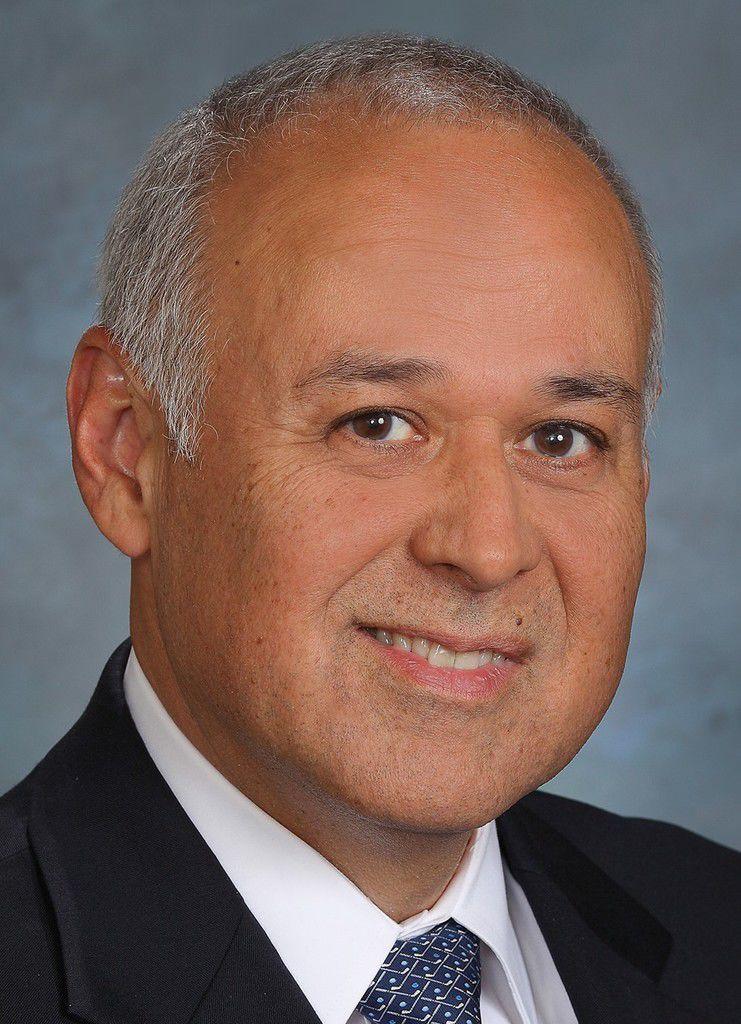
Raymond Suarez
Suarez’s resignation was accepted by the DCTA board at its March 7 board meeting, effective March 31. It came after hours of closed-session deliberation by agency staff and board members, spread across more than one meeting.
Suarez was hired as CEO in September 2018, after the resignation of the previous DCTA president. His contract originally ran for three years but was later extended to run through September 2023. His annual base salary was $250,000, on top of other benefits, including a monthly car allowance and cellphone allowance.
When DCTA extended Suarez’s contract in 2020, it also increased his early termination payout from six to nine months of his salary. He will now get that severance pay, along with nine months of reimbursements for COBRA medical payments, after his resignation. That’s despite the contract stating the severance pay comes only with termination of employment.
“In the event of termination by DCTA without cause, Suarez shall be entitled to receive expenses for severance in a lump sum payment equal to nine (9) months of base salary as the sole and exclusive termination remedy,” reads Section 4 (A) of the contract.
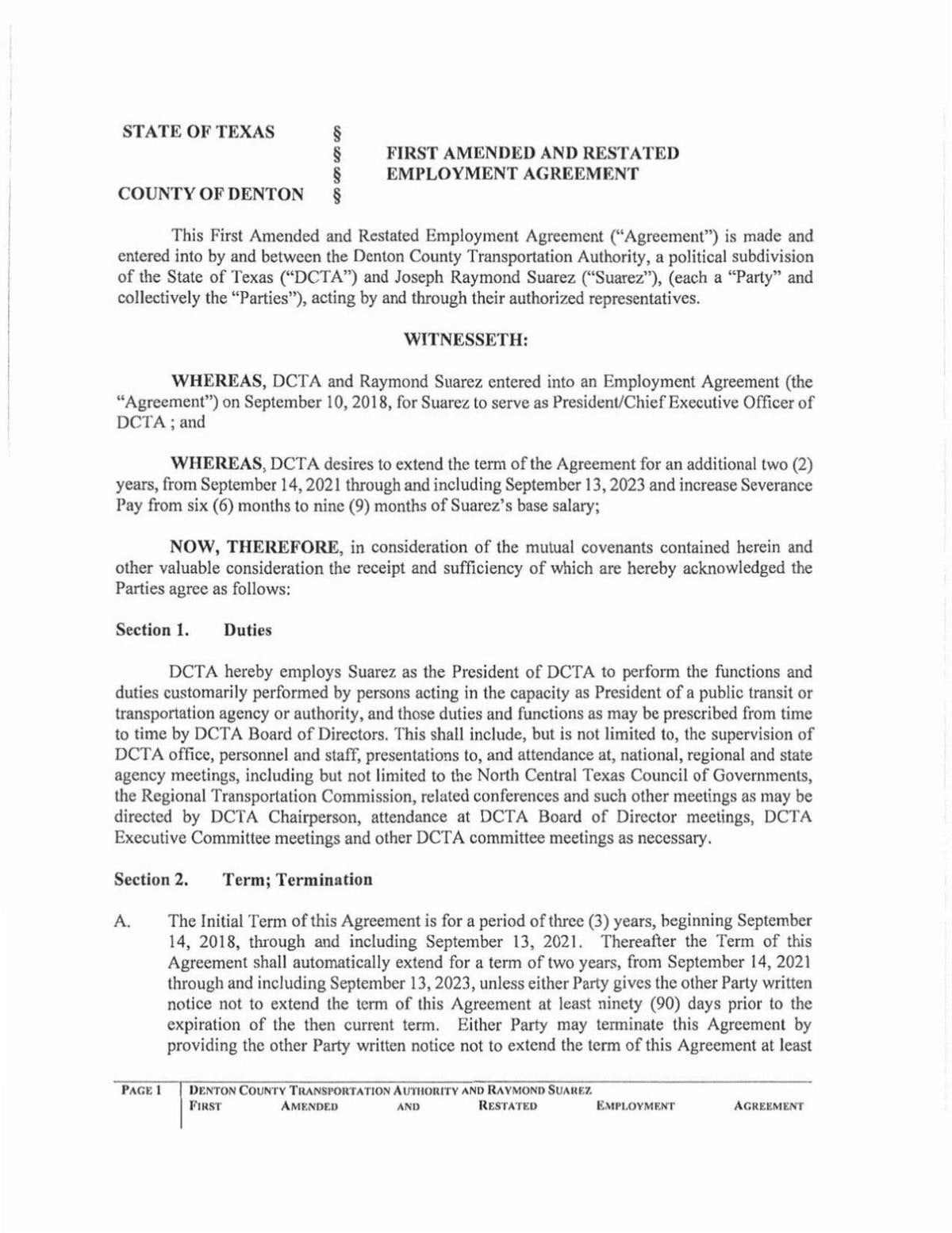
Section 4 (C) states “in the event of voluntary resignation Suarez shall not be paid any severance Pay.” Between those two clauses, the contract suggests he would be entitled to the nine months of pay only if DCTA decided to terminate him without cause — meaning not for a handful of agreed-upon reasons, such as illegal conduct or policy violations.
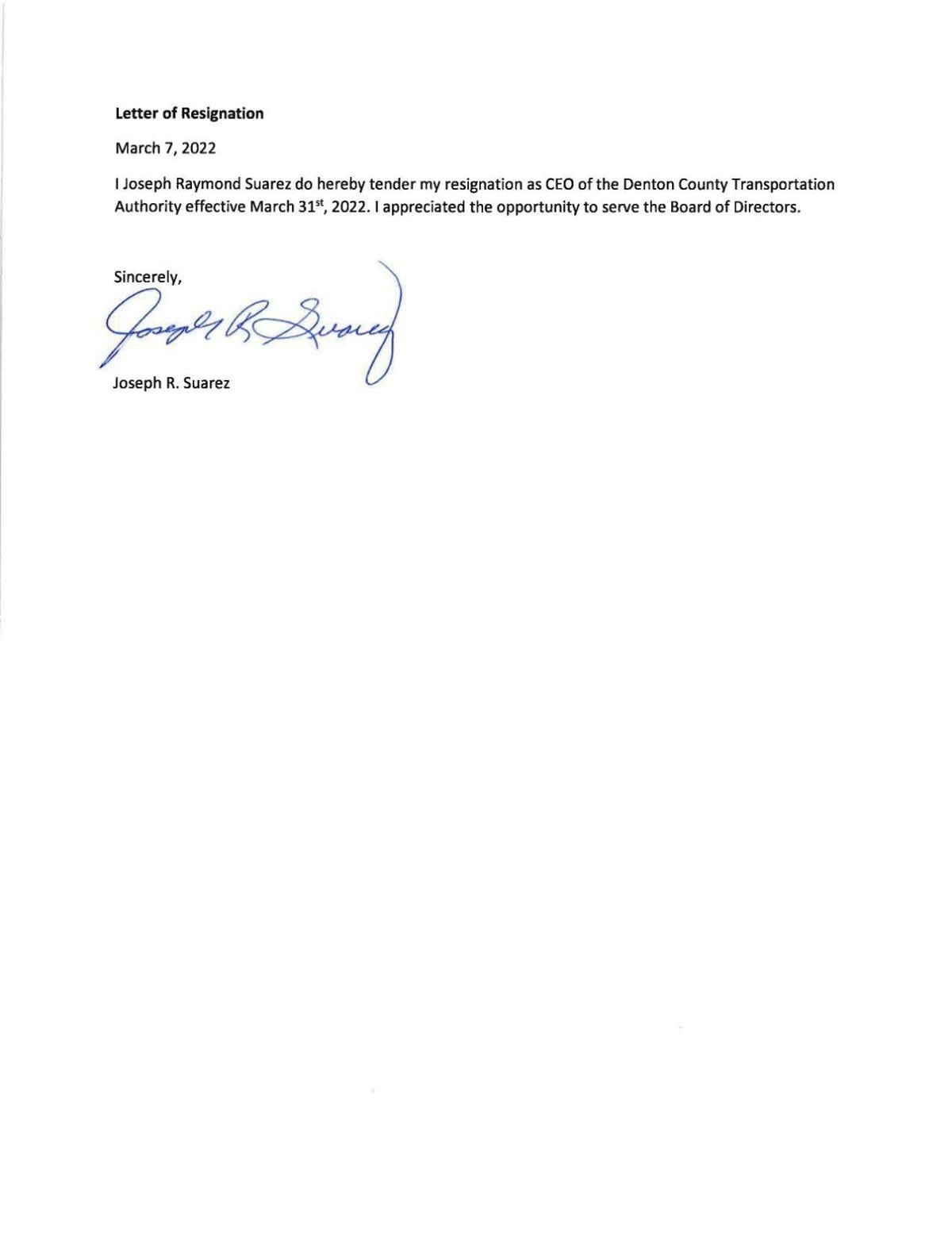
But Suarez was not officially terminated. A copy of his severance benefits agreement, waiver and mutual release shows he formally resigned, with Suarez and DCTA agreeing to waive the required 90-day resignation notice. His March 7 letter of resignation spans two sentences, simply stating that he is resigning and “appreciated the opportunity to serve the Board of Directors.”
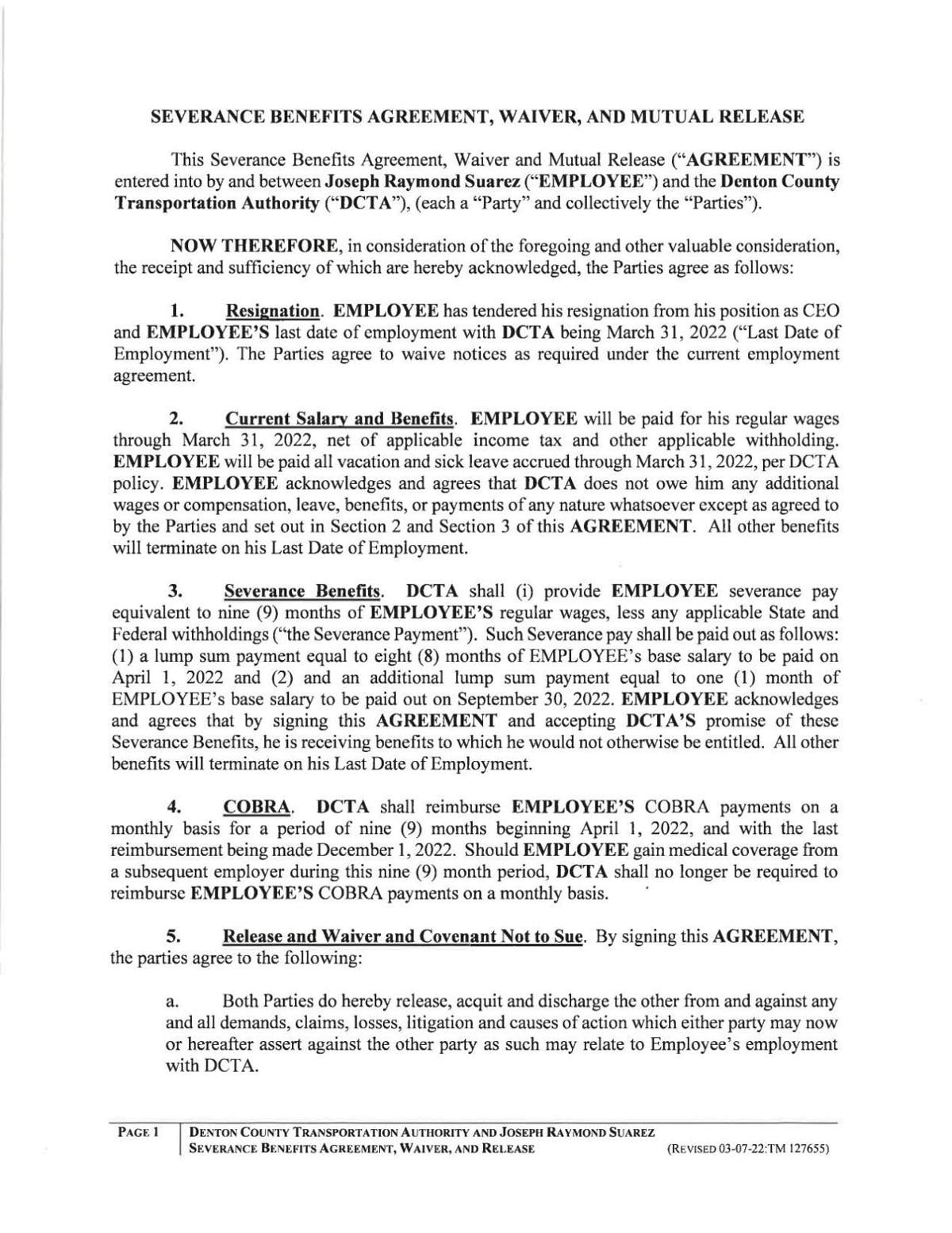
Additionally, approval of his benefits package didn’t come in a unanimous decision. When the five-person DCTA board voted on it at the end of the March 7 meeting, Denton County Judge Andy Eads voted against its approval. The agreement states Suarez should have received the first eight months of the payment as a lump sum April 1, with the final month to be paid at the end of September.
Because the discussion was held in executive session, the ultimate reason for Suarez’s resignation and any deliberations on his severance agreement haven’t been made public. He has not responded to the Denton Record-Chronicle’s requests for comment since the announcement of his resignation.
After multiple phone calls to his legal office, DCTA attorney Joseph Gorfida could not be reached to provide clarity on why Suarez received benefits despite the clauses in his contract. Notable is that Jim Cline, Suarez’s predecessor, also received severance benefits after resigning.
In an email response, Denton-based attorney Grace Weatherly stated public entities, just like private entities, can “legally negotiate terms of a release with terms that differ from their contractual obligations.” With the caveat that she hasn’t reviewed or researched legal limitations for DCTA in specific, she provided some general examples.
“To pay severance … could signal that the resignation was in lieu of termination,” Weatherly wrote, “but there may be a myriad of other circumstances in which it is to the agency’s advantage to obtain a release of claims by an outgoing employee. One such situation may be that the entity paid severance with other outgoing employees.”
Clauses in Section 5 of the agreement, “Release and Waiver and Covenant Not to Sue,” address any legal claims. Subsection A states that both parties “hereby release, acquit and discharge the other from and against any and all demands, claims, losses, litigation and causes of action” related to Suarez’s employment.
The agreement also contains a “No Disparagement” clause, which states Suarez and DCTA won’t “make any statement, oral or written, or perform any act or omission that is or could be detrimental in any respect to the goodwill of DCTA or [Suarez]” for two years.
The agency has appointed Paul Cristina as interim CEO and will soon go through the process of finding a permanent replacement for Suarez.