What value does a library bring? Question posed as Lake Dallas considers shelving its library
Published: Sat, 06/11/22
What value does a library bring? Question posed as Lake Dallas considers shelving its library

LAKE DALLAS — A Lake Dallas City Council member’s suggestion that the city look into cutting its library services has sparked pushback from residents — and larger discussion on what a library adds to communities.
The council member’s suggestion has been widely circulated on social media over the past week, but it began last month at the May 21 Lake Dallas City Council budget kickoff workshop. At the meeting, council discussed cutting library services in the city’s 2022-23 budget.
In a Sunday Facebook post, Place 5 council member Adam Peabody addressed the issue, stating he was the one who initiated the library conversation at the workshop. He wrote he had made a similar proposal in November, involving transitioning Library Services to Community Engagement Services.
Peabody stated his proposal would do away with the library’s book rentals, which would “generate large cost savings.” Some services would be kept around, such as classes and computer use. In the proposal, one employee would be retained as the community engagement coordinator.
Peabody wrote the conversation “went well,” but that the city is “hoping to have a town-hall style forum where people can engage with us on this topic before any decisions are made.” His motive, according to the post, is finances. At one point, he called the library a “luxury we can no longer afford.”
“It is my understanding that years ago the Library was co-funded by the Lake Cities as a whole,” Peabody wrote. “When the other cities decided to drop funding, it left us with the entire financial burden. I believe that is the time when this conversation should have taken place, instead of today.”
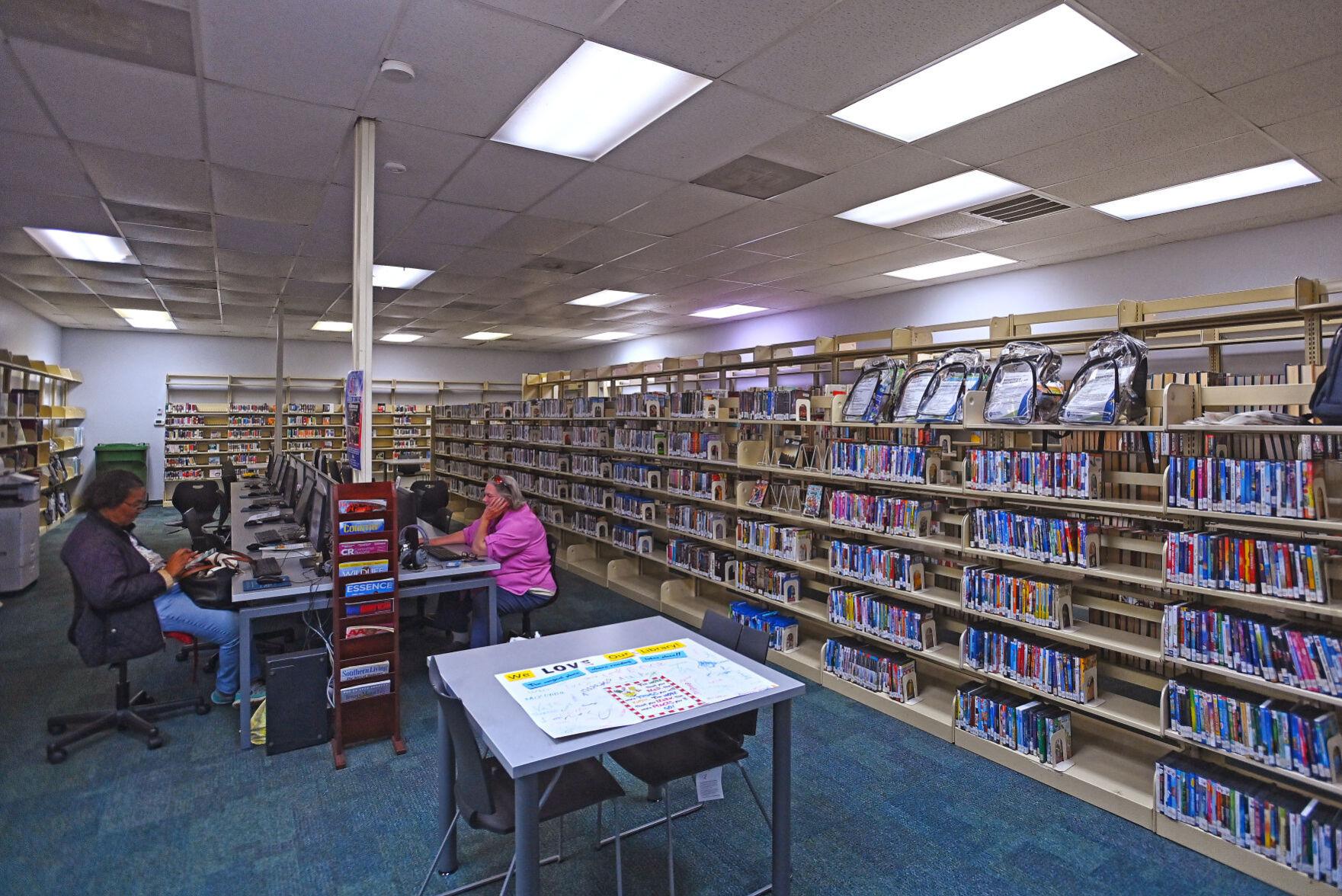
The interior of the Lake Dallas Library is shown on Thursday.
Al Key/DRC‘Something has to give’
Peabody said “something has to give” based on last year’s budget, with a budget deficit leading him to believe the city might need to dip into its reserves “for anything out of the ordinary” as early as this year.
However, in an emailed response, Peabody said it would be false to say Lake Dallas is struggling financially. He said the city needs more capital beyond just its operating costs so that it can address concerns over roads, sidewalks and drainage when they pop up.
“While I am concerned about the effect of inflation and rising costs of providing city services going forward, we are fully capable of covering all of our operating expenses,” Peabody said. “Although the City Council recently discussed during a public meeting the costs of maintaining Library services and the option of using its funding towards other existing services, we have made no collective decisions.”
Peabody did not elaborate on why he felt the library was the best option for cost savings, though he said in his Facebook post the library “is the only place to cut to give our budget some immediate relief.”
Thursday afternoon at the Lake Dallas Public Library, a librarian said the Denton Record-Chronicle would need to go to the city for comment. Patrons, however, made their opinions clear: They feel there’s no substitute for the library.
That includes Sarah Wright, a mother of five who home-schools her children. She said she has been using the library since she was a kid and now uses it for all sorts of resources. On top of renting out home-school kits — backpacks full of books and other materials covering a range of topics — she attends a Spanish language class.
“It allows us a lot of resources we couldn’t otherwise afford,” Wright said. “As a mom, it’s necessary. Our kids need it.”
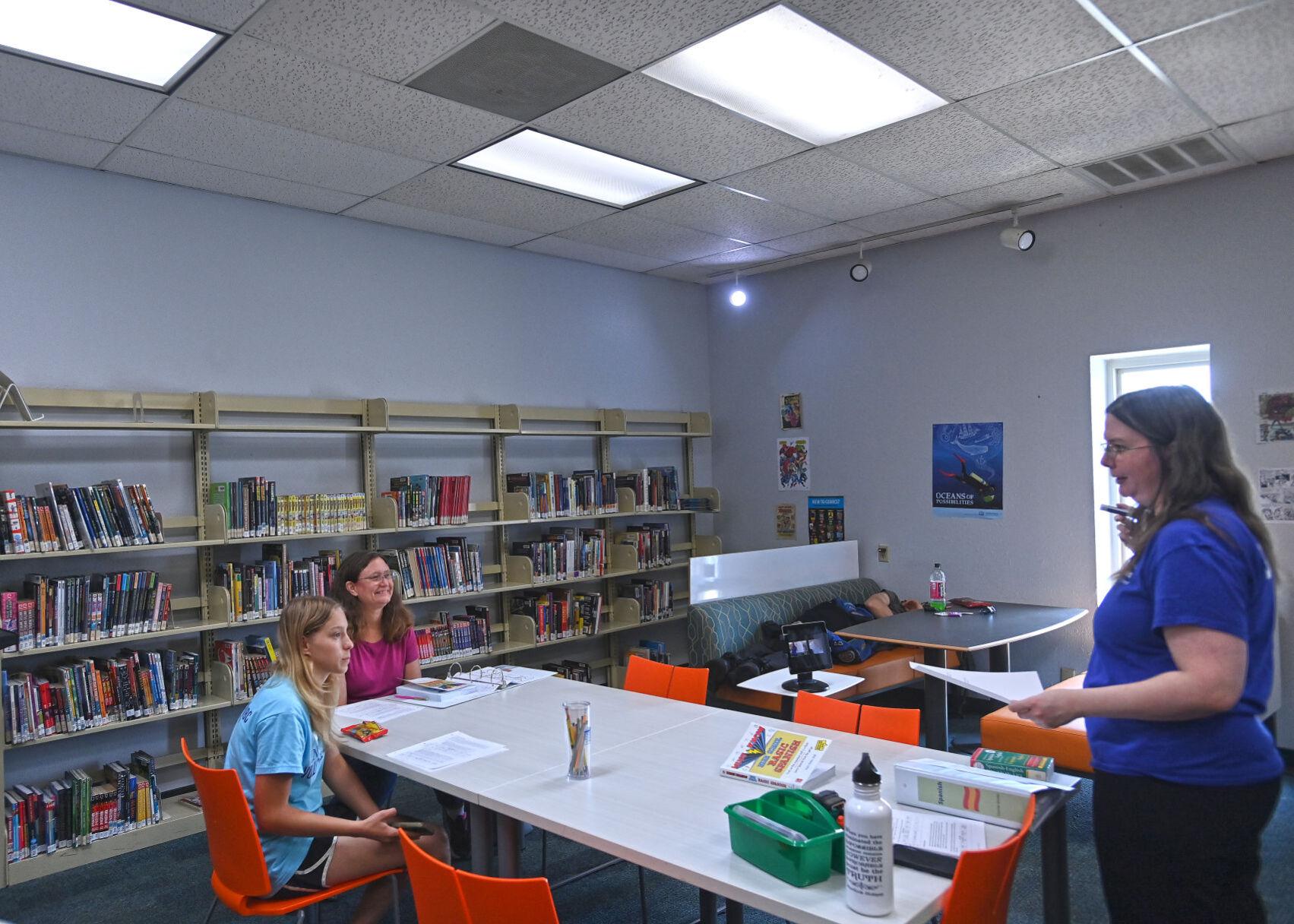
A librarian teaches Spanish at the Lake Dallas Library on Thursday.
Al Key/DRCTo that end, Wright made a poster supporting the library and filled it with dozens of signatures — all of which she collected from children over the past week. She said if the library were replaced with just a computer room, that wouldn’t be close to what it is now.
“If you just did a room in the City Hall, it would be a community center,” Wright said. “[The library] is so much more than a community center. … I don’t care how they pay for it, as long as they keep it.”
Wright’s husband created an online petition as well, which had garnered 265 signatures and well over 100 comments from library supporters by Friday afternoon.
At the same time Wright was attending her language class, 61-year-old Mark Sorenson was using one of the library’s computers. He said he lives below the poverty line and that for him, the library is the main way he accesses the internet.
“I was just blindsided,” Sorenson said. “We need to make a convincing argument that using that money on something else is greater than or equal to the library.”
Sorenson acknowledged some of the library’s value would remain if the computers got moved somewhere else, but he said the full scope of services wouldn’t be recreated. Others at the computer section jumped in to say they get a sense of community from coming to the space.
“The list is endless for what people use this library for,” Sorenson said. “In this littlebitty town, in some cases, it takes 200 or less votes. You [council members] can completely ignore us, but we’ve got 265 people who signed this petition who are up in arms.”
A handful of library supporters showed up at Thursday night’s Lake Dallas City Council meeting, where council members announced there will be two opportunities for residents to speak on the issue. A June 18 town hall will include three topics, the library among them, and residents will get another chance to speak at the June 23 council meeting.
The most recent activity by the Friends of the Lake Dallas Library appears to be the group’s book sale on May 6, 2019.
Libraries’ community value
Home-school students aren’t the only young scholars who benefit from access to public library collections and programs. City libraries can contribute to public school students, especially when public schools close for summer and winter breaks, said Jess Turner, the manager of North Branch Library in Denton. Lake Dallas ISD officials didn’t respond to a request for an interview about the links between school and city libraries.
“If the school and us are the only two sources, and you take away us, now it’s just your school,” Turner said. “So what happens during the month when they’re not in school? What sorts of literature and learning are they having?”
Municipal libraries often make sure they offer programs to promote reading and learning during the times school is out.
“For us, our summer reading program takes place, and that’s where all ages [participate],” Turner said. “It’s very much geared toward families. We have more programs during the summer geared toward families.”
The Denton Public Library’s summer reading program encourages all ages to read a certain number of times each day. There are rewards: a free book, courtesy of Denton Friends of the Library; certificates for following their program; and more, Turner said.
School libraries are focused on enriching grade-level curriculum. City libraries serve all ages, and a broad spectrum of interests. In larger cities with bigger library budgets, patrons can check out books, DVDs and music recordings as well as access a larger digital database. Just miles north of Lake Dallas, Denton residents can read e-books or listen to audiobooks. And they also can experiment with the public library system’s 3D printer.
Even rural libraries offer programming such as story times and presentations, as well as hosting affinity groups for interests such as board games, crafting and life skills instruction on everything from cooking to learning how to use software programs popular with employers.
For parents concerned with what teachers call “summer brain drain,” a summer reading program can keep kids reading, expanding their vocabulary and lengthening their attention span and focus. If city leaders have to reduce a library’s services, staff or hours of operation, residents could lose out on everything from books to a regular visit to a story hour.
City libraries augment what public school libraries do on the daily: offer references, reading material and time to explore.
“When you’re talking about a summer reading program, it’s just that whole summer of basically encouraging reading, encouraging not stopping at all, but to continue their learning pursuits,” Turner said. A bonus: Denton’s summer reading program allows participants to read what they want — magazines, books, newspapers and comic books.
Pressure on libraries
The COVID-19 pandemic closed libraries temporarily, and across the state, city leaders had to make hard decisions about where to cut expenses. In some Texas cities, libraries saw their budgets cut — or maintained as demands spiked. Texans supplemented virtual classroom resources, and new patrons used libraries to do job searches and learn new employment skills for free after losing their jobs. While some municipal libraries are back up to pre-COVID budgets, others aren’t. And in libraries like Lake Dallas, which saw declining budget support prior to the pandemic, COVID added additional stress.
Ultimately, patrons lose out — especially residents who don’t have the money to click “buy now” on Amazon or hit up Barnes & Noble Booksellers. (If money is tight, though, any and all bookworms should follow the Friends of the Denton Public Libraries Facebook page to watch for the regular secondhand book sales.)
Turner said that’s where other nearby libraries can stand in the gap for Lake Dallas library patrons. To check out items, residents who live outside of the city limits can buy a $50 yearly membership, or a $25 six-month membership. But the use of the library tech, references and programs?
Those are free for anyone, Turner said.
“To attend our programs, take part of the summer reading challenge, or just to come in and just utilize our computers, have access to data — or just to read a newspaper, or sit down and read a book in a location? That’s open to anyone,” he said. “We very much are back post-pandemic,” Turner said, “because our summer reading kickoff event with Professor Brainius had 140 attendees.”
Turner said a family program last week drew 225 people.
“And then we did our Splish Splash Story Time at the water park this morning, and we had 191. So we’re back as far as programming,” he said.
Turner said there are surprising ways to support your local library. The best way is to visit your local library and explore, or hunt around your library’s digital offerings. Join your Friends of the Library group or support their fundraisers.
“The other thing you can do is post on social media when you come to our programming,” Turner said. “Word of mouth is really huge. If you come to a story time and love it, post about it online. Let people know there is something there for their families. That there is something here for everyone.”