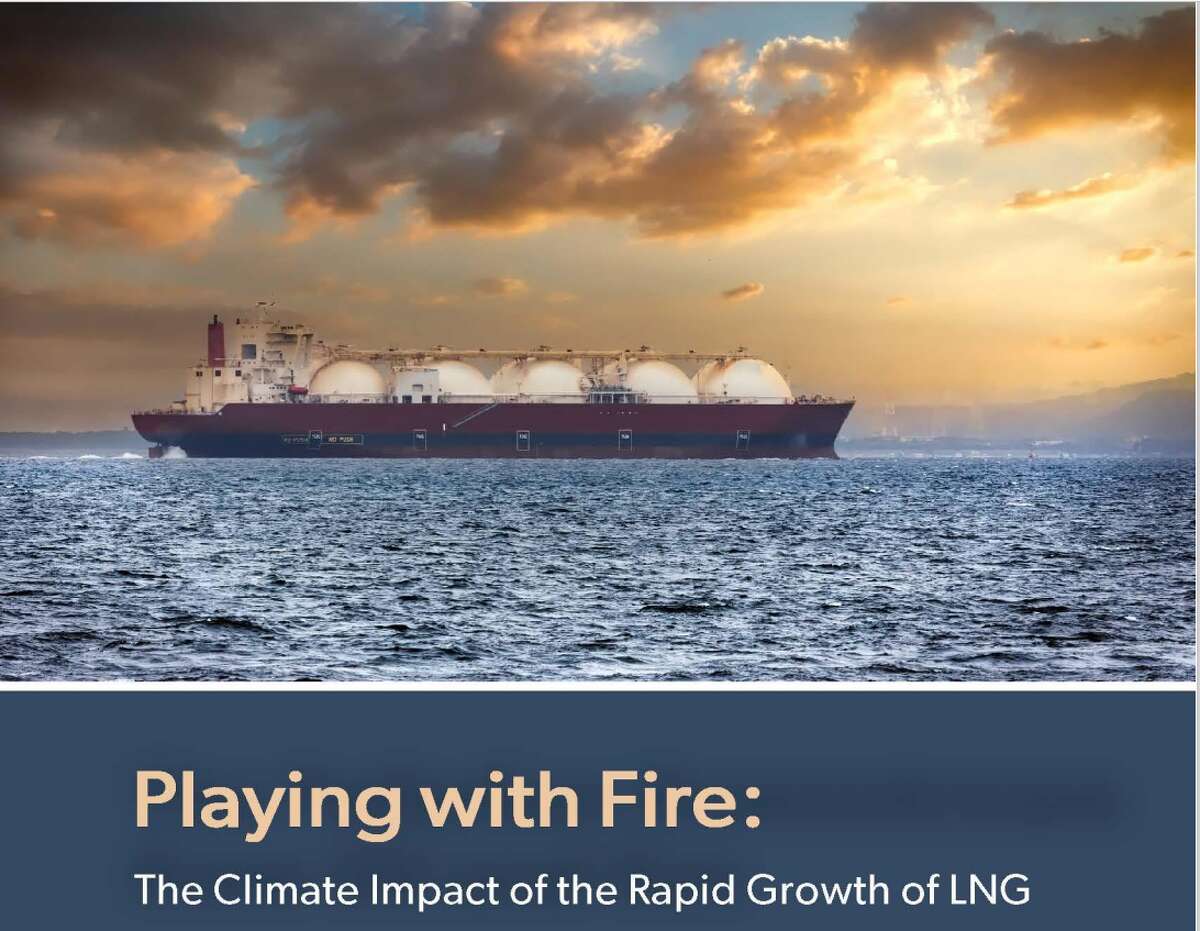
Twenty-five liquid natural gas terminals, including two in Port Arthur, could ultimately produce more than 90 million tons of greenhouse gasses per year, a newly-released report says.
The report, by the Environmental Integrity Project, says the emissions from plants including Golden Pass and Port Arthur LNGs will equal releases made by 18 million cars running for a year.
In June, the Project released the report “Playing with Fire: The Climate Impact of the Rapid Growth of LNG” which focuses on the U.S. LNG terminal construction increase related to Ukraine and its impact on the climate and the release of various harmful emissions.
RELATED: Port Arthur refinery averaged double EPA benzene limit last year
"This report highlights recent developments in the US LNG sector, and we're really focused on highlighting the emissions impact of the projects that have been proposed around the country as well as the terminals that are already operating are under construction," said EIP Senior Research Analyst Alexandra Shaykevich. "We also kind of put that into context by highlighting some recent events that have maybe precipitated these recent contracts and accelerated construction schedules."
Shaykevich is a credited author on the report and is joined by EIP Director of Research Courtney Berhardt and Research Assistant Griffin Bird. The report also includes maps by Louisa Markow and a cover and infographic by Elizabeth Gething.
Jefferson County has two LNG terminals under construction -- Golden Pass LNG and Port Arthur LNG.
Since the two terminals are still under construction, Shaykevich said researchers "don't know their operating emissions totals, only their potential to emit greenhouse gases and other pollutants."
RELATED: These SE Texas plants released the most benzene in Texas last year
"Golden Pass LNG is authorized to emit 4,940,072 tons of greenhouse gases and 1,900 tons of criteria air pollutants each year, according to government records," Shaykevich said. "However, FERC issued a capacity amendment on January 19, 2021 that would increase production at the terminal from 15.6 to 18.1 million tons per year."
Both terminals received their construction permits in 2015, but the capacity amendment hasn’t yet been incorporated into their state permits. Shaykevich said residents can expect emissions from the Golden Pass LNG terminal to be higher when the company amends its state permit with additional export volumes.
"Port Arthur LNG is authorized to emit 7,741,044 tons of greenhouse gases and 5,798 tons of criteria air pollutants each year, according to government records," Shaykevich said. "However, TCEQ has not issued final Clean Air Act construction permits and the draft permits will likely be revised with lower emissions totals."
Shaykevich said the report also highlights the pace the situation has escalated in the past few months and includes a timeline of recent contracts that have been signed.
"We thought it was really important to publish an update because so many things had gone on in 2022 and it was a really surprising year for LNG," Shaykevich said. "We really thought it was a timely report. (It) communicates to the public and to our allies how much data has moved forward, and gives an update on the current status of all of these projects that have been post."
courtney.pedersen@beaumontenterprise.com
twitter.com/courtpede