Killeen City council: No negotiating with developers on new design standards
Published: Sun, 08/28/22
City council: No negotiating with developers on new design standards
kdhnews.com

A Killeen developer who wants to bypass the city’s new architectural and site design standards will not be allowed to build more than 400 homes in the Levy Crossing planned unit development if construction is not consistent with those standards.
And it’s not negotiable, council members said.
“We’re imposing new standards,” Councilman Ken Wilkerson said. “What I‘m really trying to do is maintain some type of order in this as well. I think you did your due diligence as far as bringing back something that might be acceptable to the city. It puts us, really, in a bind here. A standard is a standard, and this negotiating a standard puts the standard at risk.”
His comments, and those of other council members, came during a public hearing on Tuesday when a request by Michelle Lee of Killeen Engineering and Surveying to reduce building setback lines was met with apprehension and confusion.
“First of all, you did understand by bringing this back for amendments, it opens you up for the new standards,” Wilkerson said. “You knew that ahead of time, right? I just wanted to make sure that we were clear on that. I think it weighs a lot into a decision on whether we can maintain consistency and continuity with anybody else who comes before us.”
‘Better quality homes’
In a June 14 letter to the city’s director of planning, Wallis Meshier, Lee, representing JOF Developers, requested the change “to provide better quality homes to homebuyers in this development.”
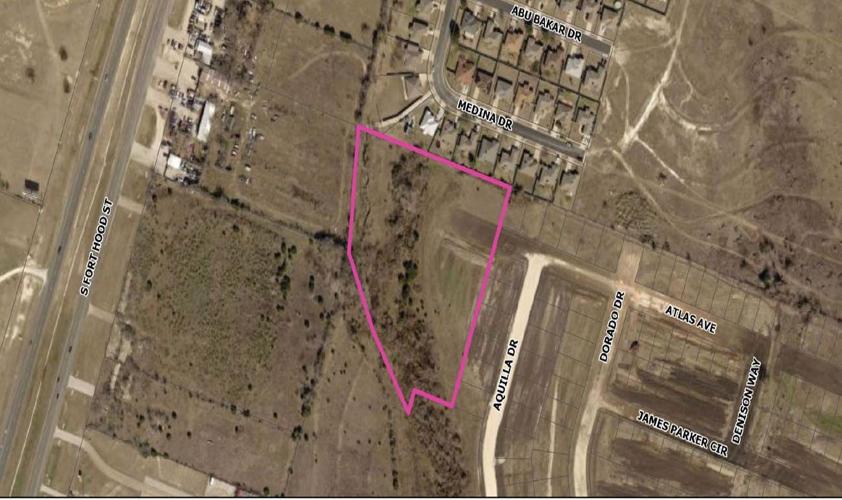
JOF, owned by longtime Killeen developer Gary Purser Jr., plans to develop 402 lots over 110 acres at Levy Crossing in the 6600 block of South Fort Hood Street. Purser could not be reached for this story.
And although the new standards do not include different setback guidelines than those in the PUD requirements, the developer’s floor plans would trigger clauses in the architectural and site design standards ordinance that would prevent the company from constructing homes to the builders’ specifications.
“Just as a reminder, this original (planned unit development) was approved two years ago, and it did include some architectural and landscape standards,” Lee said. “The property’s now platted and the water, sewer (and) roads are built. But there’s no houses on the lots because they haven’t been sold to the builders yet.”
According to city documents, the Levy Crossing PUD was approved in July 2020 — nine months after the property was annexed into the city limits.
“In accordance with the approved PUD, the setbacks within the PUD match the setback requirements in the underlying zoning districts. The purpose of this request is to amend the building code setbacks for the ... lots.”
The developer is asking for setbacks to be reduced on all sides.
“In this particular instance here, the request is to reduce the front yard setback from 25 feet to 20 feet, the side yard setback from 7 feet to 5 feet and the rear setback from 25 to 20,” said Edwin Revell, Killeen’s executive director of development services. “So that’s the request. The staff recommendation as well as the Planning and Zoning’s recommendation for this amendment request was to approve it with the condition that the architectural design standards be applied.”
But that’s not possible, Lee said, for several reasons.
‘Don’t have floor plans’
“We would not be able to meet the new architectural standards with the development. They don’t have floor plans yet for those. It takes time — six or eight months — to put together a whole new set of floor plans. They don’t have those floor plans ready with the new architectural standards right now. The only reason the architectural standards are a hardship is that builders don’t have floor plans yet for those.”
The architectural and site design standards were approved on May 22 and went into effect on May 30. The developer is impacted because it wants to include three-car garages in the construction of at least some of the homes.
Restrictions on garages
According to ordinance 22-027, two restrictions apply to building garages. If the garage faces the street, it cannot account for more than half of the house. And garages cannot protrude farther than anything else on the house.
“This particular development, at the time when this was approved, the architectural and site design standards were not in place,” Revell said. “Now, they are in place. That’s like a baseline for our site design standards. Should we at least meet those baseline standards? We believe we should.”
At the same time, Revell mentioned “give and take” as a compromise in discussions with developers about amendment requests — a suggestion with which Mayor Debbie Nash-King took exception.
“With our new design standards, should we even consider removing ‘give and take?’” she said. “I guess my concern is this: We have voted on standards ... and then we have ‘give and take.’ I don’t know where that originally came from that the applicant thought they had a choice. With that choice, I hear that there was a playscape put in place, that we would add this to the amendment.”
Revell said that “there was nothing that we received in writing that speaks to anything other than what you have in front of you” before City Manager Kent Cagle told the council that JOF Developers on Friday or Monday offered to build a playground in exchange for the council dropping its architectural and site design standards requirement.
“Just to clarify, the developer came in ... and offered in lieu of architectural standards some sort of playground in the common area,” Cagle said. “I’m not saying staff’s recommending that. I do want to make it clear the developer did come in and make that offer.”
Nash-King continued to question Revell on why staff members were making it appear developers could avoid the new standards.
‘Really concerned’
“I’m just really concerned,” she said. “It seems as if the applicant is pinned against the city and the council is here now making a decision with, ‘He say, she say.’ Who came up with the ‘give and take?’ If you do this, then we’ll give you the setback. Where did that even come from?”
Revell again tried to explain that rationale.
“There’s always a ‘give and take’ opportunity,” he said. “The city’s policy that when a request is in front of us, there is an opportunity to add value to a development. In this case here, we believe part of that value is architectural and site design standards. In other cases, it may be trails. It may be park amenities. It may be open space.”
And to that end, the developer has already made a concession, Lee said.
“With the original PUD, we did dedicate about 12 to 14 acres to the HOA, and we put in half a mile of six-foot sidewalks with that. We are only requesting a revision to the building setback lines. During the Planning and Zoning meeting, there was good discussion and lots of questions. One of the commissioners made a motion to approve, and it was seconded. Then, a different commissioner asked to amend the motion to approve the condition of the new architectural standards.”
P&Z vote
Lee was talking about the Planning and Zoning Commission meeting on July 18, when Leo Gukeisen made a motion to approve the request. The commissioner withdrew his motion when Louie Minor said the architectural and site design standards should be a condition of approval. Ultimately, Gukeisen made a motion with Minor’s recommendation, Minor seconded the motion and it was approved, 6-0.
The other commissioners are Kirk Latham, Councilman Ramon Alvarez, Luvina Sabree, Sandra O’Brien, Randy Ploeckelmann, Councilman Riakos Adams and Cyndi Rowe.
“We were kind of blindsided by that because there was no discussion with us,” Lee said. “We could have had the opportunity to explain how that would have affected us. The Planning and Zoning Commission voted, it was approved and that’s why we’re here tonight. We’re just asking that you vote on the original request only of reducing those building setback lines and not include the Planning and Zoning recommendation for architectural standards.”
That’s when council members started asking about the consequences of not approving the request.
‘The way it played out’
“What’s so different about the setbacks that would make you risk bringing this back before us instead of just pulling it or not even submitting an amendment and going forward?” Wilkerson said. “Obviously, it’s what you wanted to begin with.”
Councilman Michael Boyd also asked Lee to further explain the justification for asking for revised setback lines before she said that “it was just the way it played out.”
“We brought this back to the city knowing that a PUD (amendment request) could open up a whole new can of worms. We really need those revised building setback lines. When we platted those lots originally, we platted them at 115 feet deep. It’s the best way they laid out in that subdivision, and then Mr. (Stephen) Grove explained to us that his floor plans were 70 feet. The houses were 70 feet deep so those would not fit on the lots without the reduced building setback lines.”
Grove is vice president of development and acquisition for StyleCraft Builders of College Station.
“The current setbacks in the (single-family residential) section are only 65 foot of buildable depth. which severely limits the number of plans we currently have ... which in turn limits the number of lots we can purchase and build on in Levy Crossing,” he said. The altered setbacks would allow “us to build our full array of plans as well as offer options like third-car garages on the wide lots. Seventy-five feet of buildable depth is typical building depth in the industry.”
Furthermore, Grove said, if council members do not approve the request to amend the setback lines, “we’d only have four plans available that we could build in this section,” Grove said.
“And two of those we are phasing out because they are not favorable plans. They’re not ones that buyers like. So, we really only have two plans available that we could use.”
But with revised setbacks, at least nine floor plans could be offered, Grove said.
“We currently have no plans that meet the architectural standards. It takes time ... for us to develop a full set of plans, get them redesigned, get them priced out and out to market so that we can build those homes.”
‘Do better’
Councilwoman Nina Cobb and Boyd were unwilling to budge on their positions despite Grove’s and Lee’s pleas.
“When you know better, you do better,” Cobb said. “And now that you know, do better.”
Boyd agreed, making a motion consistent with the Planning and Zoning Commission recommendation.
“Four-hundred homes in a subdivision is quite a number of homes to go without architectural standards,” he said. “Perhaps there may have been a mix-up in communication. I don’t believe there was. I do believe that any future PUD architectural standards should be a baseline and never be considered to be taken off the table.”
Cobb, Councilman Jose Segarra, Wilkerson, Alvarez and Adams voted against the motion. Boyd and Gonzalez voted for it.
In a second vote on the request that did not include the architectural and site design standards, Cobb and Segarra voted against it. Boyd, Wilkerson, Gonzalez, Alvarez and Adams voted for it.
In a final vote — this time to table the item — all council members voted “yes” except for Gonzalez.
Cagle said that staff members and JOF Developers will meet before the request is addressed by council again during a workshop and a council meeting. He did not say when that will happen.
The full architectural and site design ordinance is at https://bit.ly/3Nv6GT7.