New Braunfels mulling increase to roadway impact fees
Published: Tue, 08/30/22
New Braunfels mulling increase to roadway impact fees
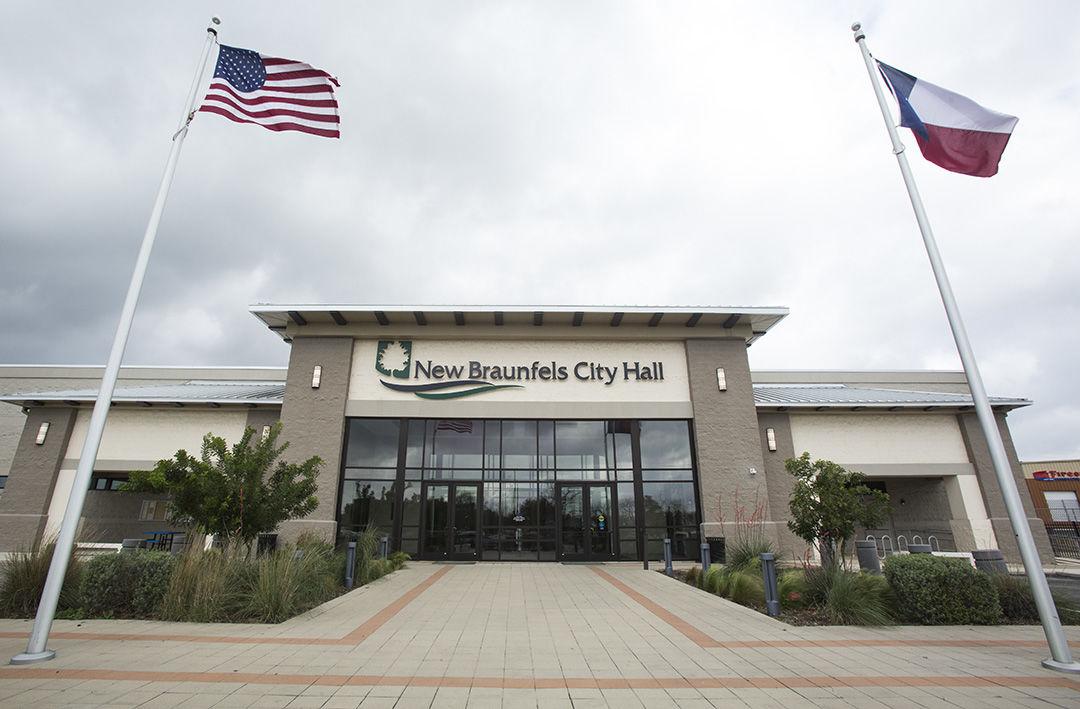
MIKALA COMPTON | Herald-Zeitung
New Braunfels city leaders are formulating a plan to raise roadway impact fees, generating additional funds for roadway projects that would place more of the burden of financing infrastructure improvements onto future growth.
Impact fees are a tool for funding public infrastructure necessitated by new development to offset some of the costs and shift the responsibility to new homes and other developments in New Braunfels.
State statute allows their use for water, wastewater, roadway and drainage facilities.
Since 2007, the city has used these fees from developers to fund public roadway improvements within its boundaries.
During a New Braunfels City Council meeting last week, there was no formal vote on the issue, but members reached a consensus directing city staffers to explore raising impact fees. The current collected fees are 50% of the maximum assessable fees for residential land uses with a $6,000 cap and 25% for non-residential land uses.
Council members have the authority to establish the collected fees at up to 100% of the maximum assessable fees.
Several members expressed support for that kind of increase and a cap increase.
Council member Andres Campos said an increase in impact fees is not “a penalty to developers” but “this is going to get passed on to people who come here and buy houses.”
“If I have to choose between pricing out somebody who hasn’t moved here and pricing out somebody who’s been here for 40 years, I’m going to choose the people who haven’t moved here yet,” Campos said. “If we don’t charge this impact fee, this is going to end up as a burden to our constituents, and that doesn’t seem fair to me.”
The City Council approved the Roadway Impact Fee Study, which includes 10-year land use assumptions and growth projections, service areas with city limits and maximum accessible roadway impact fees, in January 2020.
“The study looks at our permit history, looks at undeveloped land in the city limits and projects out what we anticipate the growth is going to be based on our future land use plan,” said Garry Ford, the city’s transportation and capital improvements director.
The study established six separate service areas within the city, and fees must be used within the service area.
According to Ford, areas 1, 2 and 3 are primarily north of I-35 and areas 5 and 6 are south. The study also includes a capital improvement plan and improvements needed by new development.
City Council then adopted the collected roadway impact fees schedule in February 2020 with an Aug. 1 effective date.
The fee plan was adopted as part of a planned two-year implementation to reach the recommended rate of 65% of the maximum assessable fee for residential land uses and 50% of the maximum assessable fees for non-residential land uses.
However, Ford said that second-year implementation was delayed due to unknowns associated with the COVID-19 pandemic.
Current project funding under the impact fee program includes Barbarosa Road/Farm-to-Market Road 1101 intersection improvements, FM 1044, Schmidt Avenue and County Line Road traffic signal design and construction, and Common Street/Old FM 306 traffic signal and turn lanes construction.
Preliminary design projects that are under consideration for the proposed 2023 bond program funded through the impact fee program include Common Street from Loop 337 and FM 306, Conrads Lane from Goodwin Lane to the city limits, some citywide intersection improvements, Orion Drive from Goodwin Lane to city limits and Solms Road from I-35 to FM 482.
Some previous projects funded with impact fees include the preliminary design phase for Barbarosa Road/Saur Lane from FM 1101 and FM 758, Hill Country Drive, Kowald Lane from I-35 to FM1101 and Waterway Lane from Common Street and Gruene Road.
Traffic signal projects funded under the program include Loop 337 and Hanz Drive, County Line Road and Dove Crossing, and County Line Road and Walnut Avenue.
The Roadway Impact Fee Advisory Committee, composed of the membership of the city’s Planning Committee, would review any recommendation from city staffers before final consideration by council members.
Changes in collected fees would require public hearings during the process.
Ford said he anticipates the new fees can be approved as soon as November and implemented at the beginning of next year.
The next impact fee study is planned for 2024, when land use, growth and development are analyzed and projected for the next 10 years.