City denies Herald’s request for financial documents on taxpayer-funded events
Published: Wed, 08/31/22
City denies Herald’s request for financial documents on taxpayer-funded events
kdhnews.com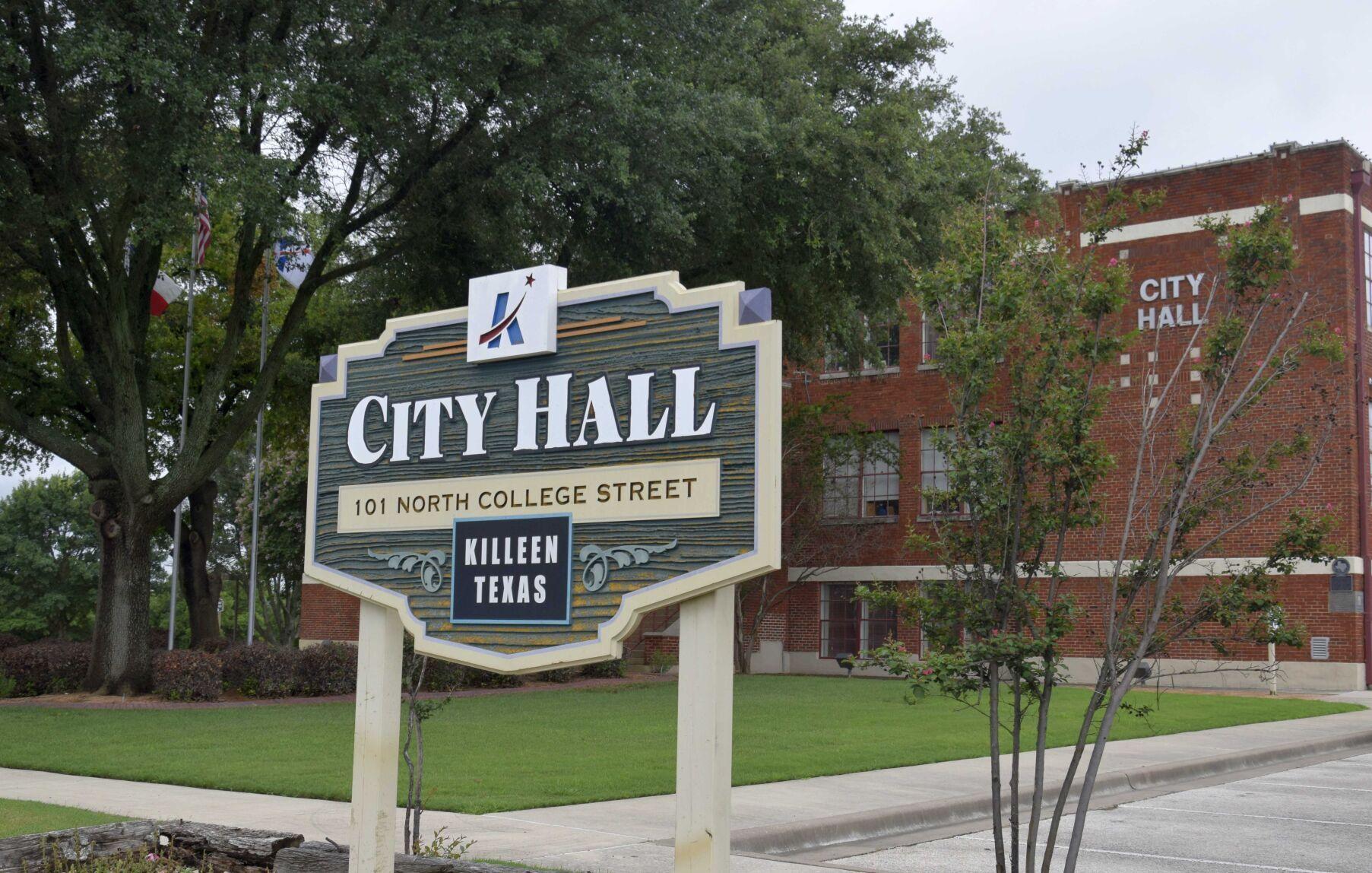
Killeen City Hall
The Killeen city attorney’s office has refused to release to the Herald financial documents that show how public tax dollars are used to help fund Killeen Arts Commission grants.
“The City of Killeen seeks to withhold the information from public disclosure as it considers it to be protected by one or more of the exceptions found within sections 552.101 through 552.154 of the Texas Government Code,” according to the letter dated Aug. 29 seeking an attorney general’s opinion on whether all or some of the information requested by the newspaper is exempt from the Texas Public Information Act.
Those sections of the Texas Government Code cover "information considered to be confidential by law, either constitutional, statutory, or by judicial decision," including personnel information, litigation, bidding, real estate, legal issues, crime scene images, birth and death records, student records, financial securities, audit working papers, personally identifying information, certain vehicle records, some economic development information, certain crime victim records, utility customer information and certain records of minors.
On Aug. 19, the Herald asked the city to provide all applications — approved and rejected — for organizations that applied for Killeen Arts Commission (KAC) grant funding in fiscal year 2022. It also asked the city to release any paperwork that shows whether safeguards are used to ensure public funds is spent lawfully and appropriately, such as receipts, reports and investment-return statements on KAC events.
Under Texas law, the recipient of a public records request must provide the materials to the requester within 10 business days. If it cannot meet that timeline, it must notify the requester about when they information may be released. If it believes that any of the requested material is not protected by the Texas Public Information Act, it must generally ask for a ruling from the attorney general.
On Monday, the Herald asked city spokeswoman Janell Ford, City Manager Kent Cagle and City Attorney Holli Clements to describe which parts of the open records request they believe to be exempt, with the newspaper offering to accept the information with redactions. As of Tuesday morning, the Herald had not received a response.
But Councilman Jose Segarra has told the newspaper that “organizations that use hotel occupancy tax revenue are required to submit proof to the city that they had at least one person staying at one of our hotels for every $3,000 ... granted. Otherwise, they are subject to a penalty,” and that “applicants are also required to submit proof when they apply for funding that they are a 501(c)(3) with current verification from the state and a letter of exemption from the current year from the Internal Revenue Service.”
Segarra also said that the city “does not pay for 100% of the events expense and the reason some charge is because they a required to provide a match depending on the amount of the grant. So, some charge at the event and some find the match through other means such as finding sponsors.”
City approves $259,668 in funding
Killeen City Council members on Aug. 23 approved $259,668 in KAC grant funding for 27 events in fiscal year 2022-23. Those events are partially paid for with hotel occupancy tax revenue and American Rescue Plan Act money.
“One of the primary responsibilities of the Arts Commission is to make recommendations to City Council regarding the allocation of hotel occupancy tax funds that are designated for grants to the arts,” Interim Executive Director of Finance Judith Tangalin wrote to City Manager Kent Cagle in an Aug. 16 staff report. “Texas Tax Code Chapter 351 governs the use of municipal hotel occupancy taxes. Section 351.101 requires two criteria be met to expend municipal hotel occupancy tax revenue.”
The criteria: Expenditures must promote tourism and the convention and hotel industry, and they must meet one of nine statutorily provided categories, according to the staff report.
“The encouragement, promotion, improvement, and application of the arts is one of the nine categories. Section 351.103(c) limits the amount of hotel occupancy tax revenue used for the arts to 15% of total hotel occupancy tax revenue collected.”
In June, nine organizations provided their grant applications to the city’s arts commission, Tangalin said in the report.
“The events proposed by the grant applicants were evaluated by the Arts Commission following the Arts Commission Grant Allocation Policy adopted by City Council on April 14, 2020. One request was disqualified.”
Grant recipients
The approved applicants are Armed Forces Natural Hair and Health ($92,245), IMPAC Outreach ($46,691), Vive Les Arts Societe ($41,226), Songhai Bamboo Roots Association (29,407), Vive Les Arts Children’s Theatre ($20,772), Killeen Sister Cities, Osan, Korea, Committee ($12,295), KZamore Foundation ($5,554) and Artesania y Cultura Hispana ($4,478).
This fiscal year, the city used $37,167 in HOT revenue and $192,455 in ARPA funding for the $229,662 total used to fund several KAC events. Under Texas law, municipalities may use HOT money “only to directly promote tourism and the convention/hotel industry,” according to the state comptroller’s website. “This means the proceeds should be spent on projects or events that result in visitors or attendees staying overnight in the community, generating more hotel occupancy tax.”
The state hotel occupancy tax rate is 6%, and the Killeen rate is 7% — for a total tax on rooms of 13%.
HOT revenue accounts for 1.1% of the city’s total revenue. In the proposed 2023 budget, officials expect to receive more than $3.1 million in HOT money — down from almost $3.6 million this fiscal year. In fiscal year 2020-21, that figure was about $2.7 million.
President Joe Biden signed ARPA into law in 2021 — a nearly $2.9 trillion economic stimulus bill that allocated $350 billion from the Coronavirus State and Local Fiscal Recovery Fund for state and local governments.