CNET
Zachary McAuliffe
SpaceX is inching closer to being ready to launch its next-generation rocket on its first demonstration flight to space after another successful static firing for Starship's Super Heavy booster.
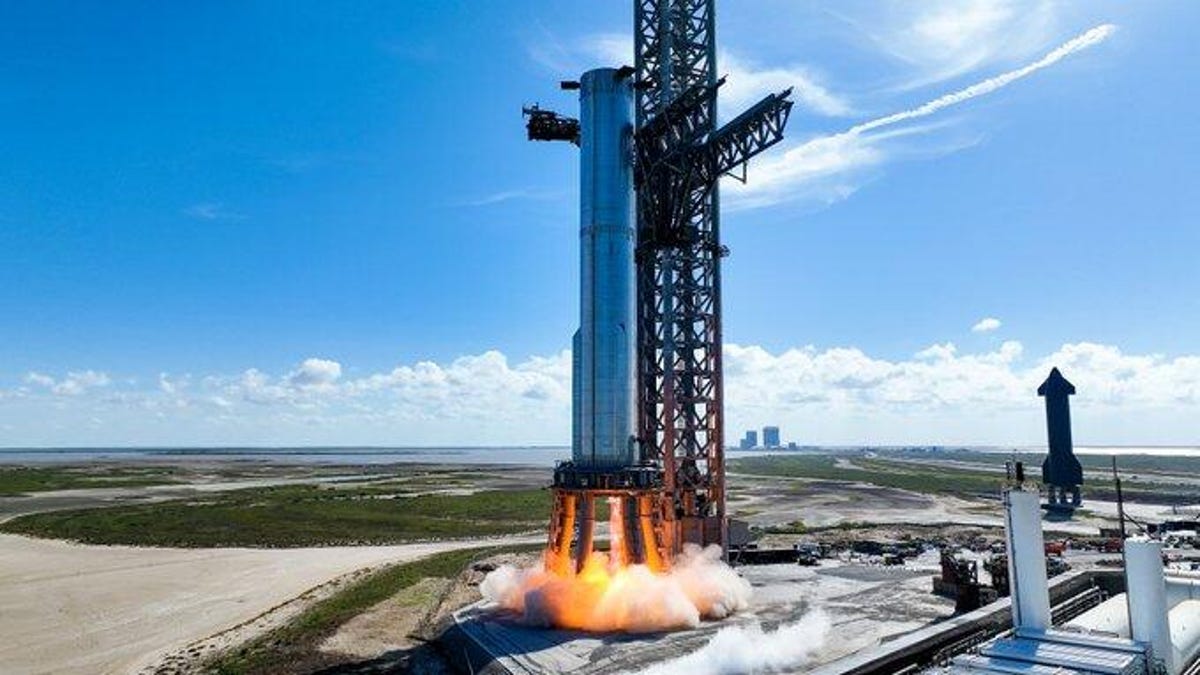
On Monday, the team at the Starbase development center in Texas lit up a Super Heavy loaded with seven Raptor engines for the first time. That's more than double the previous record, when SpaceX unleashed the fire under three Raptors just three weeks ago.
A static fire test is the rough equivalent of revving a car engine in neutral. The booster is held to the ground while the engines are fired. On Monday, the prototype dubbed Booster 7 successfully fired its seven engines for about 10 seconds.After the test, Elon Musk said on Twitter that Booster 7 will move back to Starbase's high bay "for robustness upgrades" while another booster will roll out for testing.
"Next big test is probably full stack wet dress rehearsal, then 33 engine firing in a few weeks," Musk wrote.
SpaceX is still awaiting a launch license from the FAA for the first orbital test flight of Starship. The company cleared a major hurdle in June with the completion of an environmental review that allows the launch to go forward, but requires dozens of modifications to the mission plan.
Once SpaceX has the green light from regulators, Starship will be able to launch from Starbase and take a brief trip to orbit before performing a splashdown landing in the Pacific Ocean off the coast of Hawaii. Super Heavy will separate from Starship shortly after launch and attempt to land on a modified drilling rig in the Gulf of Mexico.
All of this is leading up to Starship's eventual role in NASA's Artemis program to return astronauts to the surface of the moon as soon as 2025.