Decriminalize Denton entering critical stretch in push to change city’s marijuana policies
Published: Fri, 07/15/22
Decriminalize Denton entering critical stretch in push to change city’s marijuana policies
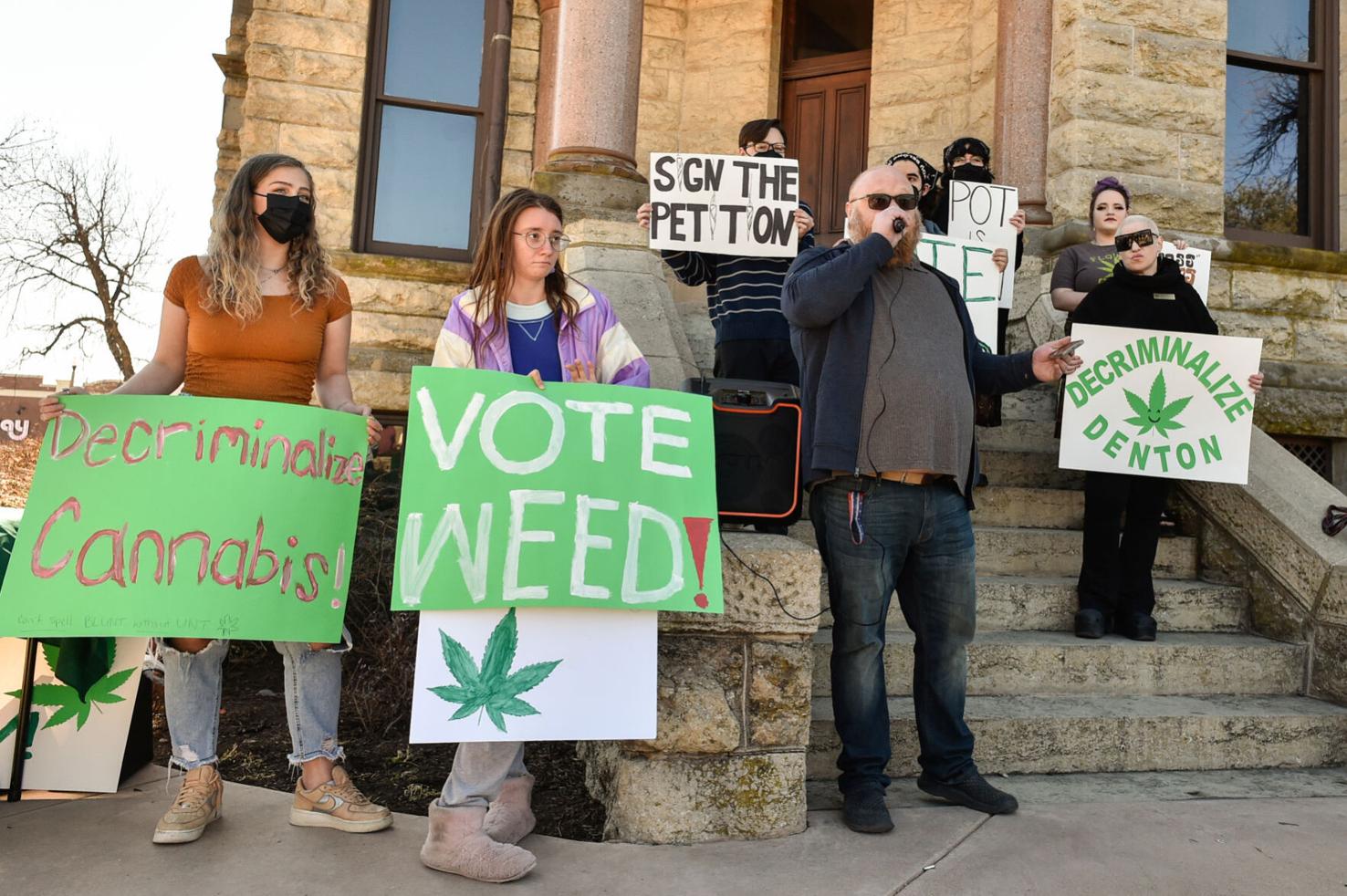
Stanton Brasher, a spokesperson for Decriminalize Denton, center, gives a speech during the petition kickoff event at the Courthouse on the Square on Feb. 19. On Tuesday, the Denton City Council is scheduled to decide what happens next after a sufficient number of residents signed the petition to decriminalize misdemeanor levels of marijuana. The options are to approve the decriminalization ordinance or send it to voters to decide in November
DRC file photoA supermajority of Texans want it. Poll after poll reveals that more than 85% support decriminalizing marijuana at the state level, say supporters of Decriminalize Denton’s petition, which the Denton City Council will either approve or put on the November ballot during Tuesday’s council meeting.
Decriminalize Denton will be hosting a town hall meeting Saturday from 2 to 4 p.m. at North Branch Library to answer questions about the petition. The group also will be holding a rally in support of the petition at 6 p.m. Tuesday in the courtyard outside Denton City Hall.
The ordinance would, as Decriminalize Denton’s Nick Stevens wrote in a July 9 Denton Record-Chronicle op-ed:
- Eliminate all citations and arrests for possession of misdemeanor amounts of cannabis.
- Eliminate citations for paraphernalia.
- Prevent police from using the “smell test” to stop and frisk for pot possession.
- Prevent the city from paying for THC testing of substances thought to contain cannabis.
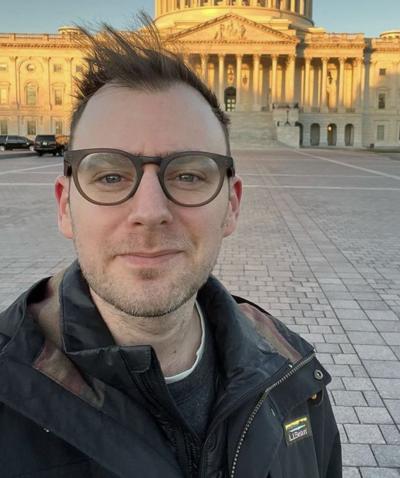
Nick Stevens
“Through this ballot initiative, we the people, not council, will be the deciding body to decriminalize cannabis in Denton,” Stevens wrote.
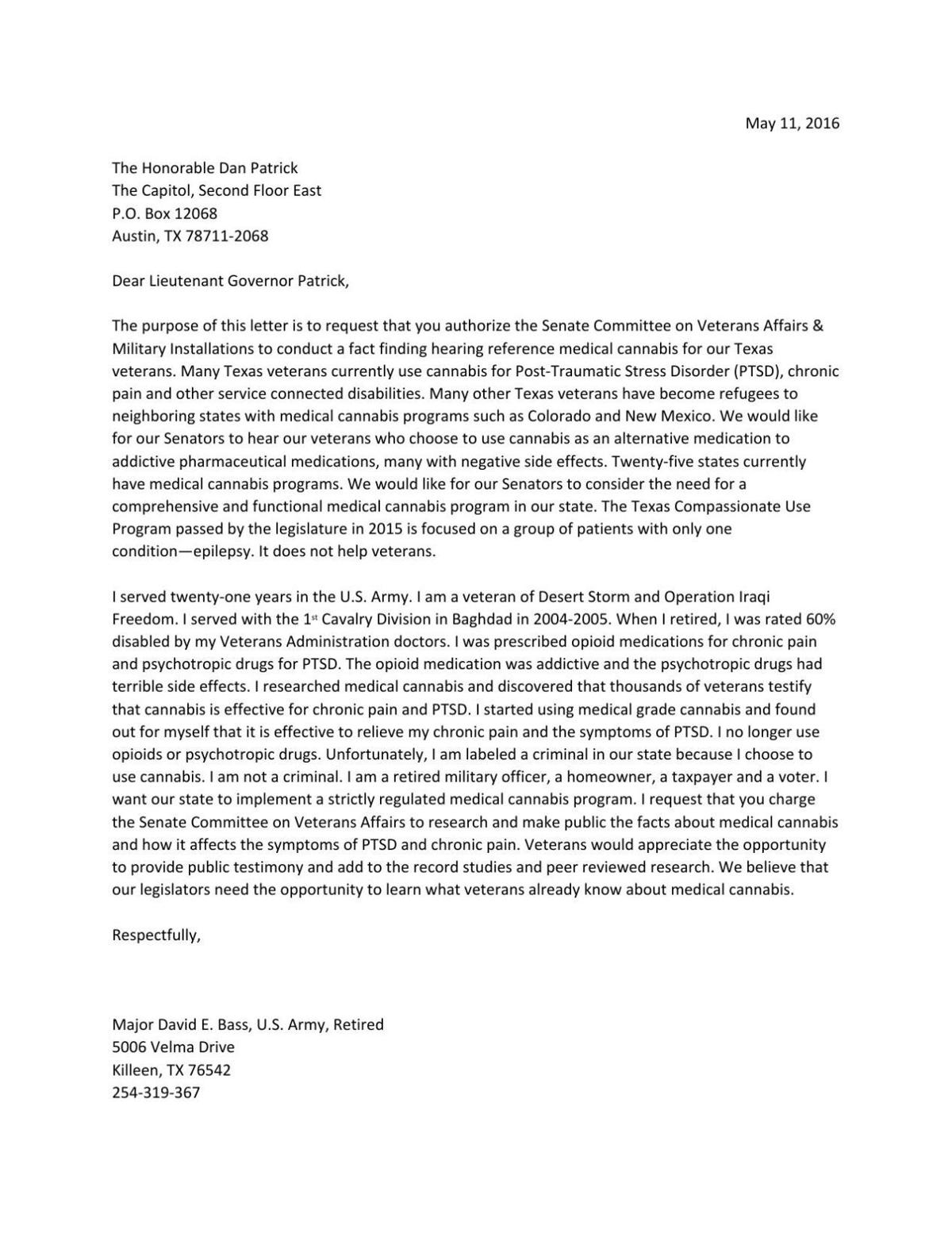
For nearly a decade now, Texas veterans have been asking for state legislators to pass legislation in support of medical marijuana. In 2017, they created Operation Trapped, a veteran lobbying movement with thousands demanding an alternative to opioid treatment. David Bass, a veteran who helped lead the movement, wrote a letter to Lt. Dan Patrick, begging him to take action:
“The opioid medication was addictive and the psychotropic drugs had terrible side effects. I researched medical cannabis and discovered that thousands of veterans testify that cannabis is effective for chronic pain and PTSD. I found out for myself that it is effective to relieve my chronic pain and the symptoms of PTSD.
“Unfortunately I am labeled a criminal in our state because I choose to use cannabis. I am not a criminal. I am a retired military officer, a homeowner, a taxpayer and a voter.”
Yet the Legislature has denied them every time.
And while the Legislature did pass and expand the Texas Compassionate Use Program to include post-traumatic stress disorder and anxiety as conditions for which medical marijuana may be prescribed, it does not cover people who suffer from chronic pain. The program is also too expensive and limited in its strength with a 1% THC cap, said Julie Oliver, the executive director of Ground Game Texas, a grassroots movement that was behind the ordinance to direct police to make misdemeanor amounts of cannabis a low priority in Austin.
The group worked closely with Decriminalize Denton on its petition to unofficially decriminalize it in Denton.
Letting voters decide
Ground Game Texas also is helping residents in San Marcos with their petition, which was recently submitted to the city secretary for verification, and in Killeen and Harker Heights, two cities with large veteran populations.