Consultant pushes smarter development, focus on north Killeen in comprehensive plan meeting
Published: Wed, 07/27/22
Consultant pushes smarter development, focus on north Killeen in comprehensive plan meeting
kdhnews.com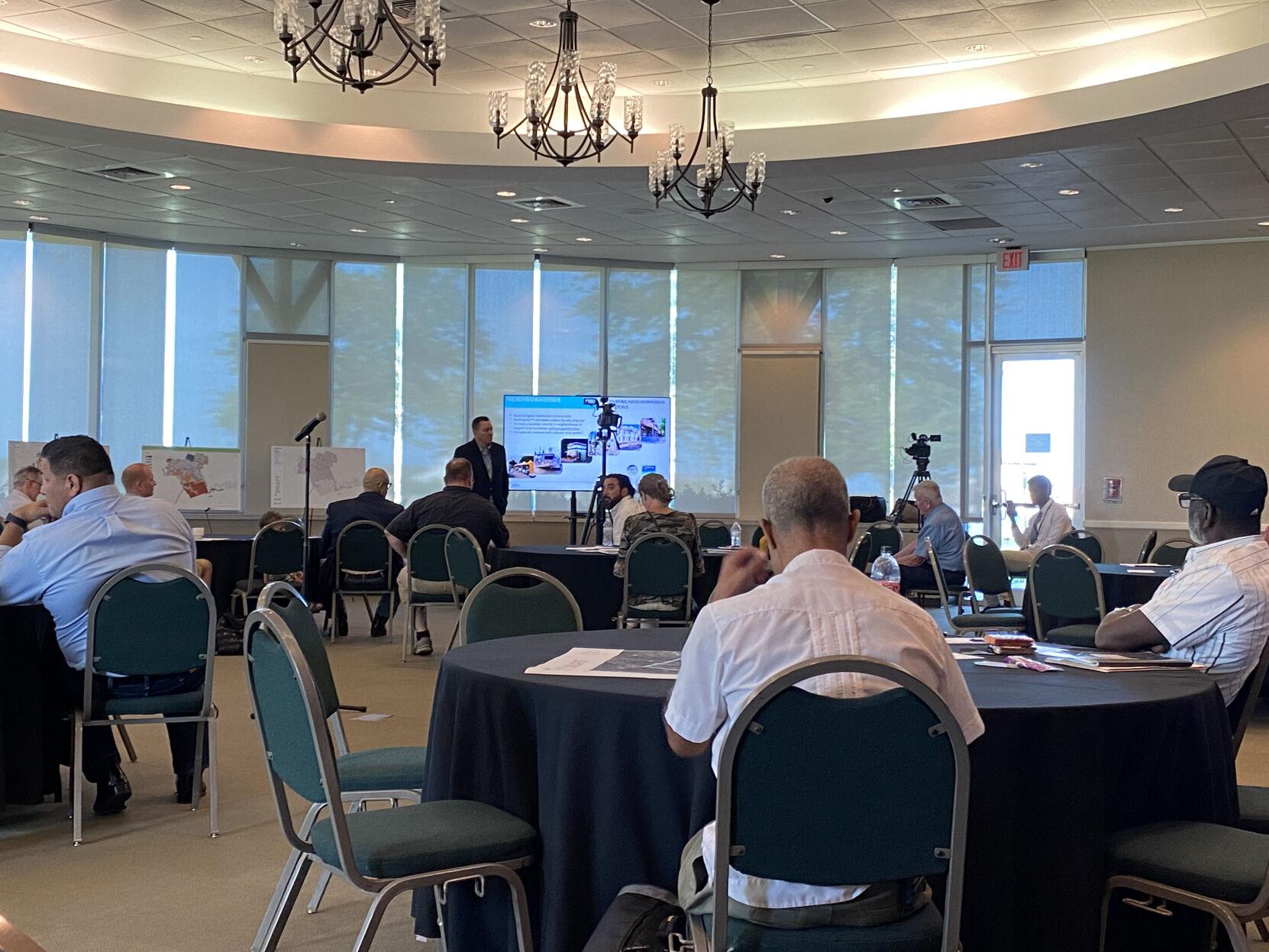
Kevin Shepherd of Verdunity Engineers (standing) talks about Killeen’s proposed comprehensive plan on Monday at the Killeen Civic & Conference Center.
Paul Bryant | apIn an overview of the Killeen City Council’s proposed comprehensive plan, consultant Kevin Shepherd said Monday that it will take decades to reconcile development gaps between the north and south ends of the city.
“You’re adding so much development in south Killeen that you’re sabotaging north Killeen. It’s going to take you longer than 20 years to ultimately get there. You’re too far behind,” Shepherd said during a public hearing on the comprehensive plan held at the Killeen Civic and Conference Center.
About 40 people, including city staff, were in attendance, as well as Mayor Debbie Nash-King and Councilmen Riakos Adams and Jose Segarra.
Shepherd, the CEO of Verdunity of Dallas, also criticized how south Killeen is being developed.
“The quality of construction and design has got to be raised in Killeen,” he said. “It’s cookie-cutter, and it’s not getting neighborhood feel.”
In north Killeen, planning there has been effectively non-existent, Shepherd said. Furthermore, the city’s income base remains stagnant while maintenance and utility costs have increased.
“The growth management is so important,” Shepherd said. “How can you incentivize growth to the north? There’s a lot of potential in north Killeen to build the kind of neighborhoods that people are itching to get into.”
That can happen through infill — building homes on empty lots, developing small parks, “complete walkable neighborhoods” and incremental development, Shepherd said.
“You’re going to see growth happening around here, but what does it look like?” he said. “You’re not going to be a Temple or Harker Heights next door. But you can just be gritty by yourself.”
As he did just over a year ago during a community meeting, Shepherd said that Killeen’s population quickly expanded in the 1960s and 1970s tenfold. But its population density dropped from six people per square acre in 1950 to about three people in 1990.
As for “walkable neighborhoods” — residential areas where parks, retailers and other businesses and schools can be reached within 15 minutes on foot — those should be the preferred development over subdivisions, Shepherd said.
“It’s mobility and connectivity — aligning transportation with values. And downtown has got to be the hub for cultivating fiscal health and local wealth,” he said.
City officials plan to hire a downtown revitalization director in August. Shepherd said that in north Killeen, residents said that security is needed as well as a supermarket, homelessness should be reduced, “better” health-care options made available and “family-oriented” businesses opened downtown.
“Neighborhoods are more than subdivisions,” Shepherd said. “We see a lot of subdivisions but not many neighborhoods. You also need a vibrant downtown. (That) is very important to the fiscal health of the community overall, and it is the cultural heartbeat of the city.”
Even so, the city faces a number of challenges in the comprehensive plan.
“There are three things that came up very early,” Shepherd said. “The first one is the funding gap. There are a lot of wants and needs in the community but a lack of alignments between various plans and policies within the city.”
For example, the consultant said, when residential communities are built, the developers are responsible for infrastructure but Killeen is responsible for upkeep.
“When a developer comes in, the developer will build those streets. The city is on the hook to maintain that infrastructure forever. A street will typically last (40-50 years). If Killeen were to rebuild all of the streets right now, what would it cost?”
Shepherd said that number is $818 million.
“That comes out to, over a 20-year lifespan, over $40 million a year.”
City Council adoption of the comprehensive plan is scheduled for Aug. 23.