Denton council member’s lawsuit to stop recall adds more council members, mayor
Published: Mon, 08/01/22
Denton council member’s lawsuit to stop recall adds more council members, mayor
62e6c48f4c809.pdf.pdf (townnews.com)
Denton City Council member Alison Maguire keeps an eye on election results on the evening of May 1, 2021, at East Side Denton. Maguire edged out incumbent John Ryan with 53% of the vote to win the District 4 seat but now faces a recall election, contested by a June 8 lawsuit, after the city voted to redistrict in December 2021.
DRC file photoNearly two months have passed since Denton attorney Richard Gladden filed a lawsuit to stop Denton City Council member Alison Maguire’s recall election from occurring in November. His argument for why Maguire couldn’t be recalled seemed simple enough for people to understand, and in emails to the Denton Record-Chronicle, his apparent frustration that some couldn’t seeped into his language, appearing in capital letters, parentheses and quotation marks.
In a June 15 email to the Record-Chronicle, Gladden compared what former Denton council member Don Duff was trying to do by recalling Maguire to the June 14 special election to fill the unexpired term of the U.S. representative for the 34th District of Texas.
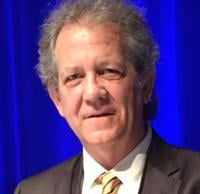
Richard Gladden
“You may be surprised to learn (no one else is) that the only ‘constituents’ permitted to vote in that election were those who continue to reside in ‘old’ Texas U.S. District 34, even though the Texas legislature revised that district in the congressional redistricting plan it enacted last October, 2021,” Gladden wrote in his June 15 email. “Perhaps you should notify the elections administrators out there that they got it all wrong, and that only voters in the new districts, covering part of the same geographic area as ‘old’ District 34, were ‘constituents’ entitled to vote to fill this unexpired term in the 34th congressional district?”
And that is the crux of Gladden’s lawsuit: Local constituents who didn’t vote for Maguire in the May 2021 election — e.g., those in Robson Ranch — should not be allowed to sign a petition to recall Maguire, regardless of whether City Council signed a Dec. 21 ordinance to adopt new district lines that affected those represented by Maguire and Denton council member Jesse Davis.
The new district lines were adopted after the 2020 census data was released, and the city claims they went into immediate effect.
In late June, shortly after Gladden filed his lawsuit to stop it, council members voted unanimously to send Maguire’s recall election to the November ballot box.
This past Tuesday, Gladden added Denton Mayor Gerard Hudspeth and all of the council members except for Maguire, whom Gladden said he was representing, to his lawsuit filed June 8. He said he had overlooked including them in the lawsuit when he initially filed it.
“If the court is going to order the city to stop doing something, you have to sue the individual City Council members in the official capacity,” Gladden said.
He also represents plaintiffs Kari Caruthers, Emily Meisner and Tracy Runnels and lists several other defendants besides the mayor and council. Those include Duff, Denton City Secretary Rosa Rios, Denton County Elections Administrator Frank Phillips and the city of Denton.
“I don’t see how he has any basis for this,” Duff told the Record-Chronicle in early June. “[Robson Ranch] got gerrymandered into District 4. We are District 4.”
Denton city spokesperson Stuart Birdseye said the city doesn’t comment on pending litigation. Hudspeth made the same claim. Council member Brian Beck deferred to Gladden or the city attorney, and fellow council members Vicki Byrd and Brandon Chase McGee hadn’t responded to requests for comment by Sunday afternoon.
“Council Member Maguire’s lawsuit is legally creative, but without merit,” Davis wrote in a late Friday morning email. “The Council passed the redistricting ordinance with express intent that it was effective immediately. So Council Member Maguire now represents the District 4 she voted for, and is accountable to those voters. The only way to change that would be to repeal the redistricting ordinance and undo the tortured gerrymandering Council undertook.”
Council member Chris Watts claimed that by adding their names to the lawsuit now instead of when he originally filed, Gladden simply reset the whole court process. If the jury trial isn’t set by time of the Nov. 8 election, the recall election could be delayed, as Gladden told the Record-Chronicle in early June: “Pending the file outcome of the case, which may be trial, and a trial cannot be provided before Nov. 8. The whole case could be moved, and there wouldn’t be an election on Nov. 8.
“Everything would be put back to square one,” Gladden said.
The next uniform election date after the Nov. 8 election is in May 2023, when Maguire’s and Davis’ terms end.
“I’m not sure why it wasn’t done in the beginning unless it was a delay tactic,” Watts said.
Though the trial date hasn’t been set, Gladden and the plaintiffs are demanding a jury trial in the 431st District Court. The jury will determine how the second sentence in Article IV of Denton’s City Charter about recall elections is defined:
“… whether the [recall] petition is signed by qualified voters of the constituency of the council member whose removal is sought equal in number to at least twenty-five (25) percent of the number of the votes cast for that council member and all of his opponents in the last preceding general municipal election in which he was a candidate. As used herein ‘constituency’ shall mean the qualified voters eligible to vote for the council member whose removal is sought, either by geographical district or at large, as the case may be.”
As Gladden wrote in the June 8 lawsuit, the sentence defining “constituency” omits use of “who were” or “who are” between “voters” and “eligible.” Inserting “who are” between “voters” and “eligible,” Gladden argued, would conflict with the acknowledged use of the past tense in the previous sentence. But he said when “who were” is interlineated between “voters” and “eligible,” no conflict between present and past tense appears in the text as a whole.
To avoid the inconsistency in tense, he wrote, the second sentence in the paragraph should read: “As used herein ‘constituency’ shall mean the qualified voters [who were] eligible to vote for the council member whose removal is sought, either by geographical district or at large, as the case may be.”
In his mid-June correspondence with the Record-Chronicle, Gladden attached an April 6 article by the Sacramento Bee that discussed a recall election of a Sacramento City Council member who, like Maguire, represents new voters in a new district after the city redrew the district maps after the 2020 census.
There, unlike in Denton, Sacramento City Attorney Susana Alcala Wood issued a formal opinion stating council members represent their old district until their term ends instead of when council votes to approve redistricting and that only voters from their old districts could recall them, according to the Sacramento Bee.
Wood’s formal opinion, the Bee writes, reversed the city’s practice of adopting new council district maps immediately after the redistricting process.
On Friday, Gladden spoke with the Record-Chronicle about the 1976 Oregon attorney general’s opinion, as well as Los Angeles, the first city to implement the recall provision in its city charter in the early 1900s.
“This all comes down to the original intent of the recall process, going back to 1903, and the history of recall measures in America, or actually worldwide,” Gladden said.
“The Father of the Recall,” John R. Haynes, a renowned physician of California elites and president of the California Direct Legislation League, had written a letter to Lincoln Steffens, an investigative journalist and one of the leading muckrakers of the Progressive Era in the 20th century, and discussed what led to Los Angeles becoming the first community in the nation to enact a “businesslike plan to remove inefficient or corrupt officials from office.”
In “The Recall of Los Angeles,” republished in Equity Series Vol. IX, No. 3 in 1907, Haynes discussed a sixth ward (district) councilman who had upset his constituents because he had “the interests of the corporations at heart, rather than those of his constituents.”
“The machinery for accomplishing this result is exceedingly simple,” Haynes wrote. “Upon the presentation to the city council of a petition signed by 25 percent or more of the voters who elected the objectionable official, asking that a special election be called to replace such official, the council must, within a specified time, call such election.”
About 30% to 40% of the voters in his ward, Haynes claimed, signed a petition to recall the council member.
Gladden claimed that Los Angeles’ recall amendment “spread like wildfire, and within 10 years, hundreds of cities and several state constitutions had been amended to include the recall.”
In his letter, Haynes said he believed every city in California had adopted a new charter with the recall initiative included and learned that Direct Legislation workers of Oregon planned to initiate a state constitutional amendment to include it.
Former Oregon Attorney General Lee Johnson took a similar stance as Haynes on Page 3 of his 1976 opinion. Johnson had been asked if a Multnomah County commissioner, who had been elected at-large, could be recalled by voters in the new district he’d been assigned, either by reelection or recall or by a city charter amendment.
“We conclude that a county commissioner elected in a county at large, although later ‘deemed’ to be serving in a single district of the county, can only be recalled by the constituency which conferred office upon him: the county at large,” Johnson wrote in his 1976 opinion. “Article II, Section 18, of the Oregon Constitution does not permit otherwise.”
But unlike in California and Oregon, in Texas, a recall or remove article doesn’t appear in the Texas Constitution. Instead, recall elections are defined individually by local charters.
As Ballotpedia, a nonprofit digital encyclopedia of American politics and elections, points out on its website, “the laws that govern the available procedures, such as how many signatures are required to force a recall election, can and do vary from jurisdiction to jurisdiction within the state.”
Texas isn’t the only government that doesn’t have one. The U.S. Constitution also doesn’t have a recall provision for elected federal officials. While some states have provisions to recall elected federal officials in their state constitution, the Supreme Court hasn’t ruled on whether it is constitutional at the federal level, according to Ballotpedia.
Maguire’s case will boil down to how a jury will define the second sentence in Article IV of Denton’s city charter and whether the recall provision should read either “who are” or “who were” between “voters” and “eligible.” Gladden prefers the latter because it makes more sense and falls in line with what Haynes, Johnson and others have claimed.
“In short, the recall petition submitted by Duff, which has been found ‘sufficient’ by Defendant Rios, legally does not contain the requisite number of recall petition signers necessary to authorize a recall election of Plaintiff Maguire,” Gladden wrote in the June 8 lawsuit.
Either way, as Gladden points out in the June 8 lawsuit, the jury’s decision will determine whether those who elected Maguire will have representation for six months until the May 2023 election if Maguire is recalled, since they didn’t elect Davis in the May 2021 election.
But it’s also an argument Duff and other Robson Ranch voters are making now since they didn’t vote for Maguire and their elected official, Davis and the city have claimed, no longer represents Robson Ranch unless a jury rules otherwise.
A jury trial hasn’t yet been scheduled.