Police and fire will get a smaller slice of San Antonio’s budget than in last decade
Published: Thu, 08/11/22
Police and fire will get a smaller slice of San Antonio’s budget than in last decade
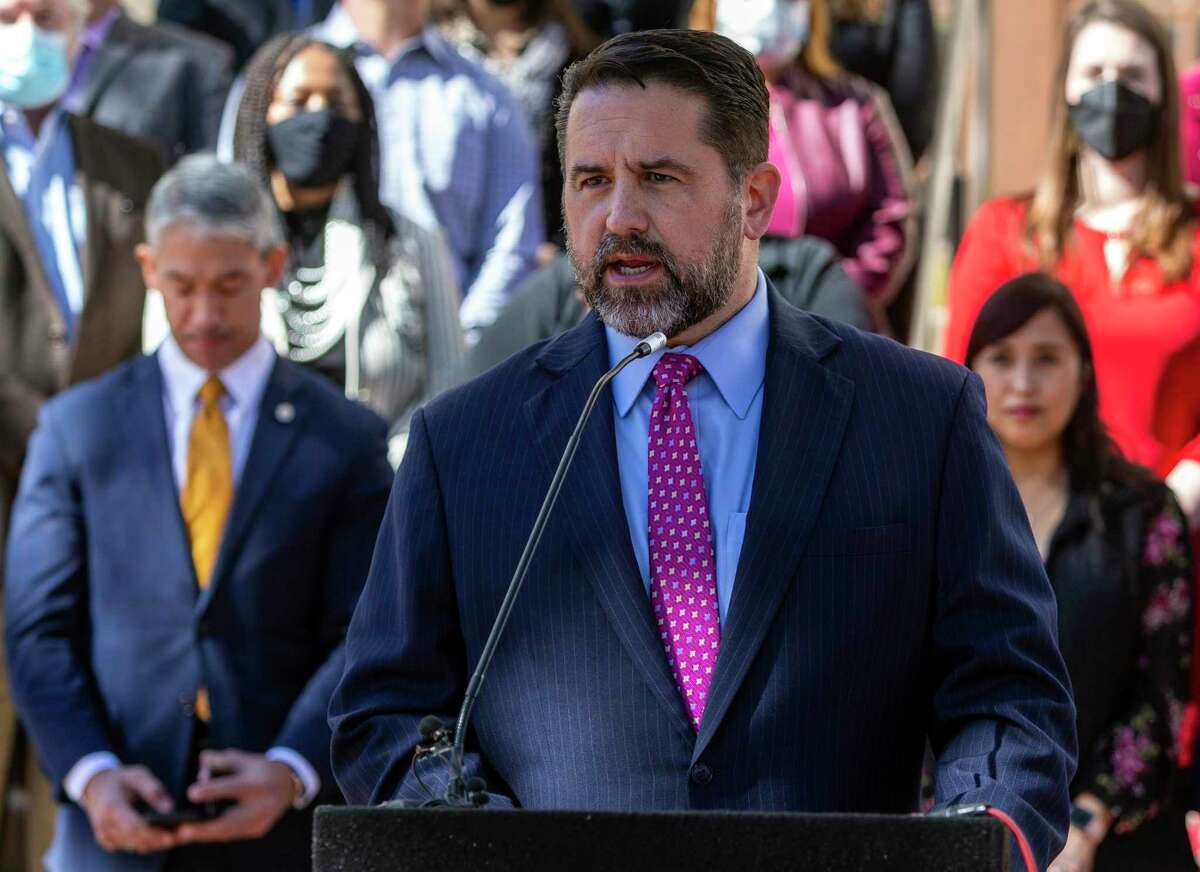
City Manager Erik Walsh will present a proposed $3.4 billion budget for the fiscal year starting Oct. 1 to City Council on Thursday, Aug. 11, 2022.
William Luther, StaffThe city of San Antonio will spend less on police and fire protection next year — as a percentage of its overall budget — than it has in any year over the last decade.
The city would funnel 60.7 percent of its general fund to public safety under a proposed budget for fiscal year 2023, which begins Oct. 1.
City Council is slated to review the proposed spending plan on Thursday.
The city is looking at a $3.4 billion budget for the 2023 fiscal year — up from this year’s $3.1 billion. That includes a $1.5 billion general fund, an increase of 11 percent from this year; $1.2 billion for restricted funds like airport operations; and a $641 million capital budget for infrastructure improvements and other projects.
The general fund pays for basic services, such as fire and police services, street repairs, parks, libraries and senior centers. It’s funded with sales and property tax revenue and contributions from city-owned CPS Energy and San Antonio Water System.
Eight years ago, as they battled with the police and fire unions over new contracts, city officials said growing public safety costs threatened to crowd out other basic services. City Council pledged to keep public safety spending below 66 percent of the general fund.
Last year’s budget kept police and fire at 63.3 percent of the general fund, which is funded . Five years ago, it was 65 percent.
However, that doesn’t mean the city will spend less on police and fire. The recently-approved police union contract includes pay raises that make San Antonio police officers the second-highest paid in Texas behind Austin.
Nevertheless, San Antonio’s revenue growth is outpacing the growth in police and fire spending.
Projections for the city’s next budget have looked good all year. Homeowners have seen their property appraisals skyrocket, which will result in more revenue for the city, even with tax relief measures approved by City Council.
And the proposed budget would add 78 officers to the police force.
Of those, 50 of the positions depend on the city receiving a federal grant that would help cover the cost over time — although San Antonio would eventually have to pick up the full tab for the new officers.
The other 28 officers would staff the new North St. Mary’s Street police substation, a 2017 bond project that is slated to open in January 2024.
Increasing the size of the San Antonio Police Department has become a divisive topic at City Hall. East Side District 2 Councilman Jalen McKee-Rodriguez has ardently opposed adding more officers to the police force. He wants the city to spend more on social services to address the root causes of crime.
That puts him at odds with North Side councilmen Manny Pelaez and Clayton Perry, who want to hire more officers as San Antonio’s population grows.
Big raises
Police officers aren’t the only ones in line for a pay raise. The proposed budget would significantly increase wages for civilian municipal employees.
The city plans to raise its entry-level wage from $15.60 to $17.50 an hour, and give a 5 percent pay bump all non-public safety workers. On top of that, they’ll see a minimum 2 percent “market adjustment.”
With runaway inflation cutting into city workers’ spending power and private-sector employers luring away many of them with bigger paychecks, City Manager Erik Walsh said, “We don’t have the luxury of not doing something.”
This story will be updated.
megan.stringer@express-news.net
Written ByMegan Stringer
Megan Stringer joined the Express-News in October 2021 as the City Hall reporter. She previously reported on workplace issues for the Wichita Eagle in Kansas, where she wrote extensively about local police union contract negotiations and an overwhelmed state unemployment system in the pandemic. While in Kansas, Megan was a corps member with Report for America, a national journalism service organization. She has also covered business and economic development for the Wausau Daily Herald in Wisconsin. Megan holds a bachelor's degree in journalism from DePaul University. She grew up in St. Louis.