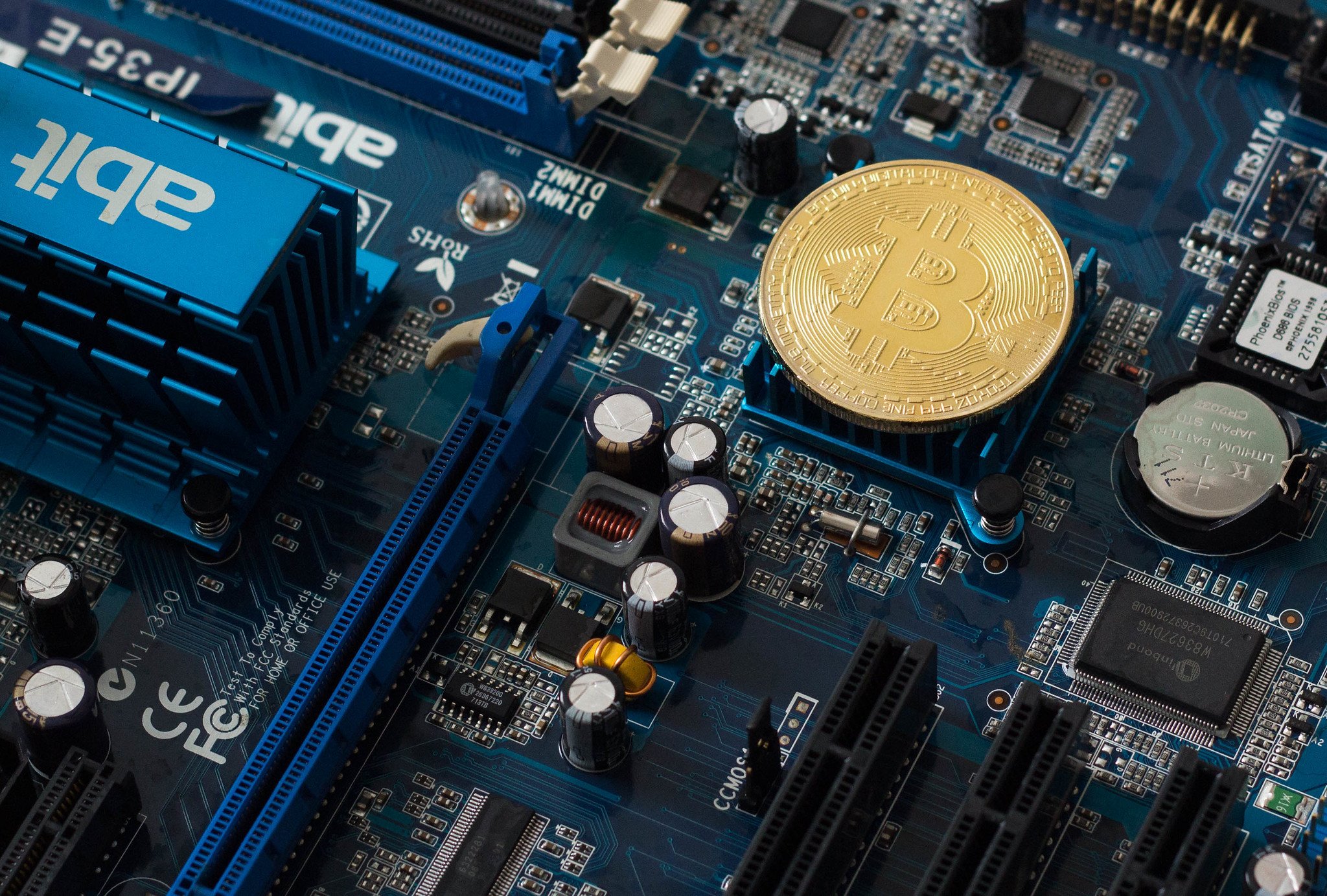
Despite the FTX crash, ERCOT continues to court the cryptocurrency industry.
Texas Observer
by DELGER ERDENESANAA
While the collapse of cryptocurrency exchange FTX earlier this month dominates national headlines, the Texas blockchain and Bitcoin community is determined to forge ahead.
“Texas is home to the largest Bitcoin mining sites in North America, and fast achieving status as the undisputed Bitcoin mining capital of the world,” Texas Blockchain Council President Lee Bratcher said at an industry summit in Austin last week.
Enticed by relatively cheap electricity, businesses that mine energy-hungry Bitcoin and other cryptocurrencies have been knocking on the state’s door. But after a summer of record heat and energy demand, and on the heels of Winter Storm Uri in 2021, concerns about the Texas electric grid loom large.
Those worrying about crypto mining’s power use include Senator Elizabeth Warren, U.S. Representative Al Green, and five other federal lawmakers who wrote in October to the Electric Reliability Council of Texas (ERCOT), which maintains the state’s power grid. The legislators’ letter outlined concerns that the state’s cryptocurrency boom could raise Texans’ electricity bills, destabilize the grid, and exacerbate climate change. Warren, Green, and their colleagues pointed out that Texas is already home to roughly a quarter of U.S. bitcoin mining and that state leaders—including ERCOT’s previous Interim CEO Brad Jones—have actively courted the industry.
“Given the impacts of crypto-mining on the climate, the grid, and to ratepayers, ERCOT’s support for this industry is irresponsible and highly concerning,” the lawmakers wrote.
The letter asked ERCOT to answer a list of questions by October 31. Nearly a month later, the agency has not sent a formal reply yet. During a press conference introducing Pablo Vegas as ERCOT’s new CEO, Vegas said he looked forward to responding. For now, he simply said, “We want to be able to serve any business that wants to do business in Texas. And that includes crypto miners.”
“Given the impacts of crypto-mining on the climate, the grid, and to ratepayers, ERCOT’s support for this industry is irresponsible and highly concerning.”
The lawmakers singled out Texas partly because of its independent grid, which has few connections to the rest of the country. Independence allows Texas to escape federal oversight, but Uri showed that isolation also makes Texas more vulnerable. As the climate changes, the grid needs to withstand hotter summers, worse storms, and less predictable weather overall.
“We don’t have a means by which we can link up with another grid in a time of dire straits. We are literally on our own … when the heat waves come our way, we have fewer options,” said Green, a Democrat who represents southwest Houston and the only Texas legislator to sign the letter.
Today’s cryptocurrency is a consequence of the 2008 financial crisis, according to Molly White, a software engineer and cryptocurrency researcher who runs the popular website “Web3 is Going Just Great.” Many crypto evangelists in the United States believe that the federal government sacrificed everyday Americans’ hard-earned wealth to bail out banks and that government can’t be trusted with people’s money. They view Bitcoin and other cryptocurrencies as a decentralized alternative.
“Crypto is really born out of very libertarian ideologies around freedom from state control of money,” White said.
It’s not a neatly partisan issue: Democrat Beto O’Rourke’s gubernatorial campaign accepted $1 million from now-disgraced FTX founder and former billionaire Sam Bankman-Fried.
The most popular cryptocurrency, Bitcoin, relies on a public, distributed, digital ledger system (or blockchain) that requires participating computers to crank out tremendously energy-intensive calculations. Computers that successfully complete these calculations get to validate transactions for the public ledger and get their own, new bitcoins in return—known as “mining” the currency. The bar for validating transactions rises constantly, and these days mining a single bitcoin requires more electricity than the typical American household uses over several years, according to a 2021 New York Times analysis.
Some other cryptocurrencies, most famously Ethereum, use slightly different systems that require far less computing power and electricity. But Texas is dominated by Bitcoin. Because electricity is a major cost for crypto miners, they have an incentive to follow cheap energy. And in the United States, Texas hits the spot.
“The main attraction is cheap wholesale electricity prices,” said Carey King, assistant director of the Energy Institute at the University of Texas Austin.
This is true across the state, but especially so in West Texas, where new wind and solar farms are popping up faster than new transmission lines to get that power to major cities. This “stranded” renewable energy contributes to very low and occasionally even negative electricity prices in West Texas. At the same time, oil and gas producers in the Permian Basin and the Eagle Ford Shale regularly flare, or burn off, natural gas leaking from their wells. Crypto miners see areas with these underused renewables and wasted gas as prime locations for their facilities, King explained.
Industry insiders argue that using this energy is a service to the grid and to the public, as is crypto mines’ ability to shut off quickly during peak electricity demand. ERCOT has agreements called “demand response programs” in which industrial customers, including most big Bitcoin facilities, get paid to cut back their energy use when demand across the state threatens to outstrip supply.
Over the summer, crypto miners did just that, shutting down as Texans sweated through extreme heat waves and ERCOT called for conserving energy. Along the way, these miners made a lot of money. In their letter, Warren and the other lawmakers called out Riot Blockchain’s 750-megawatt facility in Rockdale, an hour northeast of Austin. The company received an estimated $9.5 million worth of credits in July for curtailing its operations and energy use—much more than the $5.6 million profit it made that month from selling Bitcoin.