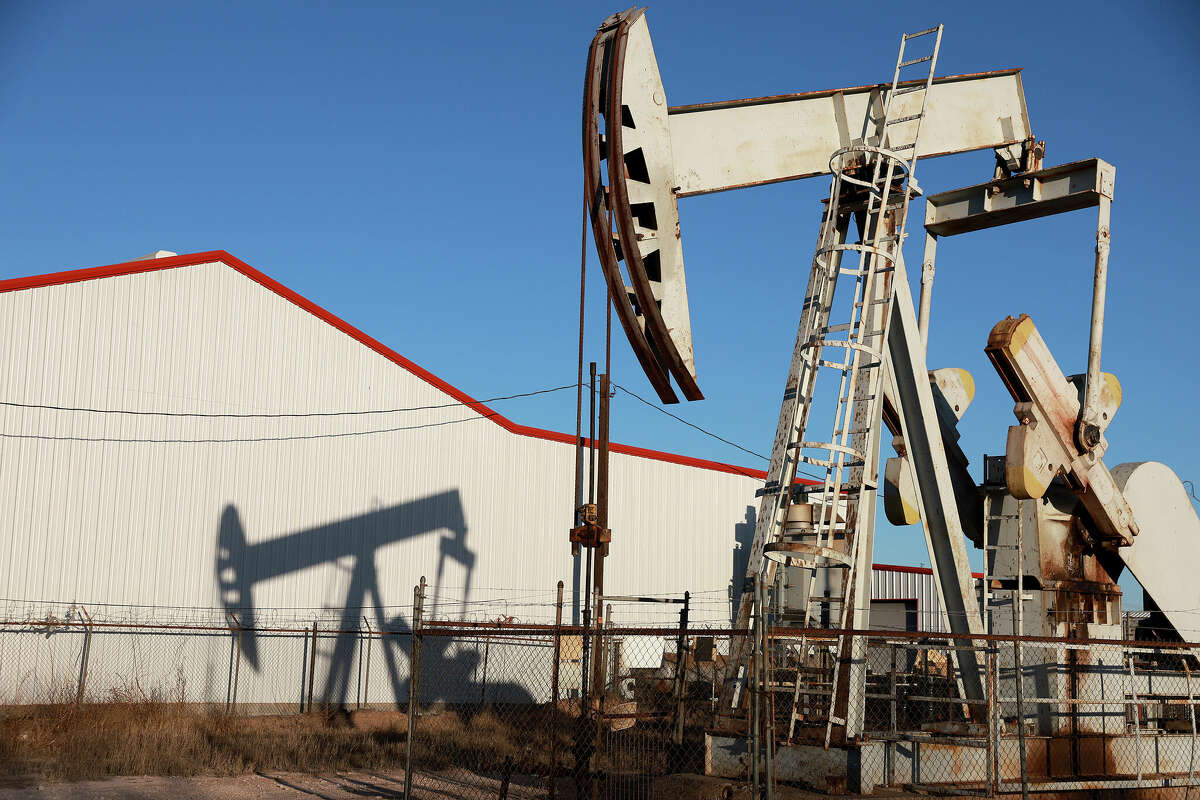
Oil and groundwater extraction in and around Houston's richest and fastest growing suburbs is causing the ground to sink in those areas.
Joe Raedle/Getty Images
Chron
Michael Murney, Chron
The ground is sinking at a significant pace in several of Houston's most affluent and fastest-growing suburbs, according to a new study from University of Houston researchers.
“Subsidence used to be a rare phenomenon. Now, it is all over the world,” Dr. Shuhab Khan, professor of geology at the University of Houston and leader of the study, said in a news release. “There are 200 locations in 34 countries where there’s known subsidence. Cities in the northern Gulf of Mexico, such as Houston, have experienced one of the fastest rates of subsidence.”
Areas experiencing subsidence are at risk of severe flooding, according to researchers. Increased flooding can then exacerbate the problem, as downward pressure from floodwaters compresses the sediment below the ground's surface even further.
The researchers warn that continuing to pump groundwater and oil at current rates could even cause fault lines in certain areas to become active again. “If current ground pumping trends continue, faults in Katy and The Woodlands will likely become reactivated and increase in activity over time,” the authors wrote in the open-access, peer-reviewed scientific journal Remote Sensing.
While groundwater extraction was the main cause of sinking ground in the suburban areas, researchers found that in other areas like Mont Belvieu, subsidence is driven primarily by "heavy withdrawal of local oil and natural gas reserves," a team member said in the release.