See what's in store for the city of Allen in a one-on-one with Allen City Manager Eric Ellwanger
Published: Sat, 10/29/22
See what's in store for the city of Allen in a one-on-one with Allen City Manager Eric Ellwanger
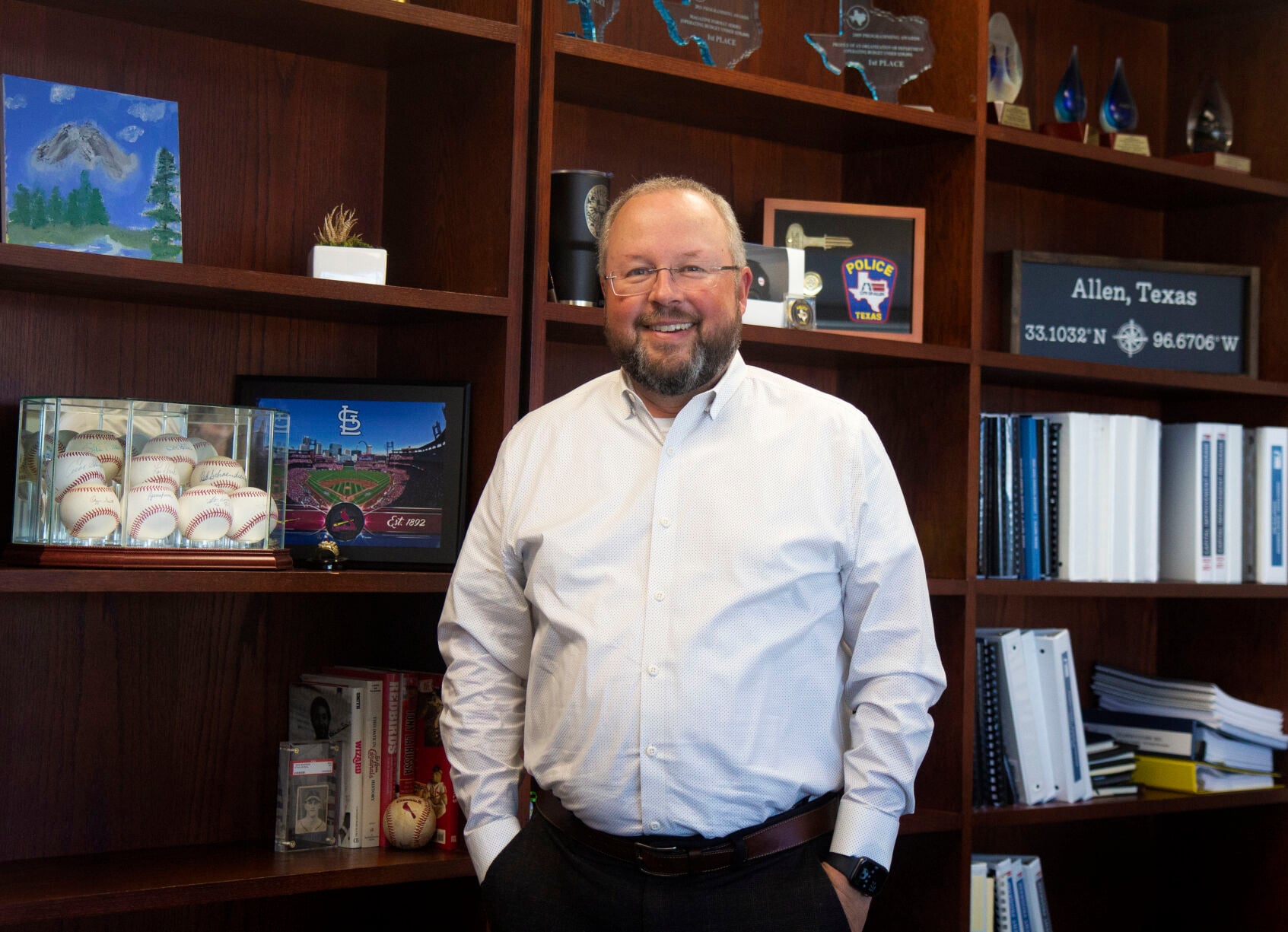
Eric Ellwanger
By Winston Henvey
Allen American
Winston Henvey
October 28, 2022
Eric Ellwanger has served as Allen's city manager since May 1, 2019, guiding Allen through a period of transition following the retirement of longtime city manager Peter H. Vargas.
Ellwanger spoke with Star Local Media on the interesting point the city has reached in focusing on revitalization and new growth.
In your opinion, what is Allen's identity?
I've always thought of Allen as a small-town feel with all the amenities of a big city. That's really our identity. We have the close-knit feeling of a small community, even though we're over 100,000 in population. We have a lot of the amenities of a lot of other cities, and that for me is the goldilocks. Not too big, not too small, just right.
It really is a nice-sized community with a great location. It's a vibrant community and a great place to live.
How do you feel the identity of Allen has evolved?
Obviously, like a lot of cities here, we've seen a massive amount of growth over a short period of time, which changes the identity of a city. What I think is unique about Allen compared to our neighbors is that we've managed to maintain some of that small-town feel, even with the growth. I think a big part of that is with the school district having one high school. It maintains that feeling of everyone in town pulling for the same team. Managing the growth over the years is very challenging but also rewarding. In a lot of ways, I don't think the identity has changed. We just added a lot of amenities, so people don't have to leave to shop or go out to eat like they had to years ago. There's still that hometown feel.
How do you maintain that hometown feel while encouraging growth?
That's the thing I love most about this profession. It's about community building. That's been at the heart of what I've always loved about what I do. That's something I think is challenging but extremely rewarding. Some of it is coincidence or luck, but a big part of what makes Allen 'Allen' is the school. Everyone is in this together.
Where do you see the growth in Allen?
Primarily, what we have left from a land standpoint is the 121 corridor. That's the last frontier. The growth there is primarily commercial. That comes from decades of patience from councils over the years. We've been able to maintain that corridor, and it's really primed for the development that is important to round out the community and really finish the development in the community. That tax base is really important primarily to lower the tax burden for residents.
What are some key things to know about the 121 corridor?
I think it's important to recognize the decades of planning and patience from previous and current councils. In a lot of communities, you can see it's easy to say yes to the first developer that comes by, whatever it is. It's harder to say no and maintain this for development of the highest and best use for the community. It's been a lot of patience, but it's paid off. The Farm happening up there is one of the major mixed-use developments happening up there, and that's ideal for the community.
What improvements would you like to see in Allen?
Part of the responsibility of staff, since we're not elected, is to have a long-term outlook. We talk about that internally all the time, making sure we're preparing for the future as best as we can. With all this development, which is great, we recognize that there's increased traffic and strain on the services we provide because you have more people. We're always looking forward and making sure we're prepared to provide a certain level of service. Traffic flow is always top of mind. Our job is to prepare for growth and make sure we have what we need to serve everyone here.
There's a lot of times a misperception on the role of city government, especially when people are happy with the way the community is, somehow it might be the role of government to keep the community exactly how it is, but that's not possible. What we do have to do is be prepared for changes and mitigate any negatives like traffic.
How did Allen achieve a No. 2 rating in real estate this year despite the current market?
Honestly, it's not something we strive to be, whether it's that or safest city, or any of those top five or top 10 lists. It's just about building a community and providing the highest level of service we can and focusing on our residents, visitors and business community. We focus on listening to the community, and the top 10 lists take care of themselves.
It's important to have a well-rounded community.
What was the transition form accounting to city management like?
That's at the core of why I love this job. Right out of undergrad, I got into the oil and gas industry in Houston. I was having success professionally. It was a good job, but there was something missing for me. The motivation was lacking to go to work and make money for the shareholders of the oil and gas company. I intentionally started looking at what I wanted to do when I grow up, even though I was already grown up at the time. That was when I found the master administration program in North Texas. Back then, I honestly didn't know much about city government, and I didn't know what a city manager was. The MPA checked all the boxes for me because it utilized the strengths I knew I had in relationship building and business management and finances. It was very important to me to serve the public. I grew up with two parents that were teachers and were in public service. I think teaching is a very important public service. Public service has always been in my blood, and that would spark me to want to get up and go to work.
What makes Allen stand out from other cities you've worked in?
I've been fortunate to work with many great cities. I worked in Plano for a while. I worked in Colleyville for a while, and Allen is right in between. I got to experience a very big organization in Plano, and I got to experience the opposite in Colleyville, which is affluent but small. The resources in the actual government while I was there were not as much. When something was going down, you had to take care of it because you were the only one, and you were putting out fires constantly. Allen is a good fit for me.
What did the transition look like between you and Peter Vargas?
It's been a great experience. Peter was fantastic, and I was very lucky to learn from him before he retired, and I got this opportunity. Filling those shoes is interesting because this is a person who was here for 25 years, a pillar in the community and a legend in my profession. Taking over was a big responsibility. It's been a really smooth transition, I think because I've worked with Peter for seven years. I'm very different than Peter, but I'm also a believer in incremental change, and I'm not going to make huge changes for the sake of change.
Where do you see the future of Allen going?
I don't see drastic changes in store. Focusing on being prepared and maintaining the high level of service our residents have come to expect while rounding out the community as a whole. The downtown revitalization, along with the 121 Corridor, is one of those last pieces to round us out as a community. A lot of people in the community have voiced their opinions on that, so we're going to get a vibrant core to our community.
We'll keep Allen on the trajectory it's on. One critical thing we do a lot is recognizing that we're an aging community. We're not like we were 20 years ago where it's growth and nothing else. We have to focus as much on revitalization and redevelopment as we do on new growth. We're at an interesting point because we have both going on. We still have growth, but we also have parts of our community that need attention. We're trying to learn from other communities who managed this in a good way and learn from the mistakes of others.