Good But Not Good Enough. San Antonio behind on 2030 emissions target
Published: Wed, 01/25/23
Good But Not Good Enough. San Antonio behind on 2030 emissions target
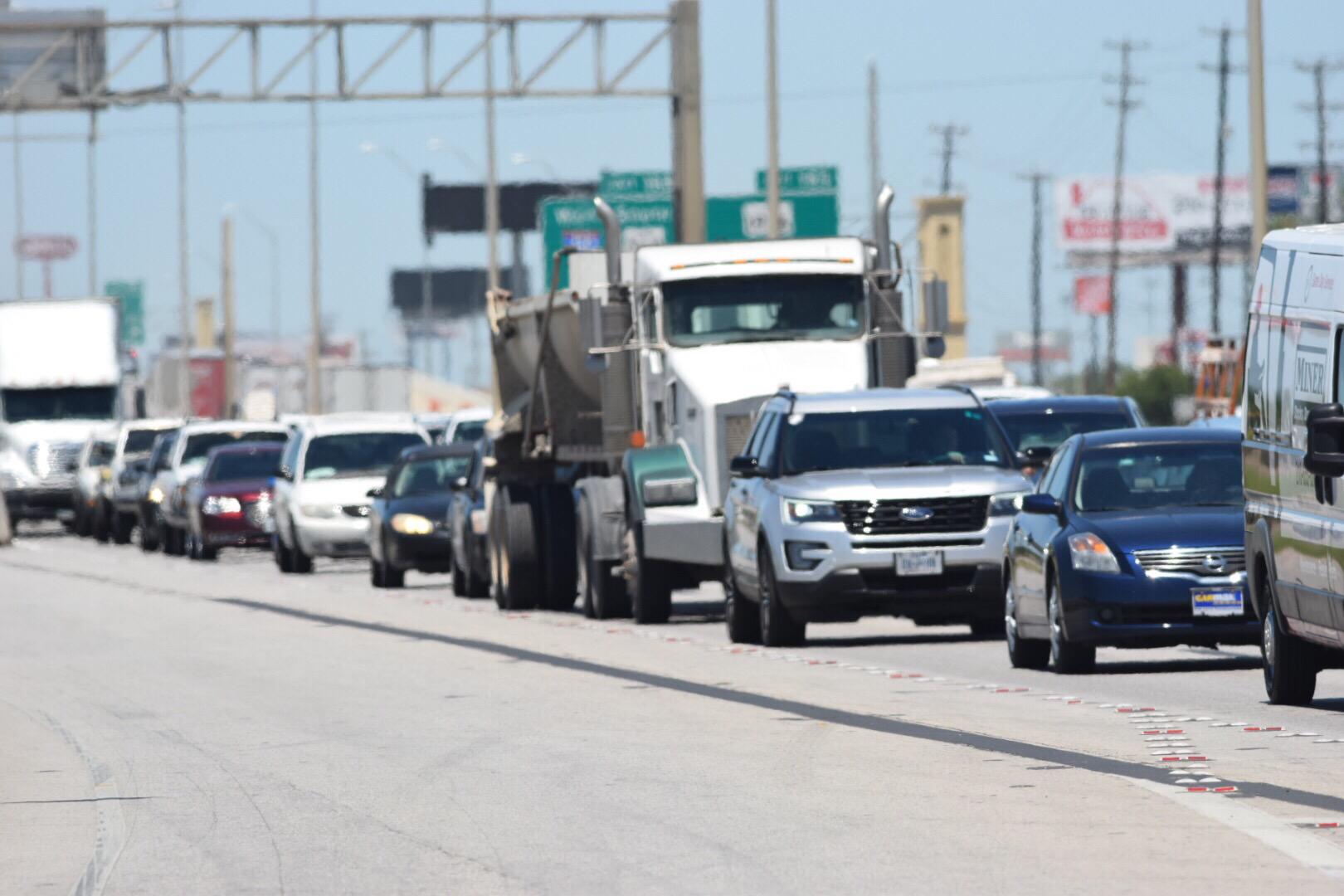
San Antonio’s biggest source of CO2 emissions is transportation.
Caleb Downs / Caleb Downs
San Antonio Express-News
Elena Bruess
January 25, 2023
When tackling climate change, city officials say San Antonio needs to be more aggressive.
In 2021, San Antonio emitted just over 16 million metric tons of greenhouse gas into the atmosphere through transportation and the generation and use of commercial and residential energy. By 2030, the city wants these emissions to be down to 10.2 million metric tons. Made up of carbon dioxide, methane and water vapor, greenhouse gas traps the sun’s heat near the Earth’s surface, causing the planet to warm and the climate to change.
At its current pace of reduction, the city will not hit the 2030 target. Given San Antonio’s projected population growth, fuel efficiency and transition to renewable energy, the city’s 2030 emissions will be at 14.7 million metric tons of greenhouse gas. That’s a decrease of 13.7 percent instead of 38 percent — the goal — between 2021 and 2030.
“That’s good, but not good enough,” said Doug Melnick, chief sustainability officer for the city’s Office of Sustainability, last week at a meeting of the Community Health, Environment and Culture Committee.
The plan’s ultimate goal is for the city to be carbon-neutral — to have net-zero carbon emissions — by 2050.
While the city saw a nearly 3.5 percent reduction in greenhouse gas emissions between 2019 and 2021, it will need to see about a 5 percent decrease every year for the next seven years in order to meet its target by 2030, according to a recent report from the Office of Sustainability.
“It’s easier said than done, and I think we’ve seen that year after year, that if climate action was easy, everybody would be done (trying to solve it). So it’s definitely a marathon,” Melnick said. “But I’m pleased to say we’re moving in the right direction.”
Melnick updated the committee — made up of five council members and chaired by Ana Sandoval of District 7 — on the city’s climate action and adaptation plan on Thursday.
San Antonio’s biggest source of CO2 emissions is transportation, such as vehicles and off-road equipment, at 35 percent of total emissions. Since 2019, greenhouse gases from transportation have decreased nearly 6 percent. The next-largest emitters are commercial and residential energy, meaning from the production of electricity or the burning of natural gas. Both have increased since 2019 by about 7 percent.
In response to high emissions, the city adopted the 2022 International Energy Conservation Code — a document that provides guidelines for constructing commercial and residential buildings. The code — to which new buildings must adhere — decreases energy use by about 5 to 10 percent from previous codes. However, these codes don’t touch buildings that already exist, so Melnick said the city also is trying to find ways to incentivize owners to be more energy-efficient.
Additionally, the city is installing solar-energy systems at 80 city-owned sites, each of which could produce 10 to 15 megawatts of electricity per year. Two systems with that output could power two to three average homes for 12 months.
Solar energy businesses have been pitching their products to the city, and it will award the contract later this year.
All of this — along with educating the public — is the best thing the city can do right now, Melnick said.
“We’re continually getting out there, spreading the word as much as possible, which I think, quite frankly, that’s the most important thing that we really need to focus on,” Melnick said. “Because I think the community understands it and they want to see action, but we need to hear from them. We need to engage.”