The Difference Between Municipal Fire Trucks and Airport Fire Trucks
Published: Sun, 01/29/23
The Difference Between Municipal Fire Trucks and Airport Fire Trucks
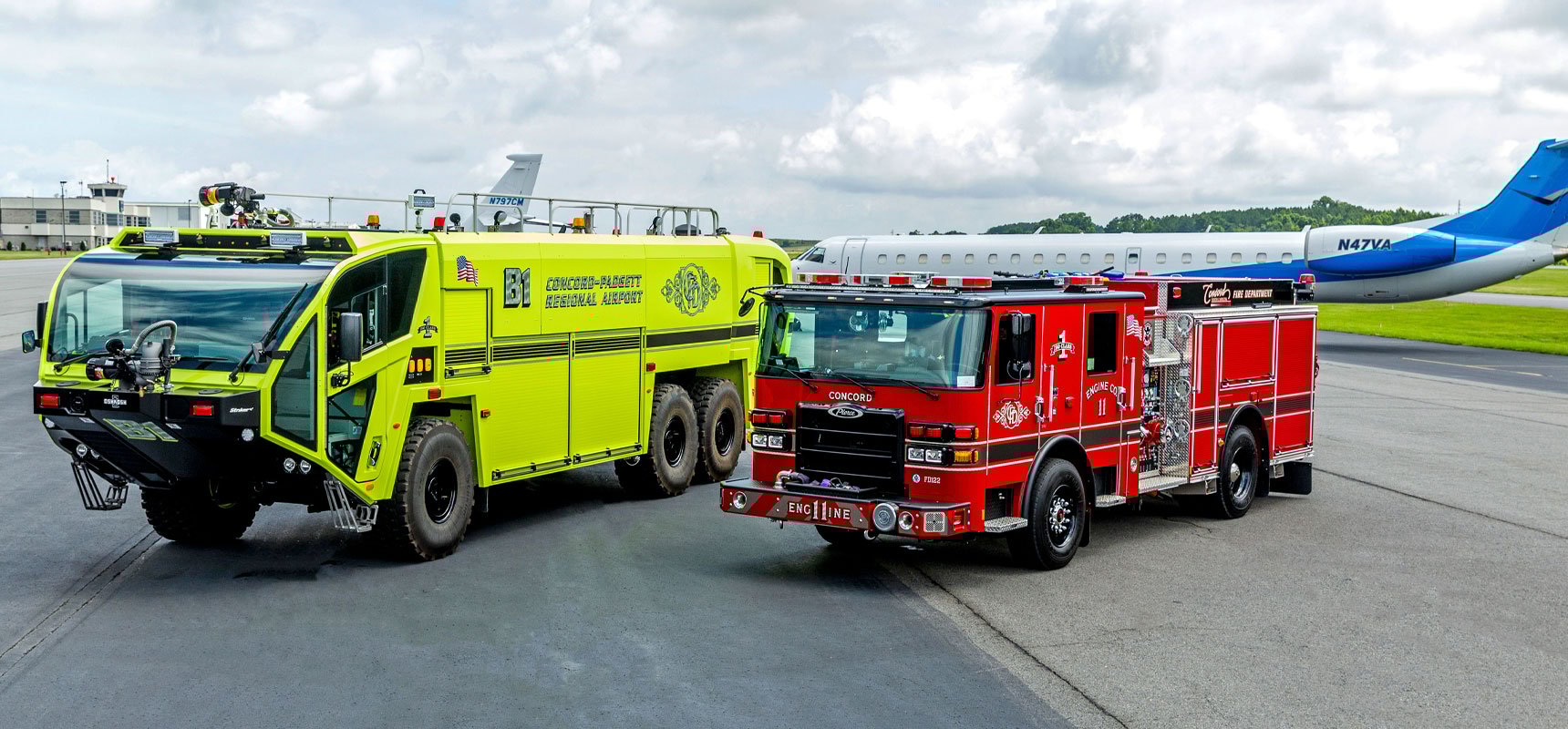
Pierce Manufacturing
January 24, 2023
Firefighters respond to a wide range of emergencies across every type of environment and the equipment they use must be able to meet the demands of each situation.
Serving a vast array of communities, including urban, rural and airport settings, firefighters use different types of fire apparatus—all with unique configurations and attributes to complete the scenarios faced each day.
This blog walks through several key differences between municipal and airport fire trucks.
Types of Calls
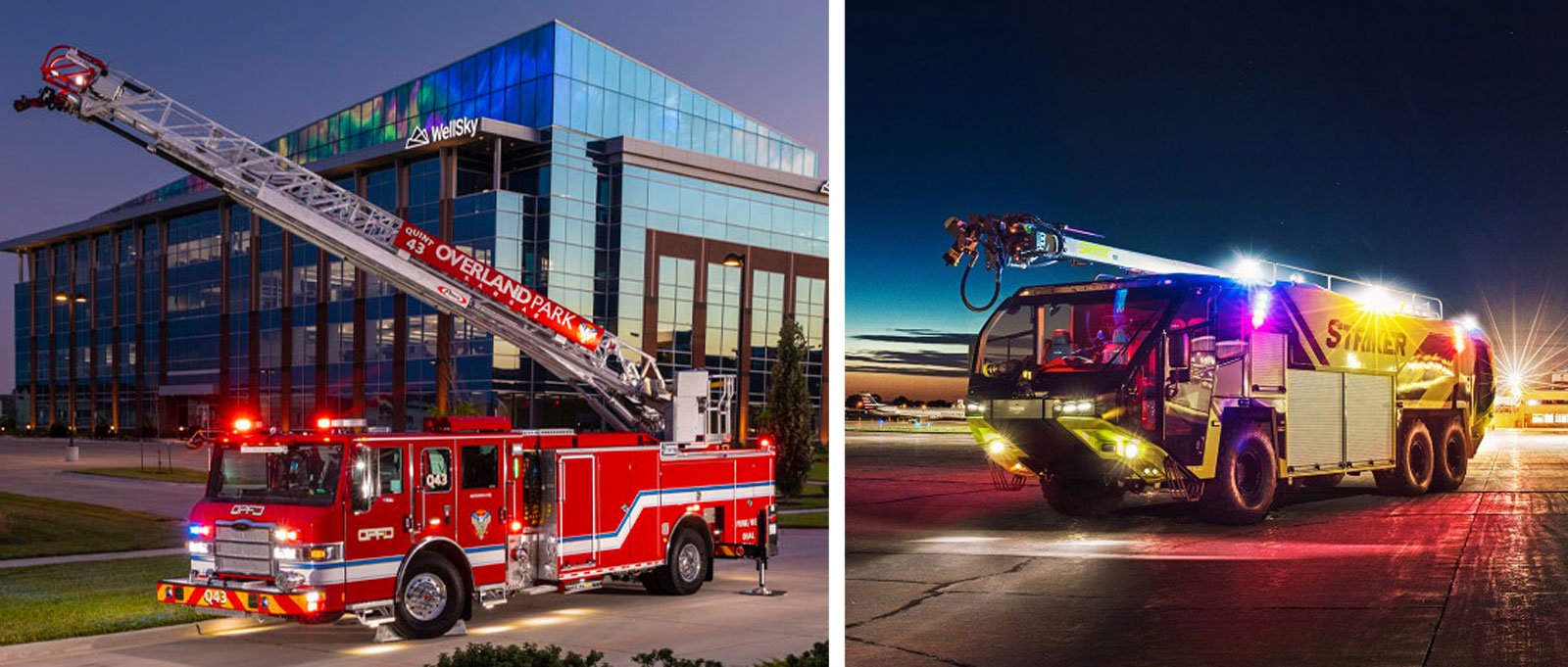
The most obvious difference between municipal fire apparatus and aircraft rescue and firefighting (ARFF) vehicles are the types of emergency calls that they respond to.
Municipal Fire Service Calls
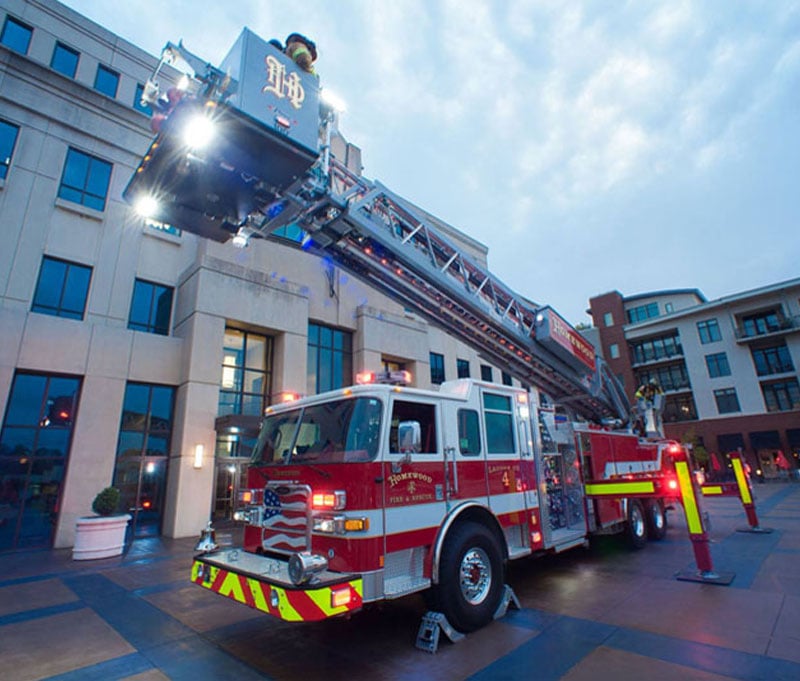
Municipal fire trucks are the most recognizable emergency firefighting vehicles. The type of fire apparatus a department needs is determined by the mission of the truck and the community it serves each day.
- Urban fire apparatus: Fire departments in urban areas may respond to emergencies on city streets that are narrow and require apparatus with superior maneuverability to navigate tight turns and corners. Oftentimes, fire stations in urban areas are historic with confined spaces, requiring more compact apparatus that will fit in the building while still providing modern firefighting capabilities.
- Suburban fire apparatus: As growth occurs outside of cities with the expansion of commercial and residential communities, fire departments need to keep a pulse of the continual progression of land use and building types to match services and apparatus accordingly.
- Rural fire apparatus: Rural firefighters may respond to a large number of motor vehicle accidents, particularly on remote roads, requiring ample compartmentation for first-aid and extraction equipment. Rural fire apparatus generally require larger water tanks to meet limited water supply events and for allowing times for greater distance in response time to building fires from other departments. Additionally, rural apparatus may be called to grass or marsh fires which require off-road capabilities.
The ability to arrive at an emergency or fire scene quickly is a critical attribute of a municipal fire truck. The National Fire Protection Association (NFPA) requires municipal fire trucks must be able to accelerate from 0 to 35 miles per hour in 25 seconds and reach a top speed of at least 50 miles per hour.
ARFF Service Calls
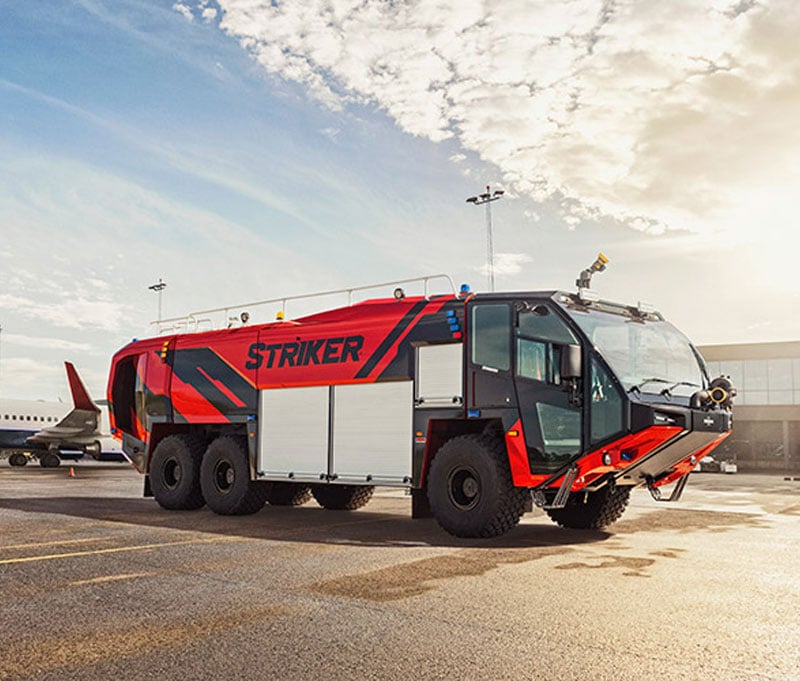
While both ARFF vehicles and municipal fire trucks are equipped with a variety of tools to help them respond to emergencies, ARFF vehicles have a specialized design and some unique attributes specific for use in an airport environment. ARFF vehicles respond to many types of calls, including airplane crash scenes, other airplane emergencies such as wheel or brake fires, medical or fire emergencies at the terminal, ground support for fuel spills, or off-airport response for events like car fires
in the parking garage and foam for municipal calls.
ARFF crews are faced with harsh conditions and hazardous scenes, including exposure to toxic fumes and chemicals, explosion risks, debris and more. Adding to the complexity of these demands is the fact that most of the world’s airports have a vastly different footprint, yet responders are required to arrive at a scene, whether on or off road, in three minutes or less at any time of the day.
The NFPA sets a higher standard for acceleration for ARFF vehicles. This is due in part to the critical nature of reaching a scene before a fire gets to an aircraft’s tanks where extremely flammable jet fuel is stored. ARFF vehicles are required to have the capability to accelerate from 0 to 50 miles per hour in 25 seconds or less and reach a top speed of at least 70 miles per hour. Often, the ARFF vehicle’s response time is aided by the relatively short distances needed to travel in an enclosed airport environment.
Known as the most capable ARFF vehicle ever built and custom-engineered to deliver rapid response, Oshkosh Airport Products’ Striker® 8x8 reaches 50 mph (80 kph) in less than 20 seconds with fewer emissions while exceeding NFPA, ICAO and EU standards.
Water Supply
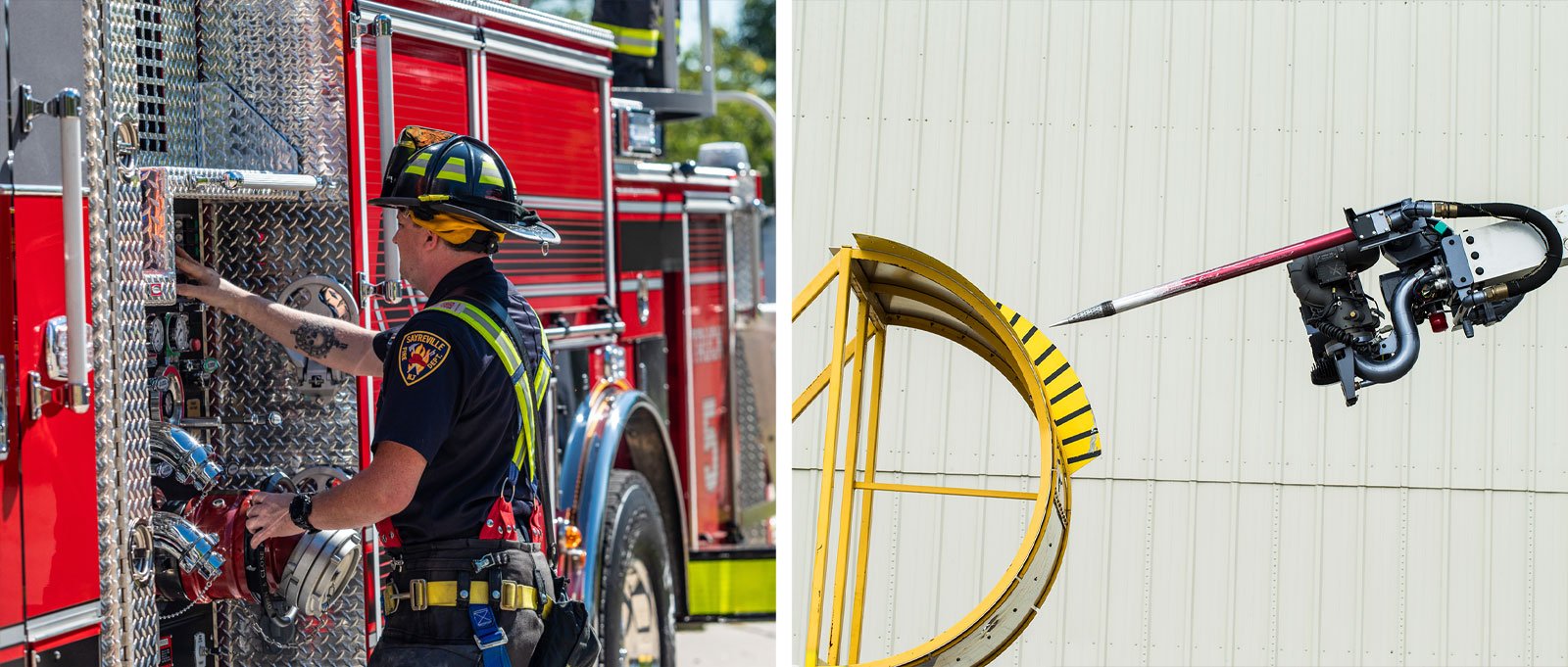
Water is the most common and recognizable method of suppressing fires. Both municipal and airport fire trucks use water to fight fires, but the trucks are often equipped with vastly different amounts of water.
Municipal Fire Truck Water Supply
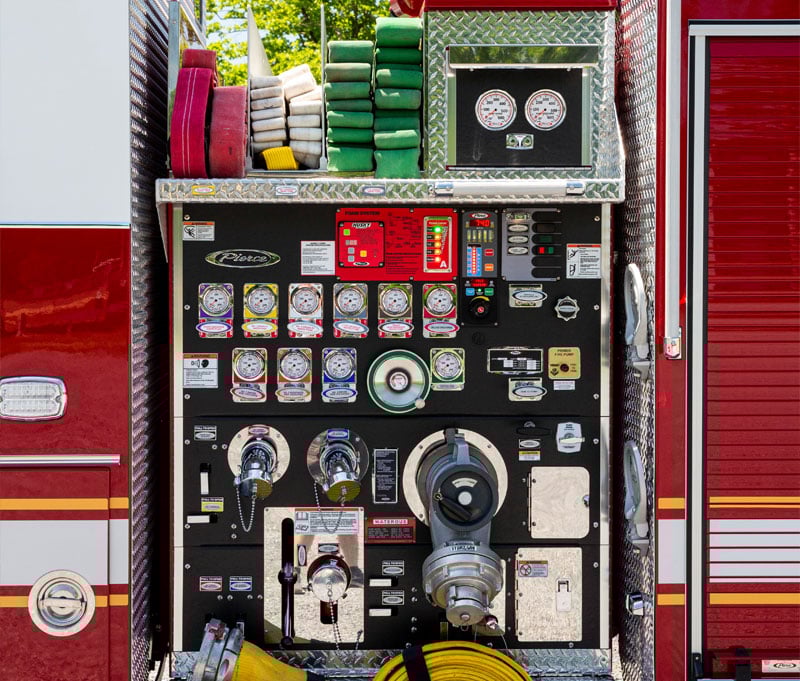
Fire departments strategically design fleet vehicles to match the needs of a community. As such, you may find some apparatus with ample water supply and some with none at all. It often depends on water infrastructure and fleet management.
Typically, municipal fire trucks have one of the following water tank sizes:
- 500-gallon
- 750-gallon
- 1000-gallon
When fire hydrant infrastructure is established, fire trucks can carry less water or no water, leaving more room for personnel, tools and equipment. In rural departments where water infrastructure may be scarce, firefighters must transport and use water strategically, and fire trucks often have larger water tanks.
ARFF Truck Water Supply
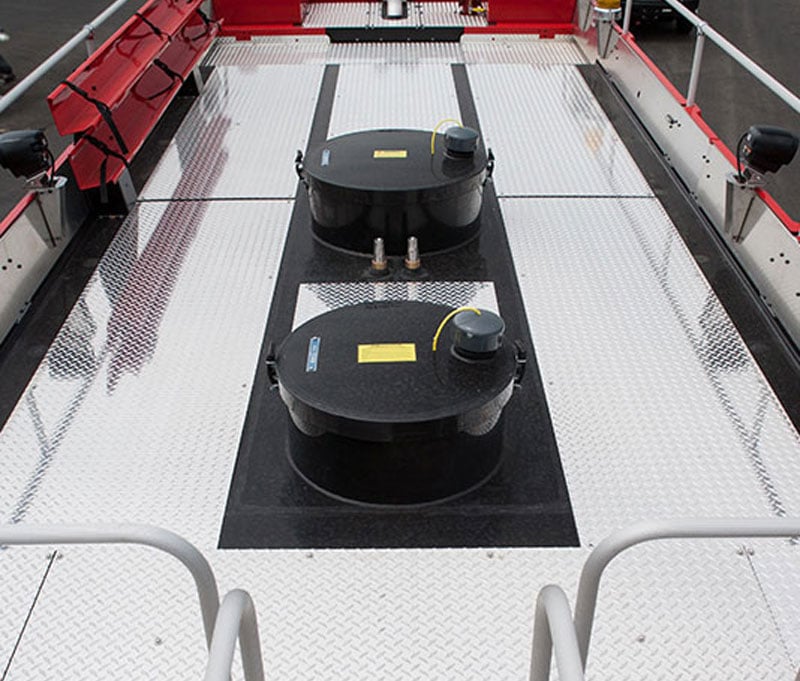
ARFF vehicles typically have limited access to water supply from fire hydrants, meaning water must be carried by the truck.
Oshkosh Airport ARFF trucks offer the following water tank sizes:
- 1500-gallon
- 3000-gallon
- 4500-gallon
The Federal Aviation Administration (FAA) classifies ARFF trucks by five categories—classes one through five. These classifications segregate vehicles by what types of fire suppression agent and how much of the agents are carried on a vehicle. ARFF trucks must carry all agents onboard with them since there is often little or no access to fire hydrant infrastructure, particularly in more remote areas of the airfield.
One of the most notable differences between a municipal and ARFF vehicle is the method of water delivery. ARFF vehicles are equipped with a high reach extendable turret (HRET), which has the ability to pierce an aircraft fuselage and spray water or a suppressing agent to knock down the fire. A HRET also allows firefighters to accurately and easily put water and secondary agent onto fires from high attack and low attack angles, effectively accessing difficult-to-reach aircraft areas.
Fire Suppression Systems
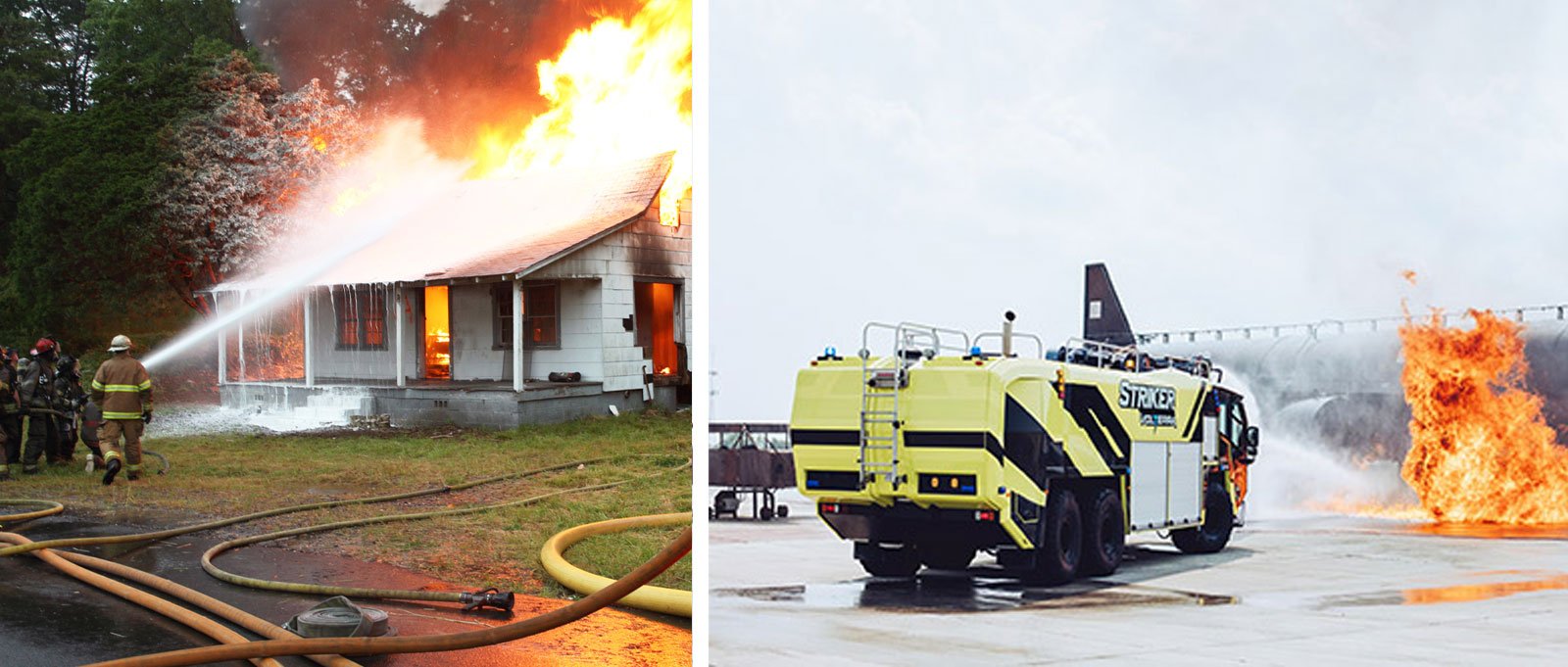
The goal of every fire apparatus is to suppress fires and save lives. But, the type of fire suppression differs depending on the type of truck, the type of fire and the environment in which the fire suppression system is used.
Municipal Fire Truck Suppression Systems
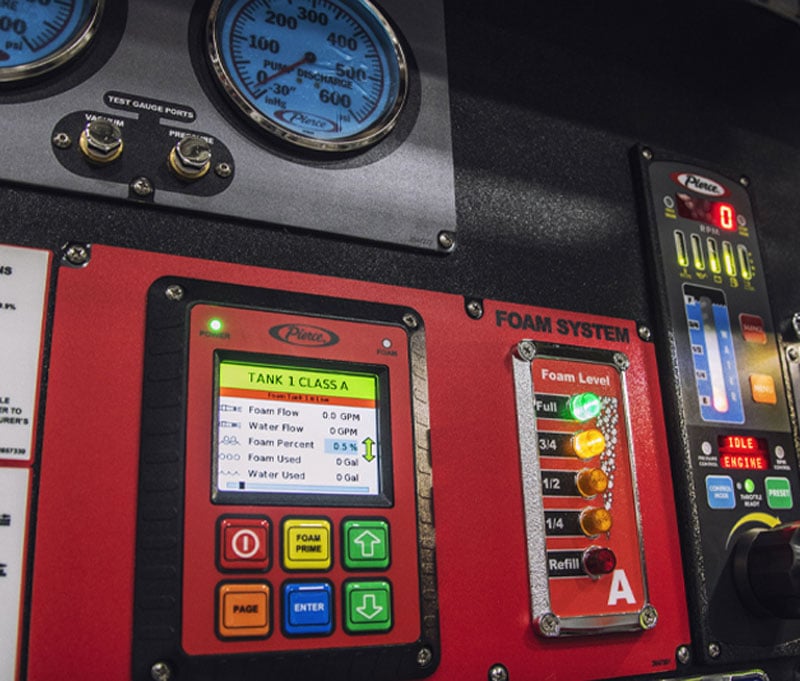
Each fire department has established standard operating and response procedures for emergency calls. Strategic deployment of aid depends on the types of call, the requirements of the emergency, and the available response team, apparatus and equipment.
In addition to water, fire trucks can also feature firefighting foam systems designed to improve the fire-extinguishing capabilities of water, enhancing on-scene efficiencies and promoting water use reduction. Foam systems provide versatility and improved efficiency in the battle against dangerous fires.
Learn more about firefighting foam systems here: Fire-Fighting Foam: What It Is and Why Fire Departments Need It
ARFF Vehicle Fire Suppression Systems
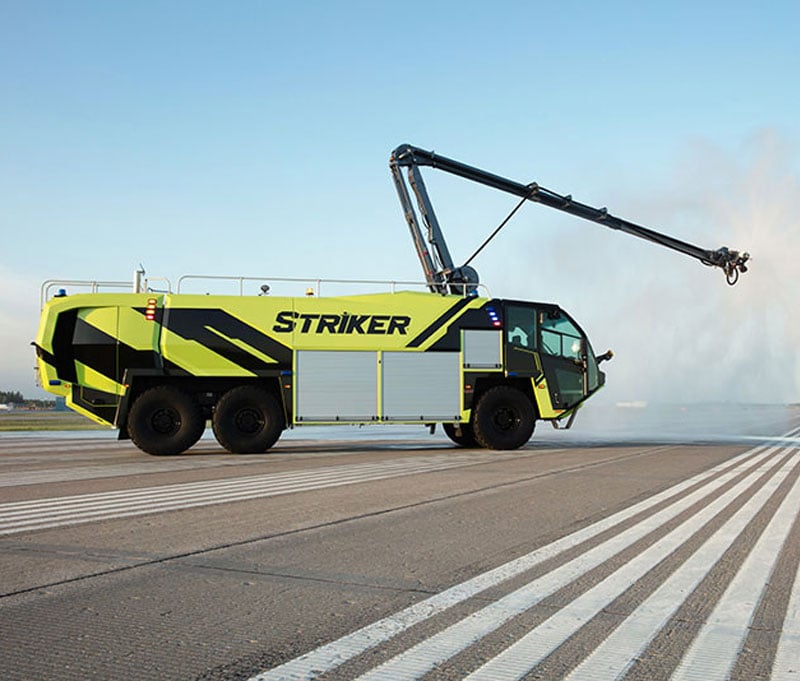
In an ARFF emergency scenario, advanced fire suppression technologies and fire suppression agent conservation are critical.
There are three primary fire suppressants an ARFF truck can carry:
- Water is often used to provide initial attack response.
- Firefighting foam is mixed with water used for fuel spills because it coats surfaces and suppresses the fire by cutting off its oxygen supply.
- Dry chemicals are used only when absolutely necessary because the fine particulates spread easily and require thorough cleanup.
The highly flammable nature of aviation fuel requires an expedited response to ensure the safe evacuation of an airplane’s occupants. The different agents are selected based on the type of response required for each emergency.
View a full explanation of the Federal Aviation Administration’s ARFF vehicle classifications, water and firefighting agent requirements and vehicle examples here.
Compartmentation and Storage
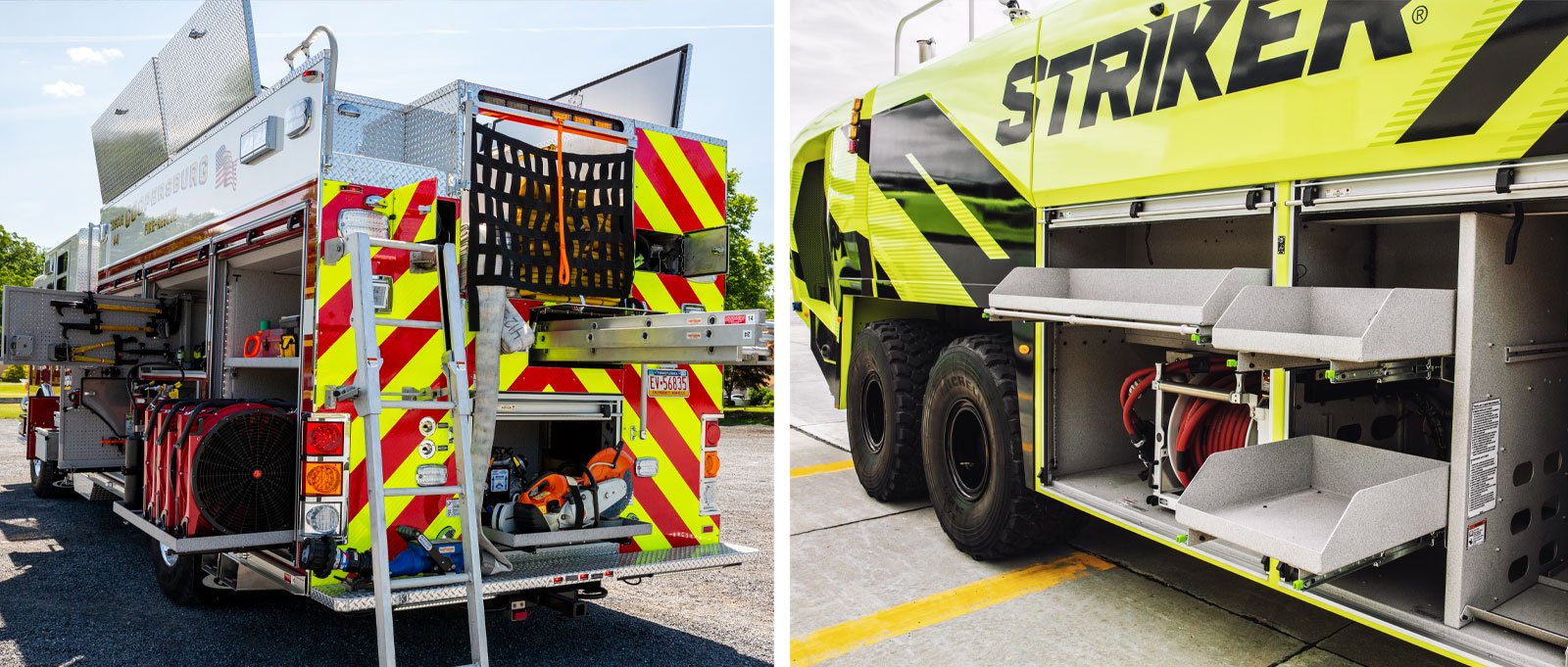
Compartmentation is a critical factor on any emergency response vehicle, but how it’s configured on an emergency response vehicle depends on many factors. One important commonality between the two types of trucks is the inclusion of storage solutions to help reduce fire personnel's exposure to carcinogens. The Carcinogen Awareness & Reduction to Exposure (CARE) initiative is a partnership between Pierce
Manufacturing and the Firefighter Cancer Support Network. Each fire department determines what the CARE initiative means to them and how they’d like to include some of the goals of CARE into their truck design and daily operations.
Municipal Fire Truck Storage
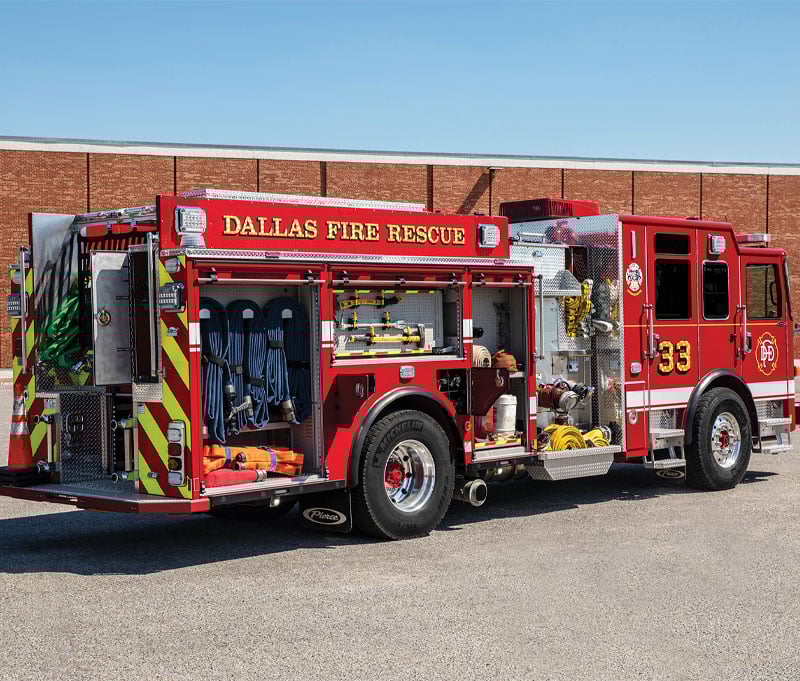
Balancing the function of the fire apparatus with the storage required is critical. Municipal departments must follow specific requirements to meet the needs of established standards and operating procedures while also considering the primary use of the apparatus.
Municipal fire trucks often carry a combination of tools and equipment, including:
- Hose and hose appliances.
- Extra air packs.
- Smoke clearing devices.
- Small tools, including a pickhead axe, a pike pole and a hydrant wrench.
- Emergency medical supplies.
- Hydraulic rescue tools.
- Ground ladders.
Learn more in this helpful blog: Fire Truck Storage: Compartment and Storage Systems FAQ
ARFF Vehicle Storage
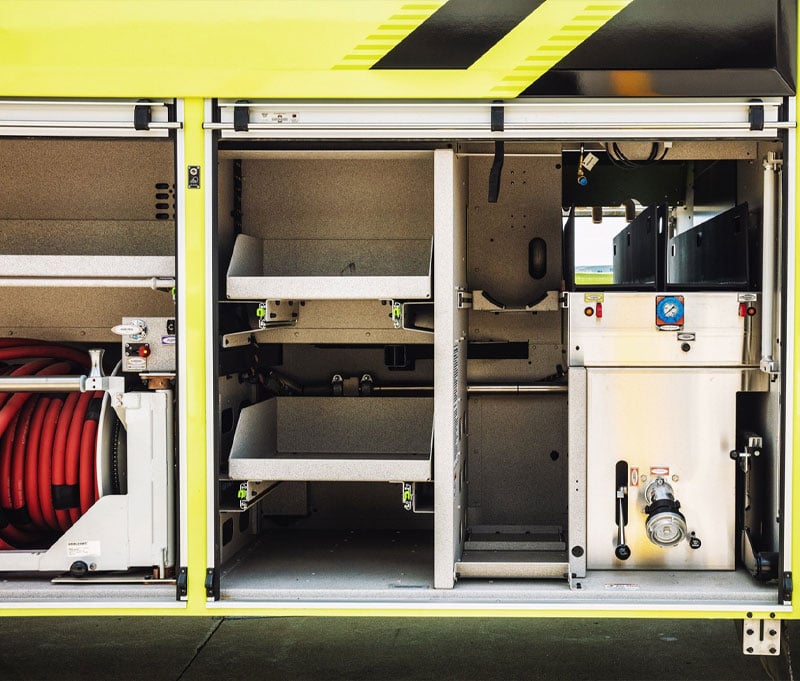
Like municipal fire trucks, ARFF vehicle storage compartments can be customized to meet the airport requirements and standard operating procedures.
ARFF fire trucks typically carry the following equipment and gear:
- Towing device.
- Communication equipment, including items like a radio with a public address system, microphone, speakers and antenna.
- Rescue and access tools, including axes, cable cutters, crowbars and sledgehammers.
- Fuel line plugs.
- Pliers, wrenches, screwdrivers and other small tools.
- Hydraulic rescue tool with cutters, spreaders or combination tools.
- Vehicle medical kit with first aid items, including bandages, trauma dressings, stethoscope and cold packs.
Each department determines the vehicle’s mission and configures the compartmentation accordingly to ensure optimal support in the field.
Cab
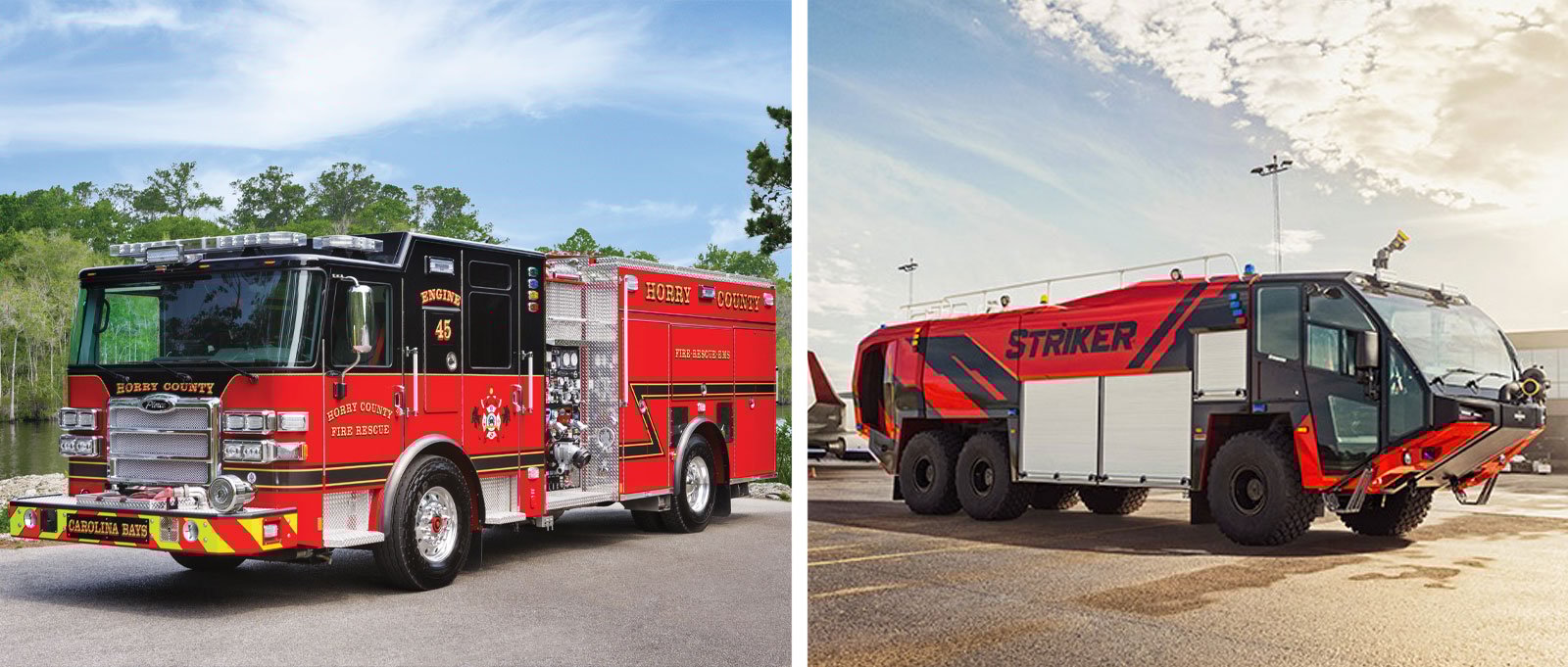
Perhaps the most significant difference between municipal and ARFF fire trucks can be seen in the cab itself.
Municipal Fire Truck Cab
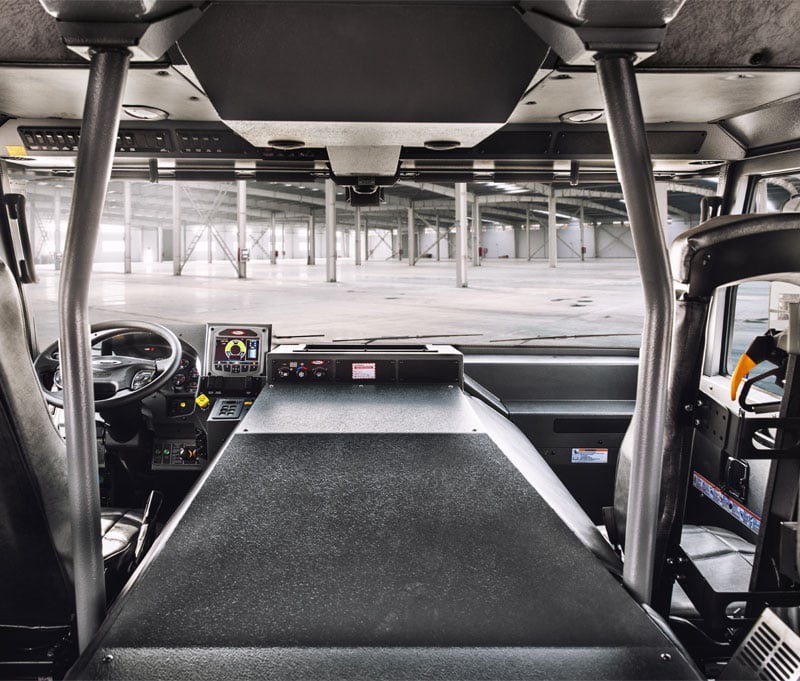
A municipal fire truck cab can have many functions, but in many communities, the cab is designed to carry firefighters to the scene.
Cabs can vary in size and configuration, but all municipal cabs for North America feature traditional left-hand seating. Depending on the chassis and design specification, Pierce’s custom cabs can seat as many as 10 firefighters.
In recent years, many municipal departments have focused on the CARE initiative and having easy-to-clean cab surfaces and seating options.
All Pierce custom apparatus are designed to offer exceptional handling and maneuverability, easy-access service points and a high level of performance. In the design and specification process, fire departments can also include several added features to the cab, including:
- Side and front airbags to help protect firefighters in the event of an accident.
- Barrier or full-height cab doors.
- Ergonomic elements to reduce stress on firefighters’ bodies as they travel in the vehicle.
- HAAS Alert collision avoidance technology helps to ensure motorists are alerted to nearby emergency vehicles.
- Wrap-around dash with panoramic visibility.
- Automatic stair steps that provide a safe forward entry and exit from the cab.
Compare chassis and cab features here or learn more about the clean cab initiative in this recent blog post.
ARFF Vehicle Cab
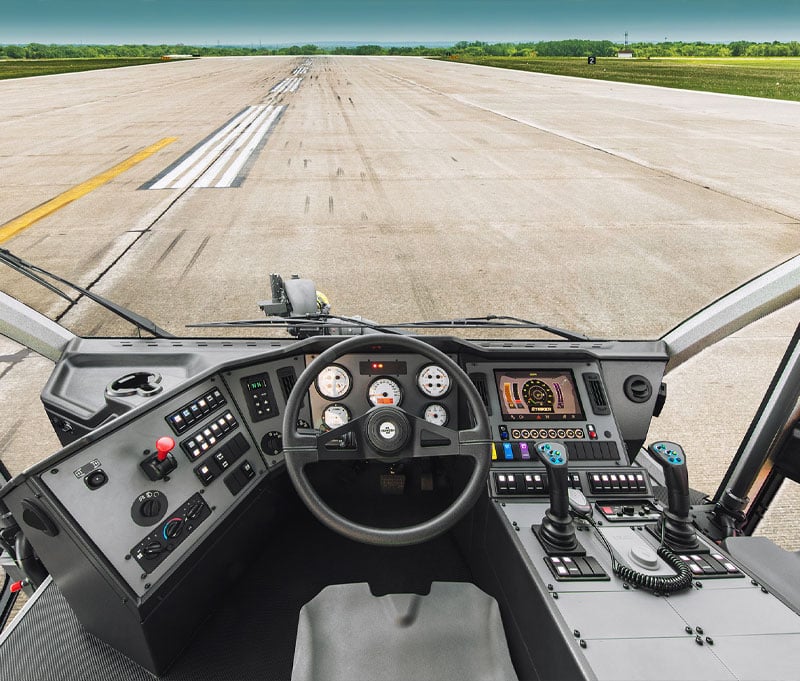
In contrast to a municipal cab, ARFF cabs have a very unique look. A larger operator area with more glass area for increased visibility is required to be able to maneuver the truck through a scene with obstacles such as passengers, other firefighters and debris. Most ARFF vehicles feature a slanted body with a front bumper designed for moving through ditches and rough terrain.
ARFF vehicles are often larger than municipal fire trucks because ARFF vehicles do not need to navigate the confines of a city street. Moreover, ARFF trucks are built for off-road driving, with large, wide tires and a long travel suspension.
While ARFF trucks can carry up to five firefighters in the cab, most are set up to allow the vehicle to operate with only the driver. The operator's seat is often centered in the cab and the operator is able to engage all truck functions from this position.
Premium ARFF trucks include many of the following features:
- Pump and roll operations.
- An extendable boom to attack fires from every angle with precision.
- Modular cab design with ergonomic control placement.
- Spacious cab seating for up to 5 firefighters.
- Increased forward and side visibility.
- Optional bus-style doors.
While there are many similarities between municipal fire trucks and aircraft rescue and fire fighting vehicles, we hope this blog sheds some insight on their differences and highlights what makes each type of truck truly unique.
Do you have questions about either truck? Let us know in the comments or reach out to our team today.