Killeen leaders to talk bond election for new City Hall, library and more
Published: Mon, 01/09/23
Killeen leaders to talk bond election for new City Hall, library and more
By Paul Bryant | Herald StaffJanuary 8, 2023
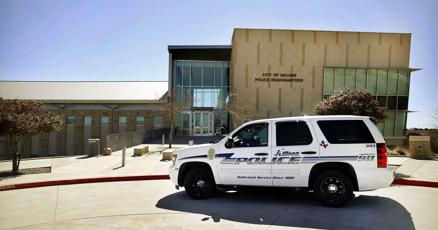
Two months after City Manager Kent Cagle told council members that it could take as much as $232 million in bond debt over the next nine years to improve public buildings and quality-of-life issues, they are scheduled in a workshop meeting on Monday to consider a bond election.
The “City Council will ... discuss putting a general obligation bond on a future election ballot,” according to a city news release issued last week. “(Residents) are encouraged to attend to hear the options and provide comments.”
On Nov. 15, Cagle said that because Killeen is “a growing city,” the need for public facilities and the infrastructure that supports them often exceeds the revenue available to fund them.
“We expect by 2023, our population is going to be over 160,000,” he said. “We’re a growing community. Typically, we have more need for more projects that are generally funded by debt than those that are not growing. The residents and the demand for service and the demand for facilities come in faster than the tax revenue to pay for them.”In 2021, the city’s population was 156,261 — a nearly 16% increase over the previous decade. Killeen officials have estimated the population could reach 180,000 by 2030. Other Texas cities comparable in population are Pasadena (148,626), Denton (148,146) and Mesquite (147,691).
“We’ve heard about a number of projects from the City Council, so we’ve put some estimates in there,” Cagle said. “Some of them, we have some pretty good ideas. Some of them require a lot more investigation. Everything that we’re doing, we’re trying to be conservative in our forecast.”
The City Council has three options for funding renovations at or construction of Killeen public buildings, including City Hall and the two police stations, and other projects — certificates of obligation, general obligation bonds and tax increment reinvestment zone revenue.
“My recommendation is that if the law doesn’t require you to do GO bonds — which have to be put out for a vote — that you don’t do it,” Cagle said. “You do it with COs. You don’t have to put debt for a fire station out to a vote. The things that we have on this list are things that require a vote of the public.”
General obligation bonds aren’t secured by municipal assets, whereas revenue bonds are backed by income generated from specific sources or projects, according to the Texas comptroller’s website.
Tax increment reinvestment zones are “special zones created by City Council to attract new investment in an area. These zones help finance costs of redevelopment and promote growth in areas that would otherwise not attract sufficient market development in a timely manner.”New city hall
Projects the city may complete with certificates of obligation include construction of a new City Hall at a cost of $66 million.
“This is a very fluid number,” Cagle said. “I would expect we would have a City Hall downtown. We have a number of employees here ... in utility collections, at the municipal court, code enforcement, building inspections, planning and development. Everything that’s in the downtown area, you would consolidate in one facility.”
The consolidation, however, would not include police headquarters.
But “this City Hall would definitely have a police presence in it because the facility in the south is getting maxed out. We would have a police presence in City Hall downtown,” Cagle said.
The existing Killeen City Hall is on the National Register of Historic Places. Renovated for that purpose in 1993, the original Killeen High School was built in 1923 on a city block bound by Avenue E to the south, Root Avenue to the west, North College Street to the east and Avenue D to the north.
‘Building downtown’
“What we would have to do is bring an architecture firm in, and we’d have to tell them all the departments that are going to be (at the new city hall), figure out the space needs, figure out some needs for growth,” Cagle said. “My guess is we’re building downtown” and construction is “going to be up rather than out. So, as I said, the city hall number probably is the most fluid one on there.”
Other projects that may be funded with general obligation bonds include an animal quarantine facility ($1 million), a southwest branch library ($10.7 million), recreation and teen center ($25.7 million), new park development ($65.5 million) and new roads ($10 million).The combined cost is $179 million. The estimated total tax rate on that debt issuance is $0.085.
“The reason we’re talking about debt issues are potential projects,” Cagle said. “They’ll have two costs. One is the direct debt service if you issue debt. Some of them will have operational costs. If you open a new rec center or a new library, there’s operational costs because you have to people operate them.”
Through certificates of obligation, Cagle recommended funding projects that include building two fire stations ($16.2 million), feet services facility ($15.5 million), fire station expansions ($4 million), City Hall structural improvements and heating and air conditioning maintenance ($2.5 million), renovating the North Killeen police precinct ($7.1 million), grounds maintenance facility ($7.1 million), expanding the police headquarters parking lot on Community Boulevard in south Killeen, building an evidence storage facility ($2.5 million) and a “terminal-type” building at Skylark Field ($2.2 million).
‘Where do we stand?’
That is a project cost of almost $54 million and a total tax rate of $0.03.
“Where do we stand when we look at this?” Cagle said. “How much debt is there per person in the city of Killeen? Our per capita debt has been dropping since 2014, (with) a high of $1,427 per person to today. We’re at $836 per person.”
Among 15 cities — Temple, Garland, Copperas Cove, Denton, Round Rock, Grand Prairie, Mesquite, Beaumont, Odessa, Abilene, Lubbock, Harker Heights, Amarillo, Waco, Belton — Killeen is the “fastest-growing” at 19.7%.“We have the 10th-largest percent of debt service at 25.3,” Cagle said. “Temple ... 53.3 percent of their tax rate is dedicated to debt service. and I believe the smallest one on this list is going to be Belton at 13.2%.”
As for debt per capita, Killeen is 13th among those cities, Cagle said.
“Temple is highest at $3,200. When you throw numbers out, they don’t mean a whole lot just standing on their own. So we try to put them in some context for you in two ways — against our peers and over time.”
TIRZ
Using $50 million in tax increment reinvestment zone revenue, Killeen officials plan to help pay for several other projects, including the reconstruction of Rancier Avenue, expanding the Killeen Business Park, streetscaping and downtown redevelopment, Cagle said.
“Working with our partners and the TIRZ board, we’re recommending we extend the life of the TIRZ,” he said. “That would require a vote of the council, the county and (Central Texas College). But if we do that, there’s gonna be significant revenue.”
Part of that money should be used to rebuild Rancier Avenue, Cagle said.
“It’s more than a rebuild. We’ve got a grant from KTMPO for sidewalks that we’d engineer along with that. But it’s to put utilities underground and to totally change the character of Rancier. And it would totally change the character of the north side of town.”
KTMPO is the Killeen-Tempo Metropolitan Planning Organization.“There will be an engineering contract coming forward soon to fund that out of cash, out of the TIRZ, to do the initial engineering from that project,” Cagle said.
If the City Council ultimately agrees to issue debt to pay for some of the projects, that would happen four times over the next nine years — $69 million in 2023, $75 million in 2025, $52 million in 2028 and $35 million in 2031.
The impact
“All of those roughly add up to $232 million,” Cagle said. “We’re paying off debt and we’re adding population, So we take that into account here. Of all the projects that we just talked about that would be on the tax rate, it excludes the TIRZ issue. We have to think about the impact on operations and then the impact on the debt-service rate.”
The city’s total tax rate for fiscal year 2023 is $0.62. Cagle said that is expected to increase to $0.74 by 2029 if all of the debt is issued.
“All the while, we’re paying off debt and we’re adding more than we’re paying off,” Cagle said. “So the tax rate would go up a little bit. We end up, over time, with about a 12.5% tax rate increase where we are right now. That is based on $232 million. The council may want to do far less. You may want to do more.”
Smaller-scale option
Another option, included in his “city manager’s message’ in the 2023 budget, is issuing about $20 million in debt for a few of the projects, such as the north Killeen police precinct renovation, the evidence storage facility, grounds maintenance facility, the animal quarantine facility and improvements at City Hall.
“The city’s debt capacity will increase over the next couple years due to a large portion of debt maturing. The timing of the proposed bond issue for FY 2023 will prevent the need to increase the city’s tax rate.”As of Oct. 1, the city’s outstanding bond debt was $212.3 million. Outstanding interest was $46.5 million.
Killeen’s 2023 budget is $265 million, with property taxes accounting for much of the city’s revenue. In fiscal year 2022, the total levy on certified values was almost $54 million, with a tax rate of $0.7004.
This fiscal year, the preliminary assessed value is $12.1 billion. The legal limit for debt service is $302.7 million. For the same fiscal year, tax-supported debt service is $13.7 million.
Budget documents show that the maturity date for certificates of obligation is August 2025. For a limited tax note, it’s February 2027, followed by the maturity of general obligation bonds in August 2039 and revenue bonds in August 2040.
‘Deficit over time’
“We’re never going to adopt a budget that’s at a deficit,” Cagle said. “You’re either going to reduce expenses or you’re going to add revenues or some combination of the two to make sure you’re not going to have a deficit. But just based on current factors, this shows just a bit of a deficit over time — somewhere of $2-$3 million.”
But by 2026, a penny on the tax rate could equal $1 million in revenue, Cagle said.
A bond election could come as soon as November.
“I think we could do that,” Cagle said. “We could probably make some changes in the budget to make that happen.”
He said it takes time to prepare bond packages and that neither staff nor council can complete the process by May — a suggestion Councilman Riakos Adams made when he asked Cagle if it could be done by that time. May, of course, is when Adams (District 2), Gonzalez (District 1), Nina Cobb (District 3) and Michael Boyd (District 4) will seek, or not seek, re-election.
The workshop on Monday is scheduled for 6 p.m. at City Hall, 101 N. College St.