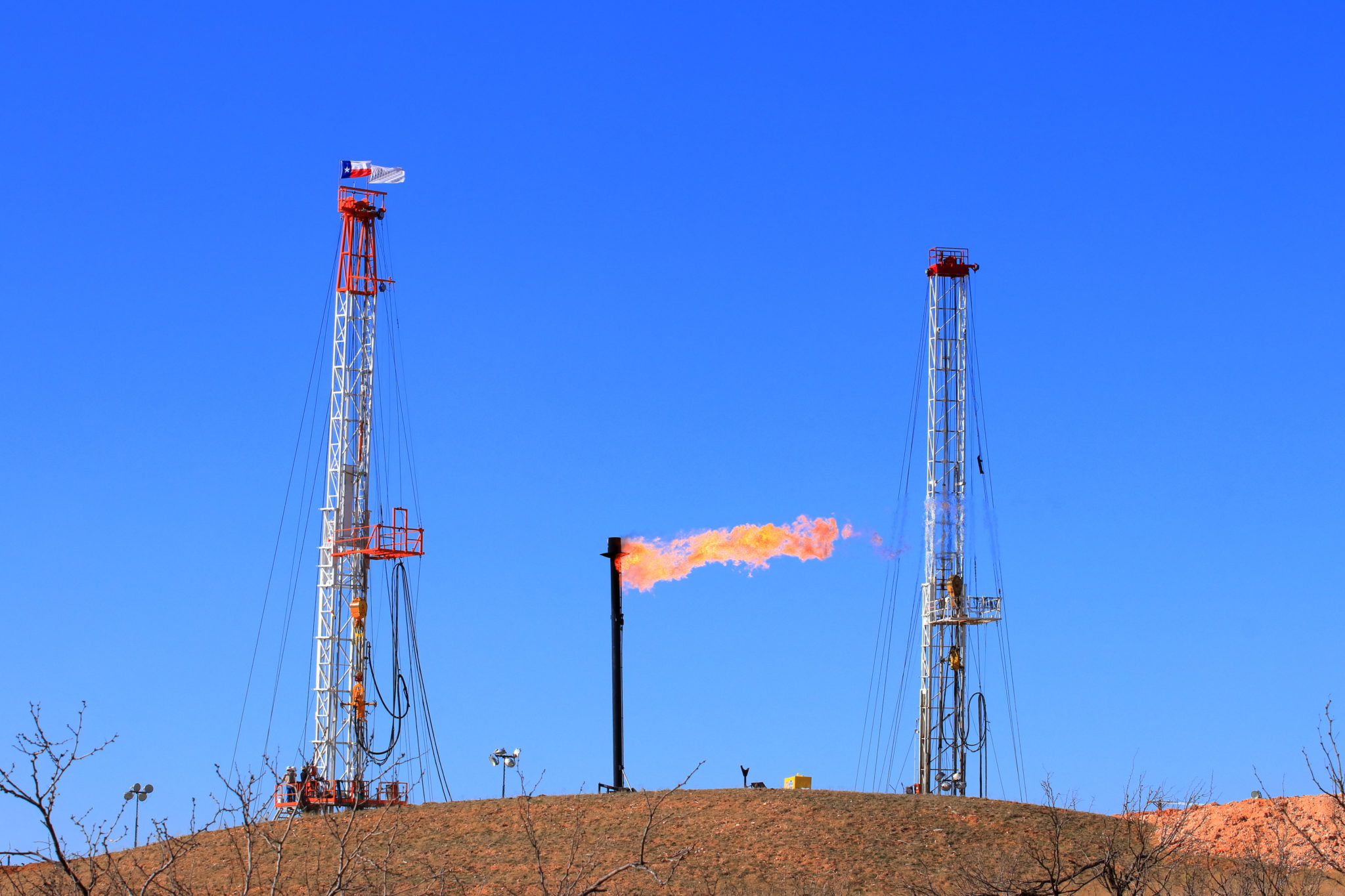
Shutterstock
Oil sector advocates pushed hard against an ozone nonattainment designation, which would have required oilfield emissions reductions.
Texas Observer
by MARTHA PSKOWSKI and DYLAN BADDOUR
Federal authorities have stepped back from a proposal to address high levels of air pollution from the oil fields of West Texas and New Mexico.
Last summer, the U.S. Environmental Protection Agency announced it was considering designating the Permian Basin—the nation’s top-producing oil patch and one of the largest single sources of carbon emissions on Earth—in violation of ozone standards, which would have required substantial reforms in local oil and gas operations.
But the proposal was moved to a backburner in the agency’s annual agenda issued last week, reclassified from “active” to “pending,” first reported by Bloomberg News.
In a statement, the EPA said it had moved the item in order “to focus on non-discretionary actions.”
It marks a win for the oil sector, which pushed hard against the EPA proposal, saying it would decrease production and cost jobs.
“While it is encouraging news that the Biden Administration has backed down on this disastrous plan, Texas remains ready to fight any job-killing attacks on our critical oil and gas industry,” said Texas Governor Greg Abbott in a statement following the EPA move.
Permian ozone standards are the latest setback for the Biden Administration’s ambitious climate agenda. Despite promising steep, rapid cuts in carbon emissions, Biden has overseen a buildout of oil and gas export capacity, a surge in U.S. shale production, and increased drilling on federal lands.
While the administration has proposed much-needed regulations, major concessions to the fossil fuel sector “contradict their commitment to stave off climate change,” said Robin Schneider, director of the Texas Campaign for the Environment.
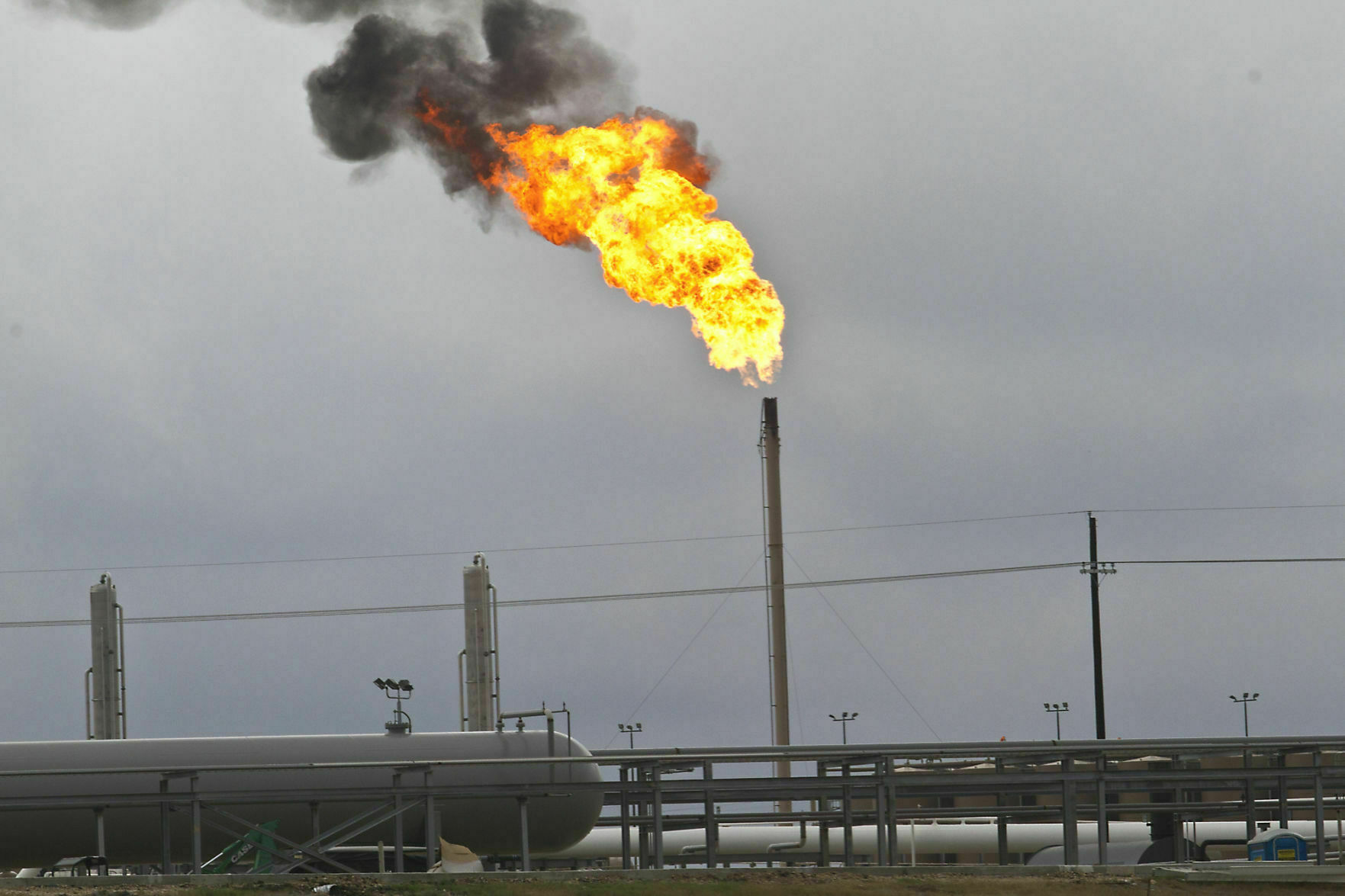
A flare goes off at an oil-processing plant outside Cuero, Texas in 2015.
Jaime R. Carrero /The Victoria Advocate via AP
Ozone, also known as smog, forms in the atmosphere when hydrocarbon gases mix with vehicle engine emissions under sunlight. It usually accumulates in big cities with crowded highways. In recent years, ozone levels have risen in the mostly rural Permian Basin.
Exposure to elevated ozone levels is the most dangerous for sensitive groups including the elderly, children, and people who work outdoors. Ozone aggravates lung diseases such as asthma and emphysema.
Hydrocarbon emissions, including from oil and gas wells, are one part of the ozone equation. The other part, nitrogen oxides, or NOX, come primarily from diesel engine exhaust.
NOX are the limiting factor in Permian ozone levels, said Gunnar Schade, an associate professor of atmospheric sciences at Texas A&M University, because they remain relatively scarce, produced mostly from the fleets of trucks and compressor engines used in hydraulic fracturing.
“Most of the NOX in the air come from the industry at this point, and they have been increasing. The satellite data shows a clear trend,” Schade said.
The EPA’s most recent assessment, in 2017, found the region was within acceptable ozone limits. But a lot has changed since then: Daily Permian oil and gas production has nearly tripled, and more activity means more emissions.
Most available ozone data comes from a few air monitors in New Mexico, said David Baake, an environmental lawyer in Las Cruces, New Mexico; in Texas, where most of the Permian lies, the EPA does not have continuous air quality monitoring.
“It makes it complicated that we don’t have more monitors in the area,” he said.