Central Texas cities, legislator, oppose bills that would limit use of tax-supported funding uses
Published: Sat, 04/22/23
Central Texas cities, legislator, oppose bills that would limit use of tax-supported funding uses
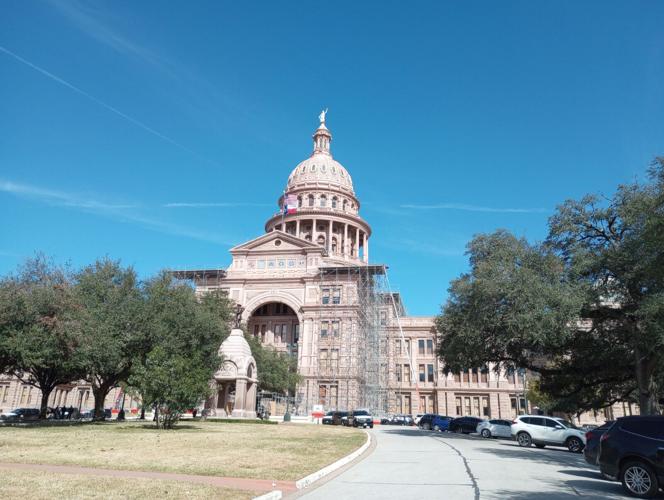
Two bills in Austin would limit when and how cities could use certificates of obligation to fund Public Works-related projects, including street maintenance. Central Texas cities oppose the bills.
Herald | File
Killeen Daily Herald
By Thaddeus Imerman | Herald staff writer
April 21, 2023
Every two years, Texas’ elected legislators submit thousands of bills, and every two years, a percentage of them are ultimately signed by the governor. With some bills potentially possessing the ability to greatly alter the way cities are able to conduct business, city leaders closely monitor what happens in Austin.
This year, a couple of bills have drawn particular concern from Copperas Cove City Manager Ryan Haverlah, and based on responses from Killeen and Harker Heights, Central Texas seems mostly against them.
The bills, Senate Bill 2490 and House Bill 1489, would limit when and how cities can issue certificates of obligation to assume debt and pay for public works-related repairs.
While often linked to emergency spending, there are few restrictions to their use, but either bill — should one gain steam and pass both chambers and be signed by Gov. Greg Abbott — would restrict the use to emergency scenarios.
Specifically, the bills would limit the use of certificates of obligation (COs) to a number of specific scenarios:
1) To comply with a state or federal regulation if the municipality has been officially notified of its noncompliance
2) If the work would mitigate the impact of a public health emergency presenting an imminent danger to the physical health or safety of residents or to mitigate the impact of a natural disaster provided the governor or “presiding officer” of the municipality (mayor, county judge, etc.) declares or renews a declaration of disaster
3) If a court order requires the construction, renovation, repair or improvement of a public work
What cities say
City leaders in Killeen, Copperas Cove and Harker Heights all oppose the bills as written.
Killeen City Manager Kent Cagle was direct with his responses to the Herald this week.
“The city opposes efforts by the legislature to limit a City’s ability to fund basic services,” he said.
In the state of Texas, certificates of obligation were first authorized by the Certificate of Obligation Act of 1971. Cities, counties and health or hospital districts can use them to fund the construction, demolition or restoration of structures; purchase materials, supplies, equipment, machinery, buildings, land and rights of way; and pay for related professional services, according to the Comptroller’s office. COs can be issued in terms of up to 40 years and are typically funded through property taxes or other local revenues.
Similar concerns abound in Copperas Cove.
“If the bill becomes law as currently written the City would face significant challenges in budgeting for future capital improvement projects and capital outlay purchases, which would require the City to consider other potential financing mechanisms,” said Scott Osburn, Copperas Cove Public Works director.
Furthermore, Haverlah said: “The process of completing projects and financing equipment will likely become more expensive and take more time to complete.”
One of the options cities would have is general obligation bonds, which require approval from the voters during an election.
Jerry Bark, assistant city manager of Harker Heights, said an election may not be a very viable option for all such projects, however.
“This process adds considerable time and cost to projects that need to be on faster timelines due to their need for repair or replacement,” Bark said in an email to the Herald earlier this month.
A failed election could also cause other impacts, according to Cagle.
“There are water infrastructure projects that must be constructed in order to meet TCEQ requirements,” Killeen’s city manager said. “If an election were to fail, the City could be in violation of TCEQ requirements.”
Legislator Remarks
State Rep. Hugh Shine, R-Temple, whose district includes all of Harker Heights and Nolanville along with parts of Killeen, told the Herald earlier this month he does not support the bills.
“I don’t support the bill,” Shine said in a phone call to the Herald on April 12 about HB 1489. “I think that the elected trustees of either the (county) commissioners or (city) council members are held accountable by the voters to make sure that they are good stewards of taking care of the financials for their community, and if there’s a need for a certificate of obligation because of an emergency situation in their community, they need to be able to take action on that immediately, and to restrict COs based on a disaster declaration by the governor, that just takes away local control.”
The Comptroller’s office has reported in the past that there is some controversy surrounding the use of COs, which has increased.
The Texas Public Policy Foundation reported in 2019 that the use of COs had increased by 25.4% from Fiscal Year 2009 to Fiscal Year 2018.
In that time frame, statewide outstanding debt from COs increased from $2.88 billion to $14.21 billion.
Shine told the Herald that bills that seek to limit a local government’s use of COs tend to be filed in nearly every session, and he didn’t seem confident the bills would get out of committee.
As it stands, HB 1489 has been left pending in the House Committee on Pensions, Investments & Financial Services, as of April 5.
Likewise, no action has occurred on SB 2490 since March 21 when it was referred to the Senate Committee on Local Government.
Shine said that prior to his return to Austin, he served as a city councilman and that he suspects other lawmakers with similar backgrounds would have similar views.
“If this bill makes it to the floor of the House, I will certainly be debating against it,” he said. “Every member of the House that has been a city council member before, I bet you they would be right there in line with me, too.”
Recent Uses
Killeen, Copperas Cove and Harker Heights have all used COs in various ways recently, though over the past couple of budget planning seasons in Cove, Haverlah has recommended that the city slow their use.
According to Cagle, the city of Killeen has recently used COs to fund construction of elevated water storage tanks and water lines.
In Copperas Cove, according to Osburn, projects currently being funded entirely or in part by Certificates of Obligation include the Killeen-Cove 20-inch water line replacement project, the Rattlesnake Elevated Storage Tank project, the sanitary sewer evaluation survey project, the South and Northwest Wastewater Treatment Plant ultraviolet system replacement projects and the upcoming Suja Lane and Oak Hill Drive reconstruction projects.
In Harker Heights, the use of COs has been small, with Bark saying the city prefers a “pay as you go” approach, using money from the fund balances.
The last time the city, according to Bark, used COs was for $4 million in 2019 for renovations to Fire Station #2, widening Warrior’s Path in partnership with Killeen ISD and the city of Nolanville, replacing aging clay wastewater lines along Beeline Drive and replacing and correcting the size of the water line serving Rattlesnake Road.