Lawsuit Limbo: Hearing on Bell County v. Killeen lawsuit over marijuana to happen Monday
Published: Sun, 05/14/23
Lawsuit Limbo: Hearing on Bell County v. Killeen lawsuit over marijuana to happen Monday
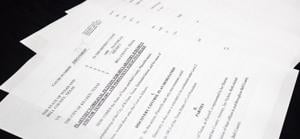
The Bell County government has filed a lawsuit against the City of Killeen for passing Prop A; the decriminalizing of marijuana under 4 ounces.
Walter Lanier | Herald
Killeen Daily Herald
By Emily Hilley-Sierzchula | Herald correspondent
May 14, 2023
Can the weight of state law overcome the will of thousands of Killeen residents who voted in favor of decriminalizing misdemeanor marijuana possession? The answer to that question could come on Monday, when a judge could rule on restraining order that would force the Killeen Police Department to begin enforcing state laws pertaining to low-level marijuana possession. KPD stopped making arrests for misdemeanor marijuana possession in November of last year after voters approved Proposition A
— a city law that prevents city police from charging people for possession less than 4 ounces.
Opponents of Prop A say the city should have never allowed the city law to stand because it goes against state law. In Harker Heights, where Prop A was also passed by voters in the November, the City Council there quickly repealed it, saying it violated state law.
The controversy caused the Bell County government — spearheaded by County Attorney Jim Nichols and District Attorney Henry Garza — to take the unusual step of suing one of its own cities.
Monday will be the first court hearing in the lawsuit that was filed by Bell County against the City of Killeen last month. Judge Rick Morris, the visiting judge who was assigned to hear the case after Judge Jack Jones recused himself, will hear arguments regarding a motion for a temporary restraining order that was filed by the Bell County Attorney on April 28, according to court records.
If the judge approves, the restraining order would force the city to stop enforcing its Proposition A ordinance (Chapter 22, Article V) and to remove the ordinance from the online municipal code database.
The controversy began on Nov. 8, 2022, when Killeen voters overwhelmingly passed Proposition A by a margin of 69% to 31%. In Harker Heights, it passed by a margin of 64% to 36%, and was later repealed.
THE LAWSUIT
According to the lawsuit, the county is not seeking monetary damages; rather, it is seeking a ruling from the court on the validity of the city ordinance. Opponents of Proposition A say it conflicts with state law — in which possession of 4 ounces or less is still a misdemeanor — and therefore should not be allowed in individual cities.
“Plaintiffs seek a declaration from the court that the City of Killeen ordinance ... is inconsistent with state law and therefore invalid, void and unenforceable,” according to the petition filed by Nichols on April 11. “This same ordinance suspends state law and is therefore invalid, void and unconstitutional. Plaintiffs request an immediate temporary restraining order and injunction enjoining Defendant City of Killeen and its agents ... from enforcing (the ordinance).”
The county argues that the law is on its side.
“City of Killeen Ordinance Chapter 22 Article V is facially unconstitutional and inconsistent with numerous state laws that have supremacy over a municipal ordinance,” according to Nichols’s petition, which cites Texas Local Government Code, Texas Health and Safety Code and the Texas Code of Criminal Procedure. “Plaintiffs see no way to reconcile the general law with the local regulation.”
The City of Killeen has not yet filed a response to the lawsuit, but marijuana decriminalization is a hot topic across the state as some wonder if Texas state law is outdated.
Austin-based progressive group Ground Game Texas, which drafted the Prop A ordinance, was a supporter of what it called the “Killeen & Harker Heights Freedom Acts of 2022.”
“The Texas Constitution ... allows for Texas cities to adopt ‘home rule’ charters,” according to Mike Siegel, general counsel for Ground Game Texas, in a previous statement. “Under those charters, cities ‘possess the power of self-government’ and may exercise ‘broad discretionary powers.’ At the same time, cities are not permitted to adopt any law that is ‘inconsistent with the Constitution of the state, or of the general laws enacted by the Legislature.’”
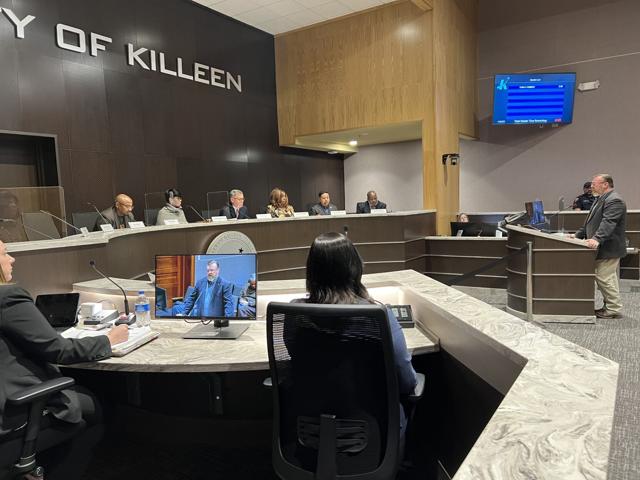
Bell County Precinct 2 Commissioner Bobby Whitson addresses Killeen City Council members in November about Proposition A, which decriminalized marijuana in Killeen. Whitson and the Bell County Commission later decided to sue Killeen over the controversial law.
Herald | File
COST TO TAXPAYERS
What remains to be seen is the precise monetary cost of the lawsuit, but taxpayers ultimately will foot the bill for the attorneys sitting at the tables of both the plaintiff, which is the county, and the defendant, the city.
The City of Killeen has retained Dallas-area attorney Philip Kingston, a former Dallas city councilman, but he has not yet sent a bill for services.
“The hourly rate is $400 or $450, depending on which attorney with the law firm (Sheils Winnubst PC) is providing the service,” said Janell J. Lewis Ford, the city’s executive director of communications, in an email. “The City of Killeen has not received a bill yet for legal services related to Bell County lawsuit.”
Ford said in an email on Friday that no payments for legal services had been made to Kingston but that the city’s General Fund would be the funding source when that time comes.
On the county’s side, Nichols — whose salary comes out of the Bell County budget — is listed as the lead attorney on the case.
The Herald will continue to follow this story.