How Denton women's stories changed the city
Published: Sat, 03/04/23
How Denton women's stories changed the city
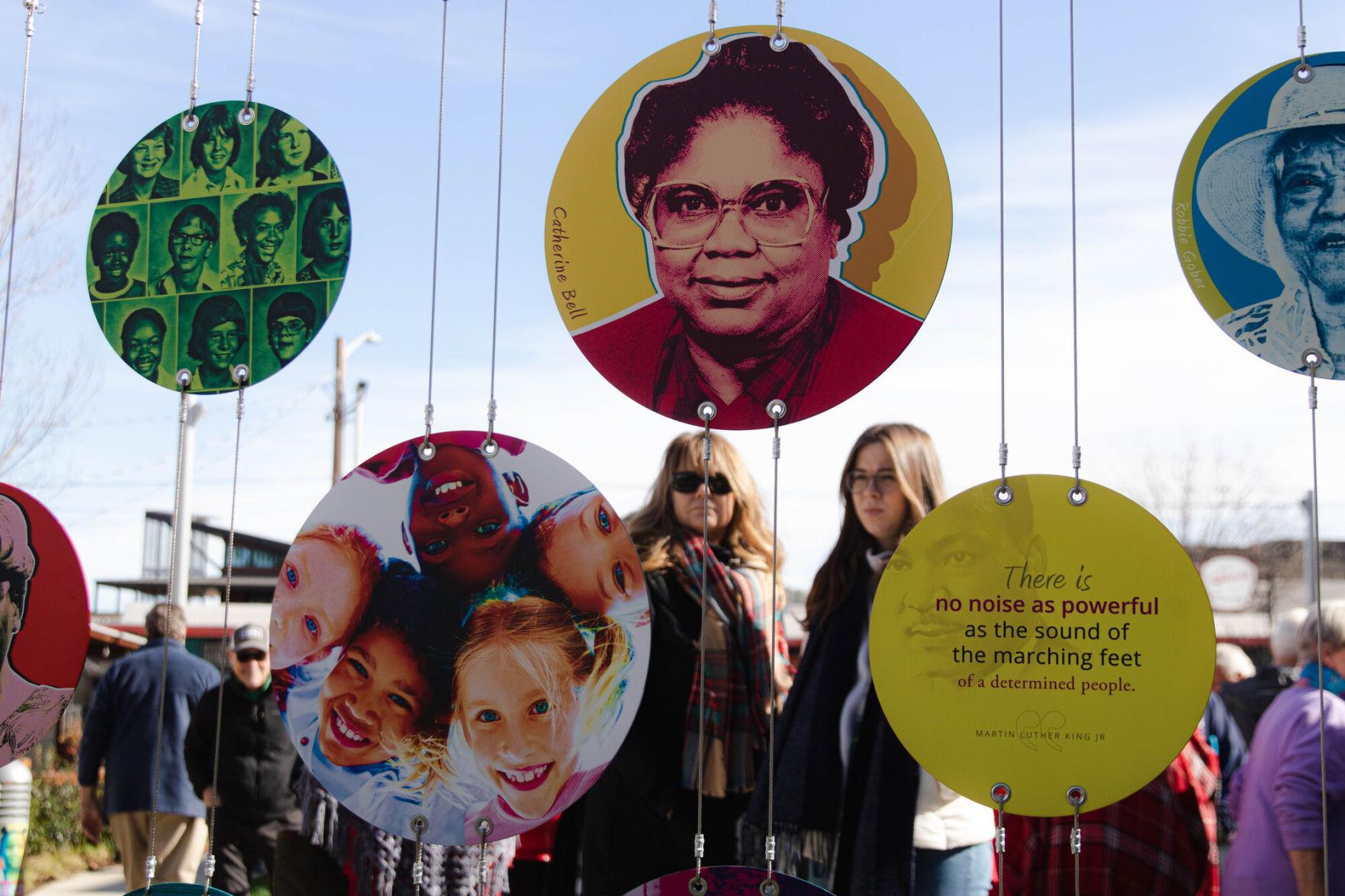
In 2021, Denton unveiled a monument honoring the Denton Women’s Interracial Fellowship at Industrial Street Pocket Park.
Jacob McCready/DRC file photo
Denton Record-Chronicle
By Annetta Ramsay For the Denton Record-Chronicle
March 3, 2023
March is Women’s History Month, and the 2023 theme is “Celebrating Women Who Tell Our Stories.”
Women have preserved Denton’s stories for many decades. The Denton Women’s Interracial Fellowship started in 1964 with 10 Black women and 10 white women to ease Denton’s school desegregation, but the group eventually did much more.
Black fellowship members told the story of Quakertown to white fellowship members when the fellowship began. It was likely the first time Black people talked with white people about Quakertown for four decades.
The story helped fellowship members understand that Denton’s problem was much bigger than desegregation.
The fellowship formed during a time of racial violence that was broadcast daily across the country. Quakertown (present-day Quakertown Park), also known as Quaker, was a thriving middle-class Black city within a city. Denton city leaders banished more than 300 Black residents across railroad tracks 100 years ago. After Quaker’s 1923 removal, white Denton forgot about it.
But Denton’s Black community preserved Quaker’s story through oral history. According to researcher Steve High, oral history helps marginalized communities record hidden stories that would otherwise be lost.
When the fellowship started in 1964, Southeast Denton streets were still not paved. Black residents paid the same city taxes as everyone else, although the neighborhood never received streetlights, curbs, trash pickup, adequate sewers or water. According to fellowship member Linnie McAdams, “The city just acted like Southeast Denton didn’t exist.”
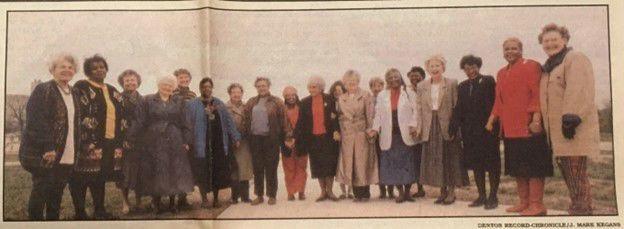
A newspaper clipping shows a photo of the Denton Women's Interracial Fellowship members. From left: Jean Kooker, Jewell James, Pat Gulley, Dorothy Adkins, Robbie Donsbach, Catherine Bell, Katherine McGuire, Betty Kimble, Willie Frances McAdams, Norvell Reed, Pat Cheek, Trudy Foster, Evelyn Black, Mae Nell Shephard, Lovie Price, Euline Brock, Billie Mohair, Mable Devereaux and Carol Riddlesperger.
Courtesy photo
Two historically white churches — Trinity Presbyterian and First United Methodist — joined forces with Denton’s historically Black St. James African Methodist Episcopal church to identify women who would join the Women’s Interracial Fellowship.
The first fellowship meeting took place in Jean Kooker’s house; subsequent meetings alternated between Black and white member’s houses. The first fellowship meetings technically broke Jim Crow laws. In Texas, Jim Crow Laws effectively prevented Black and white people from interacting until 1965.
Organizers wanted the number of Black and white women to be equal. Because only 8% of Denton was Black, the 10 Black women who joined the fellowship meant only 10 white women could join. Leadership consisted of committees with Black and white co-chairs.
Fellowship women bonded when the Black women told Quaker’s story. In 1964, fellowship members started tutoring Black students transitioning from Denton’s separate but not equal all-Black Fred Moore School to Denton High School. Since Denton schools didn’t have buses, fellowship members provided transportation to and from school for students they tutored.
In 1966, 83% of Denton voters said no to a hotly contested urban renewal bond that proposed to displace Southeast Denton residents a second time. A grassroots group opposed to the use of eminent domain to take anyone’s home sparked a feud between Mayor Warren Whitsen and opposition leader Jerry Stout.
After the urban renewal bond failed, interracial fellowship members realized city leaders had no intention of helping Denton’s only Black neighborhood. The city refused to spend $188,000 in bond money they had already collected to pave Southeast Denton streets.
That’s when the Denton Women’s Interracial Fellowship got to work. Their transformational leadership style recruited Denton’s Black and white communities. Women in the fellowship spent countless hours getting the city to initiate services denied to Southeast Denton for four decades after Quaker’s banishment.
White fellowship member Trudi Foster attended Denton City Council meetings armed with charts and graphs because Black residents were not allowed to attend council meetings. Foster relentlessly lobbied the council until they agreed to pave Southeast Denton’s streets.
In 1989, city crews trenching for fiberoptic cables discovered a cistern with middle-class artifacts in what became Quakertown Park. Council member Mike Cochran publicized the story that city leaders had buried for decades; it was the first time most white residents became aware of Quaker.
Journalist Michelle Powers Glaze spent countless hours scouring former Quaker resident’s attics to write The Quakertown Story. Denton librarian Laura Douglas wrote the narrative for a Texas Historical Association marker.
Members of the Denton Women’s Interracial Fellowship effectively fought city hall and won. And the women’s work began by telling Quaker’s story.
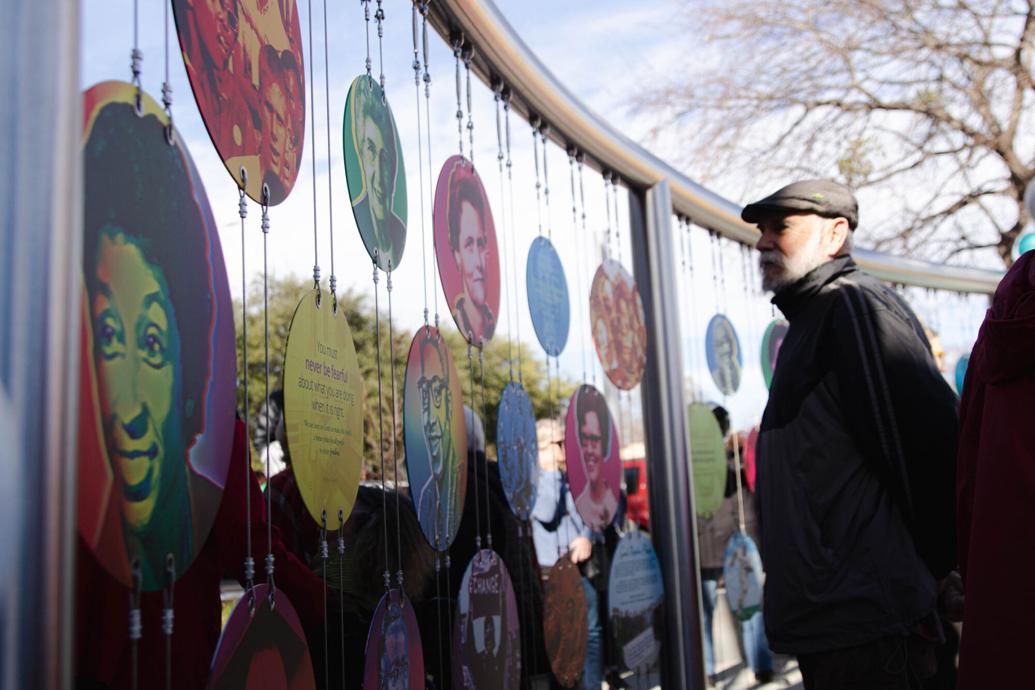
A visitor examines the Denton Women’s Interracial Fellowship monument during its unveiling in 2021.
Jacob McCready/DRC file photo