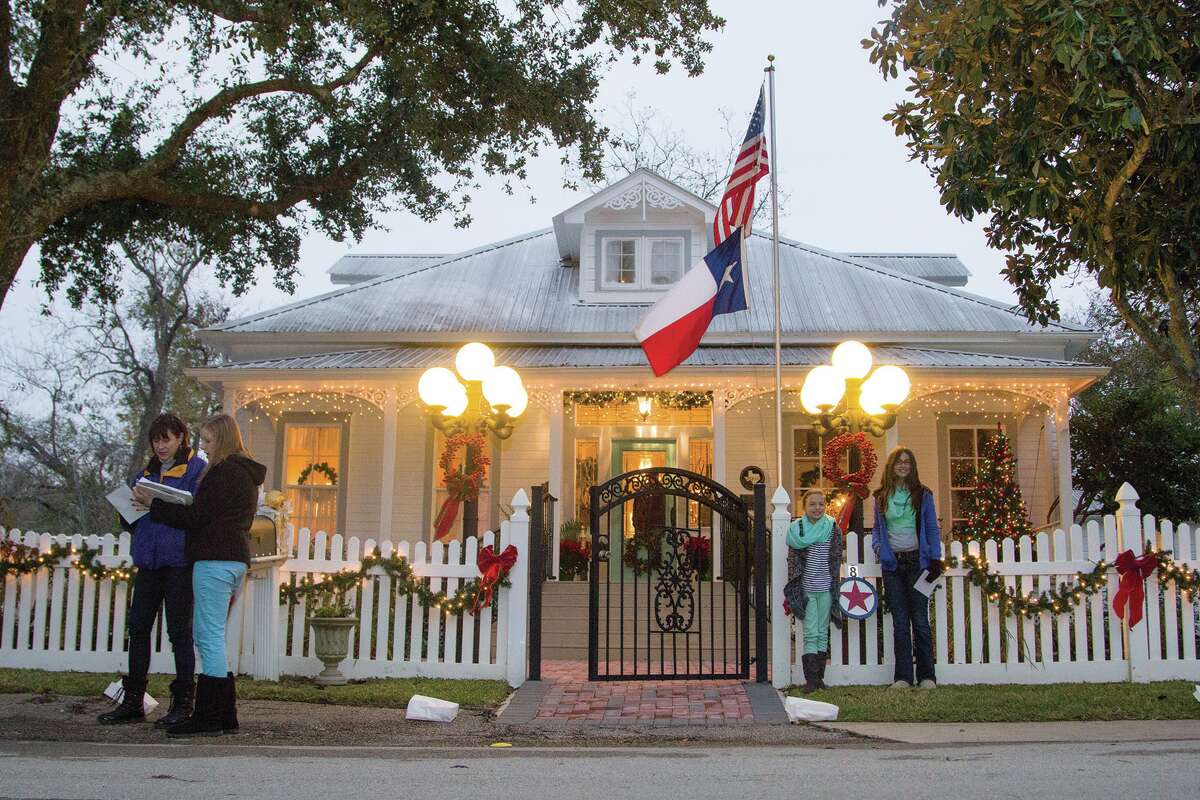
People walk house to house during the 36th Annual Montgomery Candlelight Home Tour, one of the events for Christmas in Montgomery. City officials have approved a 25 percent city tax exemption for property owners with historical structures, a move that leaders hope will encourage homeowners to maintain property and keep the ambiance of the downtown district alive.
The Courier of Montgomery County
Michael Garcia, Staff writer
Montgomery officials have approved a 25 percent city tax exemption for property owners with historical structures, a move that leaders hope will encourage homeowners to maintain property and keep the ambiance of the downtown district alive.
In the city with approximately 2,000 residents, more than 18 homes would qualify for this program, should they meet criteria, officials said.
Several homeowners have said the program could potentially help them pay for regular maintenance costs, which adds up when living in a historical home.
In 1992, the city council entered into an agreement with the homeowner of the "Magnolia House," built in 1854, which was granted a partial tax exemption on property taxes.
When Frank Tamborello, 76, moved into the home on College Street in April 2022, he approached city officials to see if he qualified for the same tax exemption.
City council members voted unanimously on March 14 to pass the ordinance.
Tani Traver said school taxes take up most of her monthly bill, but she appreciated the partial exemption on city taxes, saying it is a "nice start."
"I'm not going to complain about it," said Traver, who has lived three years in her downtown home that was built in 1896.
The partial property tax exemption program is part of an effort to encourage homeowners to maintain the original facades of the historical homes, said Dave McCorquodale, assistant city administrator and planning and development director.
Each historical home varies in terms of upkeep, said resident Mike Newman. Two factors are accounted for, including age, and type and date of restorations in the past, he said.
Most of the historical homes have pier and beam foundations, which can be prone to shifting, he said. This causes cracks, structural weaknesses and occasional leaks, he said.
"Repairs and need for periodic leveling can be costly," said Newman via email, noting that old wood needs to be painted frequently as well.
Resident Kalee Londeen said her and her husband put aside $500 monthly for regular maintenance for her home. Londeen has lived in what is known as the "Chilton Dean House," which was built in the early 1850s. Previous homeowners of the house have claimed in 2015 to have spent $70,000 in maintenance costs.
Tamborello said he was pleased that other property owners could get a financial break now.
"It's quite expensive to keep up these old houses," said Tamborello, noting that he's spent thousands of dollars on regular maintenance himself. "And that's part of the requirements (in the ordinance), is that you keep the houses in good repair."
In order for homeowners to qualify for the tax exemption, they must meet several property requirements.
- The property must contain at least one historic home or structure used as the primary dwelling for the property
- The historic home must be at least 100 years old at the time of the application
- The historic home must be located within the corporate boundaries of the city for at least 25 years at the time of the application
- The historic home must be kept in good repair
- The property must be within the Historic Preservation District or be a city-designated historic landmark
Larry Foerster, chairman of the Montgomery County Historical Commission, said previously that no such tax exemption program exists in the county. The city's historical district allows leaders to focus on preserving and protecting the historical homes, he said.
While owning a historical home can be costly to some, the charm and rich history is what draws people to these homes, leaders said. Newman said that homeowners are tasked with keeping their home presentable for visitors who appreciate the historical ambiance of the town.
"Historical homes aren't for everyone but a view of these dwellings and examination of how they were built keeps us aware of the efforts of our ancestors ancestors and their tough life," Newman said.
michael.d.garcia@houstonchronicle.com