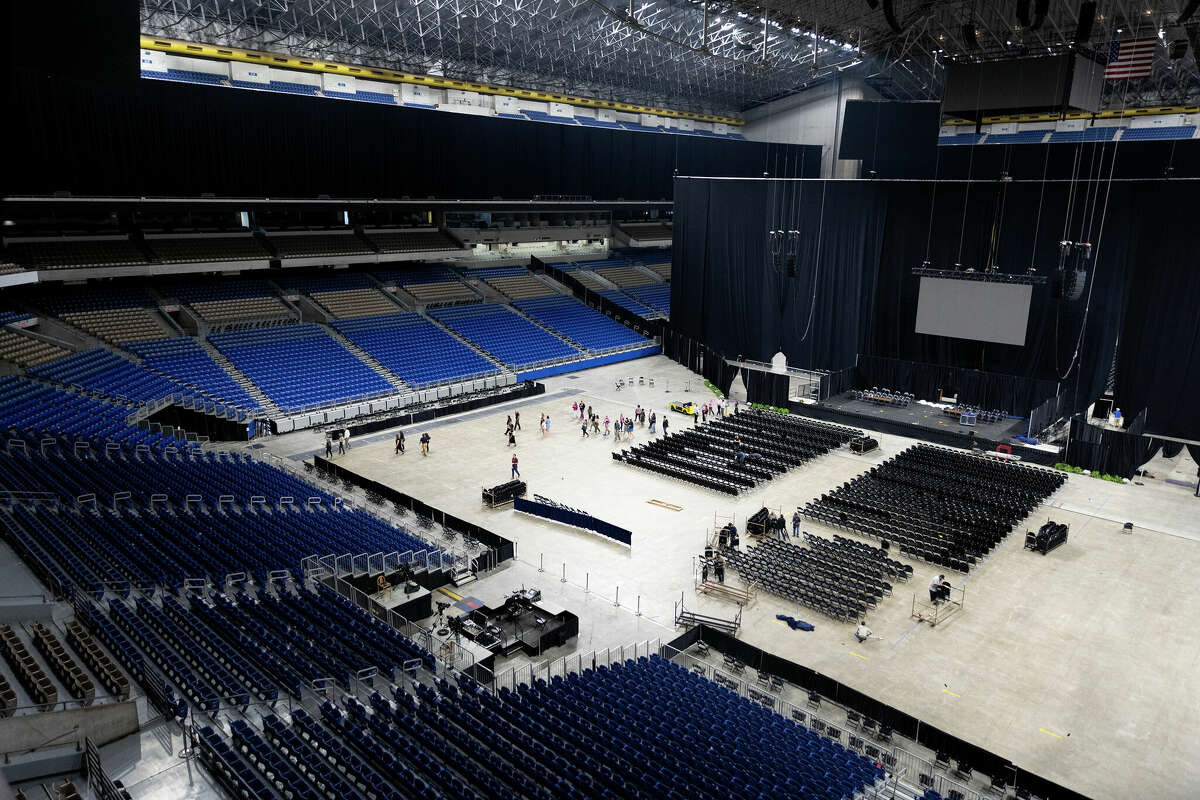
Crews clean up after a graduation ceremony at the Alamodome.
Asn Antonio Express-News
Greg Jefferson, Madison Iszler, Staff writers
City officials say the improvements are urgently needed if San Antonio is to holds its own in competing with other cities for conferences, trade shows, concerts, exhibition games and other events. The Alamodome is 30 years old and showing its age. The Convention Center on Market Street has less exhibit space than some rival venues.
As tourism dollars begin flowing again after COVID-19 devastated the industry, local leaders worry that the two downtown facilities aren’t cutting it with event planners.
They see Senate Bill 2220 as a way to pay for upgrades without burdening the city budget.
The measure would allow the city to take the state’s cut of sales taxes generated by any hotel within three miles of the Convention Center, an area called the "project financing zone." The arrangement would last for 30 years. The taxes are collected on hotel rooms and retail and beverage sales.
Legislative analysts differ on what the city’s overall take would be; one estimate puts it at $222 million, another at $473.6 million.
Jessica Phelps
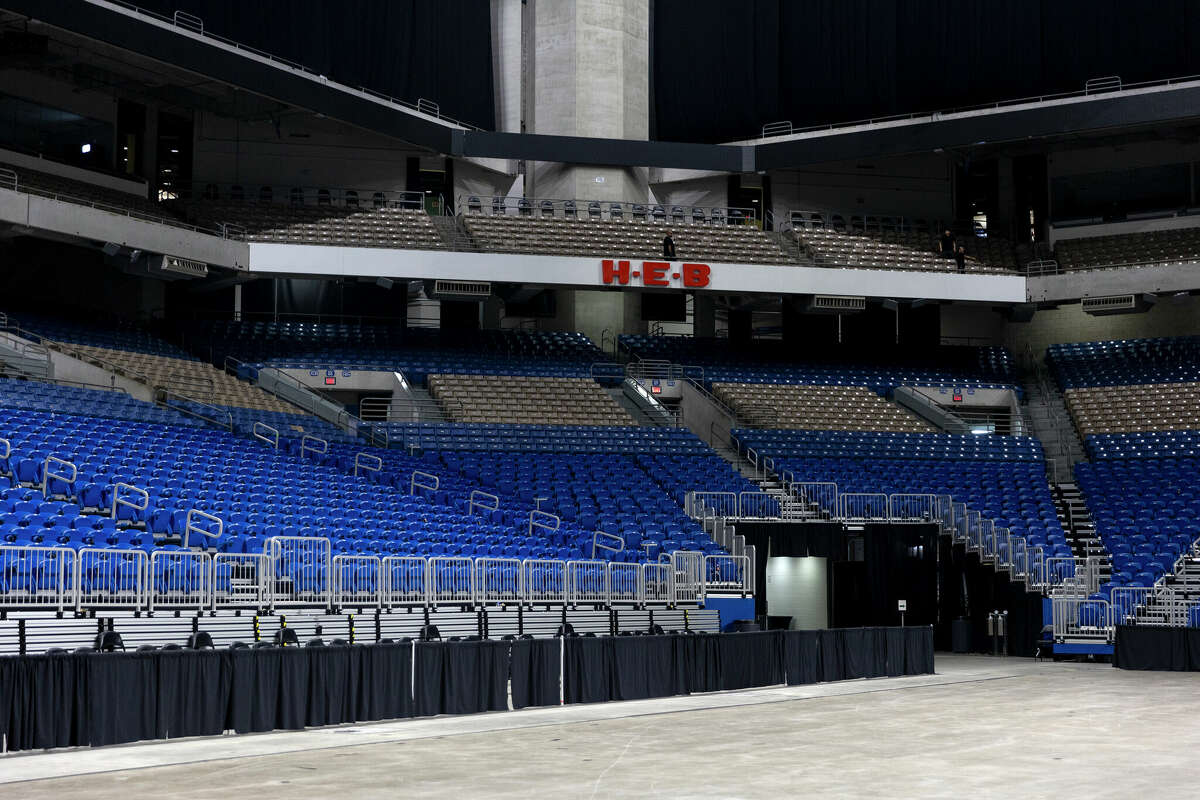
The money could be spent on "qualified projects," which the bill defines so as to make both the Convention Center and Alamodome eligible, along with any "arena, coliseum, stadium" or other facility used for professional or amateur sporting events.
The legislation, written by State Sens. José Menéndez, D-San Antonio, and Judith Zaffirini, D-Laredo, is tailored to San Antonio. And it's received little public attention.
“The reality is that we’re a top tourism city in the nation, and it’s a constant competition,” Menéndez said. The project financing zone “is a tool that our city can use," he said. "We’re doing the best we can to make sure we stay as competitive as possible.”
SB 2220 has cleared four votes in the Senate and two in the House, most recently on Monday. If senators are OK with a minor amendment added in the House, Gov. Greg Abbott will decide whether to sign it into law. If the amendment sparks objections in the Senate, the bill will go to a conference committee, where senators and representatives would work out their differences, and then to Abbott's desk.
The legislative session ends Monday.
In addition to improvements to the Convention Center and Alamodome, the city could spend the money on a new arena or stadium. The new owners of the San Antonio Missions baseball are looking to build a stadium downtown, probably with public financing. But there’s little indication city officials are thinking about using state sales tax revenue freed up by SB 2220 for anything other than the Alamodome and Convention Center.
“As I understand it, this bill is critical in that it would address San Antonio’s ability to capture quite a bit of business that it has been missing,” said Randy Smith, who is part of the Missions ownership group Designated Bidders LLC and co-founder of the real estate development firm Weston Urban. “If this is about a baseball stadium, somebody forgot to tell us.”
Jessica Phelps
Metroplex money
Thanks to a 2013 state law, Fort Worth and Dallas already have the ability to snag state tax revenue from hotels near their convention centers.
Fort Worth used the funds to help pay for the Dickies Arena, a $540 million, 14,000-seat facility that opened in 2019. The venue hosts concerts, the Fort Worth Stock Show & Rodeo and other sporting events.
The Dallas city council established its 30-year project financing zone in 2021. The city estimates it will generate a total of $2.2 billion for a massive expansion of the Kay Bailey Hutchison Convention Center.
San Antonio city and tourism leaders are nervously watching Dallas' progress on the $3 billion project.
“Many of the cities we compete with for conventions and large-scale events feature newer, more expansive, more modern facilities, and some are undergoing substantial renovations as we speak,” Mayor Ron Nirenberg said. “San Antonio must keep pace.”
Over the past five years, San Antonio has missed out on more than $525 million in revenue from major conferences because the Convention Center is not big enough, according to Visit San Antonio, the public-private organization that markets the city to convention planners and travelers.
The American Academy of Ophthalmology’s annual conference draws around 20,000 people and generates nearly $25 million in spending, said Visit San Antonio president and CEO Marc Anderson. But the organization cannot bid to host it because the Convention Center’s exhibit hall is too small.
Jessica Phelps
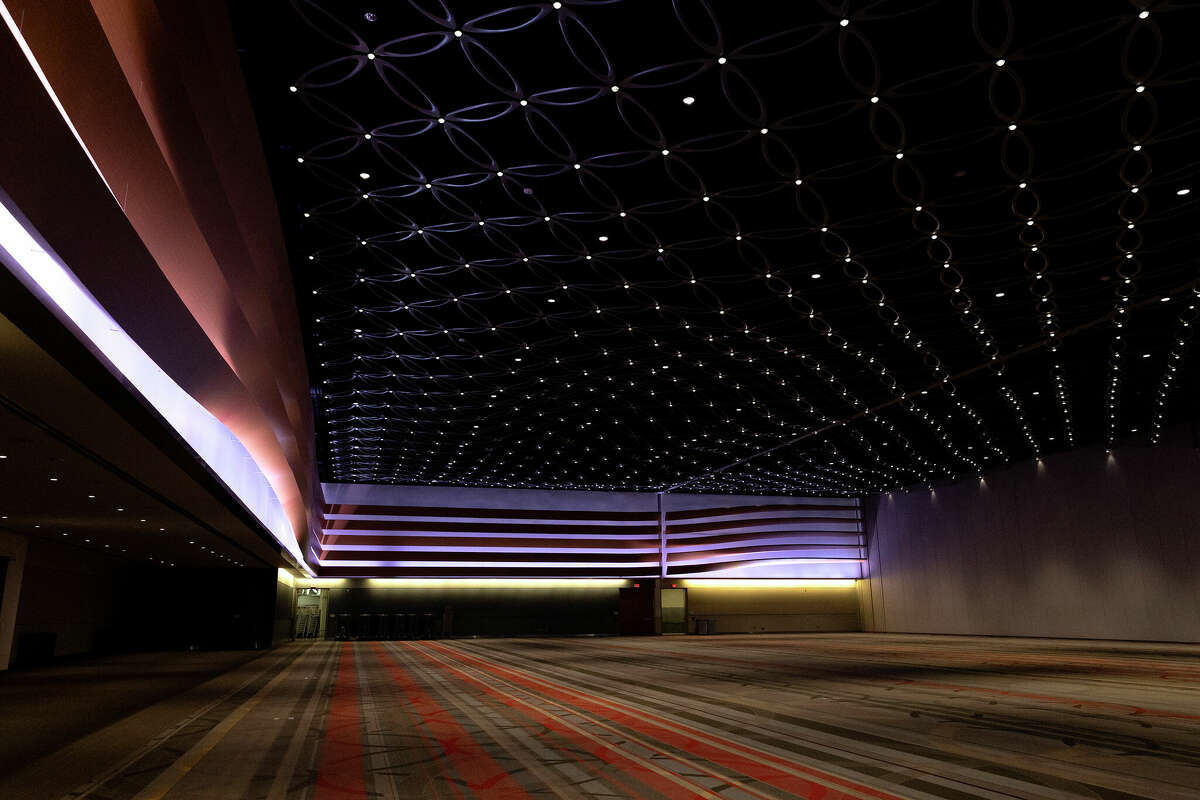
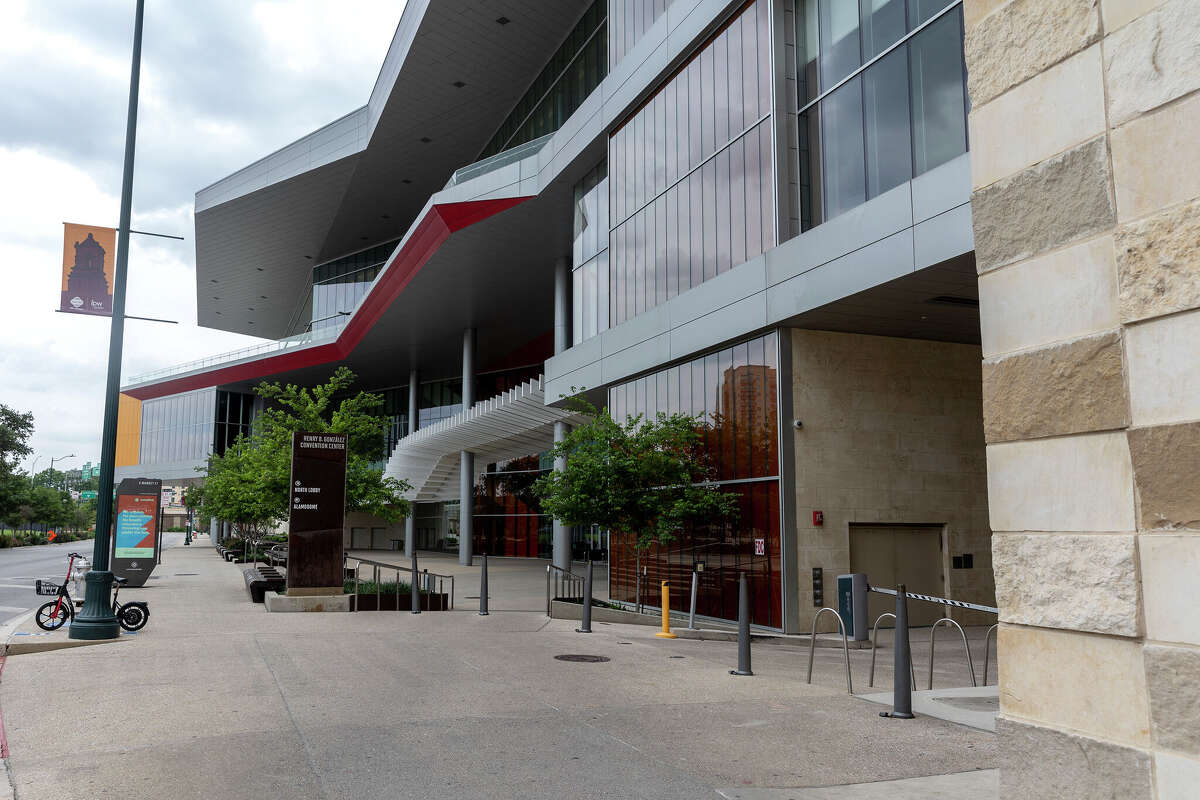
The Convention Center was built in 1968 for the World’s Fair. The original building was demolished to make way for a 9-acre park called Civic Park at Hemisfair. The city completed its last expansion of the facility in 2016, at a cost of $325 million.
It has about 514,000 square feet of exhibit space, a 54,000-square-foot ballroom and 72 meeting rooms, and hosts an average of 300 events with 750,000 attendees per year.
If the Convention Center added 200,000 square feet of exhibit space, the city said it could pursue an additional 94 meetings worth $921 million in revenue and 1.7 million visitors.
Heywood Sanders, a public policy professor at the University of Texas at San Antonio who has written extensively about the convention business, has heard the same argument from city and tourism officials before: Expand the Convention Center, and more big conferences and visitors will follow.
He doesn't buy it.
“We’re proposing to do what every other major city in the state is doing. And it is not particularly plausible that each and every one of them, and us, will see a whopping increase in our convention business,” said Sanders, author of the 2014 book "Convention Center Follies: Politics, Power, and Public Investment in American Cities."
Convention facilities were struggling before the pandemic forced the cancellation of a slew of meetings.
In 1996, before the Convention Center's two expansions and the construction of the adjacent Grand Hyatt, conventions and meetings at downtown hotels accounted for 725,395 hotel room nights, city data shows. That figure rose to 766,259 in 2019, an increase of 5.6 percent in 23 years. It dropped to 596,512 in 2022 in the wake of the pandemic.
Attendance at conventions booked by Visit San Antonio hovered at around 600,000s per year before soaring to 823,561 in 2018. After falling to the low 200,000s during the pandemic, conventions drew 541,587 visitors last year.
"We've barely moved the needle on our local convention business," Sanders said.
He lamented the lack of public debate over SB 2220.
"The fact that it is free to us doesn't mean it's a sensible public expenditure," he said. "Doing dumb things with other people's money is still doing dumb things."
Jessica Phelps
Aging Alamodome
The $186 million Alamodome sits east of the Convention Center, on the other side of U.S. 281.
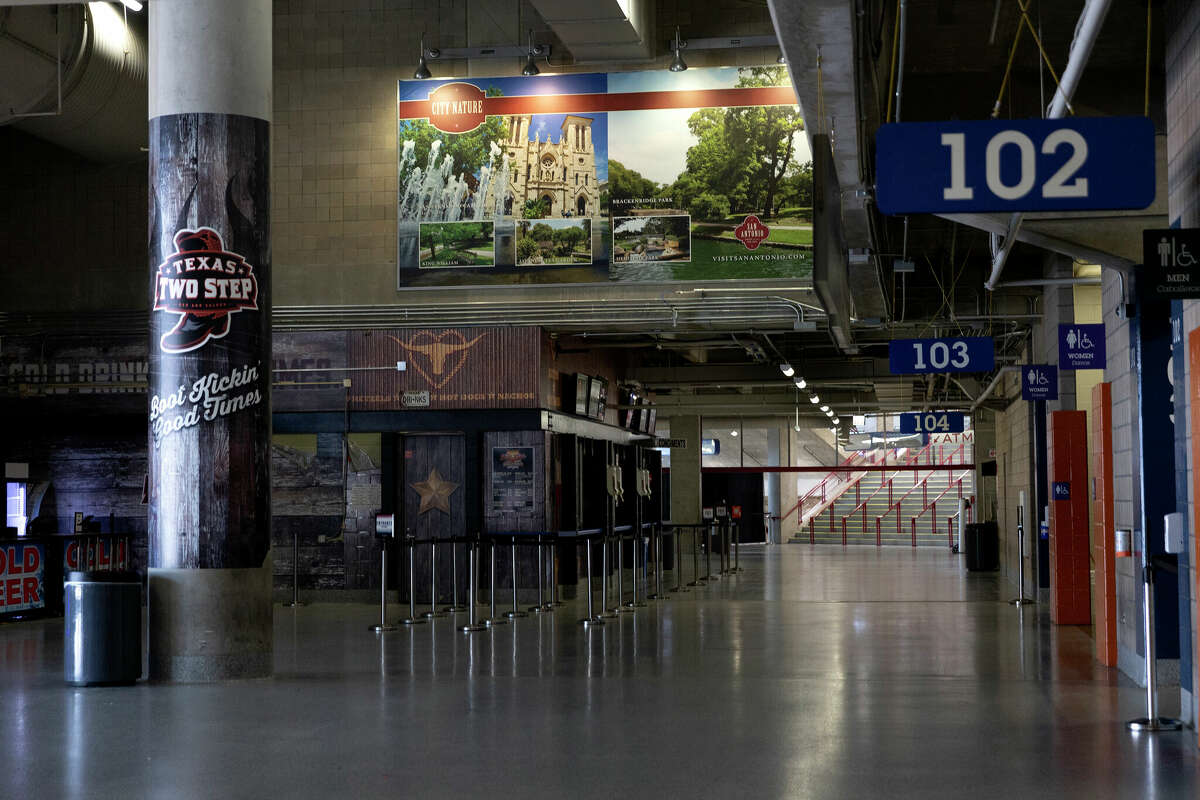
The former home of the San Antonio Spurs lacks many of the ultra-modern amenities fans are now used to, and its technology and lighting need upgrades.
The arena is struggling to return to attendance levels before the COVID-19 pandemic.
In 2019, nearly 905,000 people showed up for events at the dome. But attendance plunged to 227,000 the following year as the coronavirus spread and local and state governments ordered shutdowns and travel restrictions.
Last year, not even performances by Bad Bunny, Elton John, Motley Crue and Joan Jett did much to drive up overall attendance. The Alamodome ended the year having hosted a total of 514,000 people, the second lowest yearly figure in the venue's 30-year history.
The Alamodome is set to host the NCAA Men’s Final Four tournament in 2025 and the women’s Final Four in 2029. But it could struggle to land future tournaments.
"It has and will continue to become increasingly difficult to meet major event requirements and to compete against newer facilities,” a city official told the Express-News.
It costs about $19 million a year to operate the Alamodome. The city expects the facility to break even this year.
The Spurs left the Alamodome for the AT&T Center in 2002. UTSA’s Roadrunners and the San Antonio Brahmas football teams play at the dome, which also hosts the annual Valero Alamo Bowl.
The city set aside $157.3 million in its 2023 budget for improvements to the Convention Center and Alamodome over the next six years, including upgrades for the NCAA Men’s Final Four two years from now. The work includes replacing building systems, technology, elevators, lighting and other features.
Jenny Carnes, president and CEO of San Antonio Sports, a nonprofit that helps bring major sports events to the city, said her organization backs SB 2220 largely because of the potential new funding for the Alamodome.
“The overall need is for the city to determine what improvements are needed at the Alamodome beyond the 2025 improvements,” she added.
greg.jefferson@express-news.net / madison.iszler@express-news.net