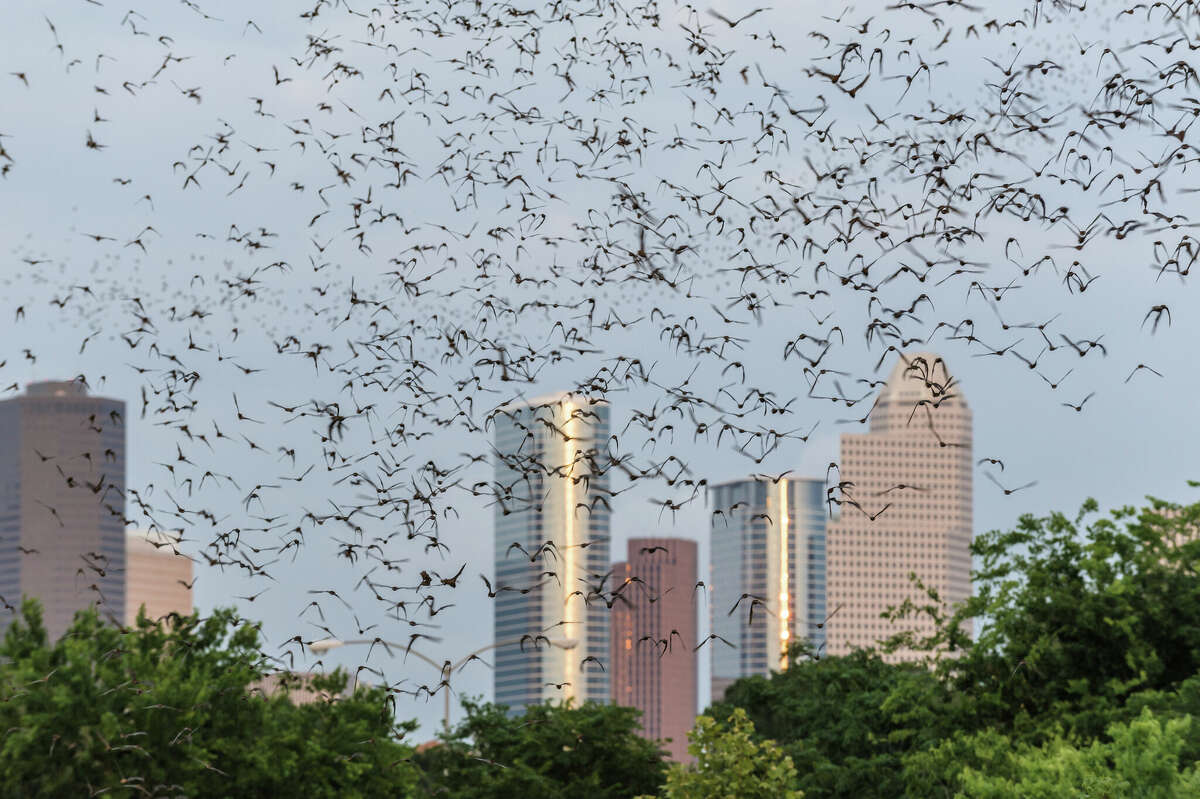
About 250,000 bats take flight every evening in the warmer months in Houston, a phenomenon people can watch in real time.
Richard Eden/Getty Images
Beaumont Enterprise
Sana Ameer, Staff writer
Any meteorologists casually monitoring the National Weather Service's Houston radar might have been shocked to see a green cloud-shaped image suddenly swell out of nothing on the screen one evening in early June.
Instead of a low pressure system defying time to explode into a hurricane before it even made the journey through the tropics, the billowing graphic turned out to be a massive exodus of bats taking flight from under a bridge in Houston.
Our radar detected some bats taking off from the Waugh Drive Bat Colony this evening. 🦇🦇🦇 #TXwx #HOUwx #GLSwx #BCSwx #Houston pic.twitter.com/z28Ho3EXyt
— NWS Houston (@NWSHouston) June 5, 2023
Most evenings during the warmer months after the sun sets, thousands of wild bats emerge from their sleeping quarters under the Waugh Drive Bridge to begin the night shift.
Watching the bat colony take flight and fly along the bayou or through the skyscrapers at night is often described as a marvelous display of nature and a uniquely Houston experience.
An estimated 250,000 Mexican free-tailed bats call the bridge home and usually emerge when sunset temperatures are above 50 degrees.
"Looks like the bat signal was lit in Houston," one user replied to the weather graphic NWS posted on Twitter.
It was unique weather conditions on June 4 that made the radar image unusually clear, a NWS meteorlogist said, adding it was likely temperature inversions that allowed the radar to pick up a non-weather phenomenon closer the ground. But it's uncommon to see such a highly visible formation on radar.
"In some cases, you can actually see traffic," said Brad Brokamp, a NWS meteorologist. "But you typically don't get an image that clear."