Buffalo Business First
By Chuck Clark – Marketing & Public Information Officer, City of Lackawanna, The Business Journals
A focused strategic development plan, when coupled effectively with government incentives, is often the catalyst for driving a municipality's economy forward. Such is the case in the City of Lackawanna, where the city has made a focused effort to create an ‘open for business’ approach to development which aligns and supports various development initiatives and programs offered by Erie County Government and the Erie County Industrial Development Agency (ECIDA).
The most notable example of Lackawanna’s alignment is the city’s 2020 revision of its dated tax platform in an effort to attract new and retain current businesses – which had been a struggle for the former ‘steel city’ since Bethlehem Steel, its largest taxpayer and employer, closed local operations 40 years ago.
Prior to 2020, in an effort to keep the city solvent after the steel plant’s closure, Lackawanna operated under a homestead/non-homestead tax structure. In the 40 years that followed, this structure became a tremendous barrier for attracting new private economic development as the non-homestead/business rate had ballooned to $42.10 per $1,000 — meaning 42 cents of every dollar earned by a business went to pay city taxes. Despite the availability of government incentives, many developers bypassed Lackawanna for decades because it was not a financially viable municipality.
Under the administration of Mayor Annette Iafallo, in 2020 the City of Lackawanna shifted to a more competitive unified tax rate, which treated all properties equally from a tax rate perspective. The city tax rate was lowered and today stands at a steady $16.75 per thousand. Now, for the first time in decades, Lackawanna is no longer an afterthought in the development community. Since 2020, over $130 million in new economic development projects have been initiated or completed in the city.
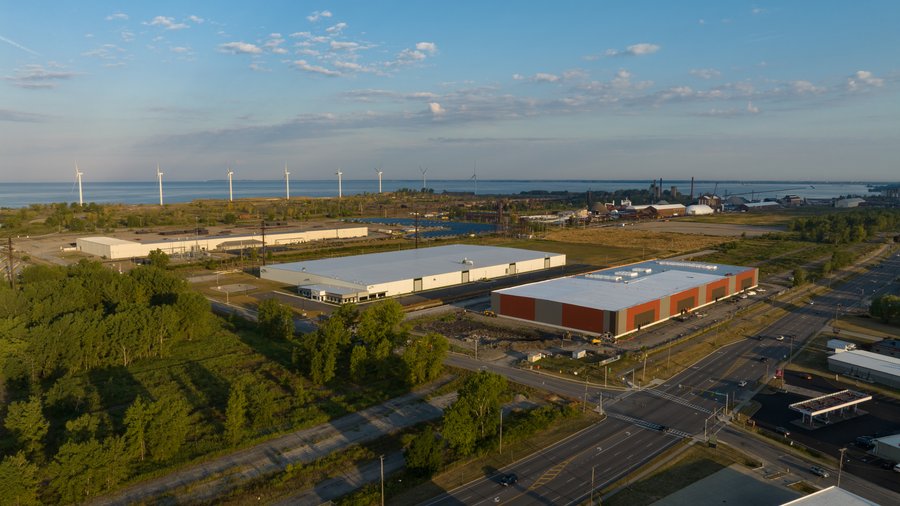
Renaissance Commerce Park (RCP) emerging on the site of the former Bethlehem Steel plant under a multi-government partnership led by Erie County Government, is the most prominent of these developments. Without Lackawanna’s tax platform change, private companies currently investing in RCP and benefitting from the ECIDA incentives, would very likely be questioning their decisions once the 10 year incentive period ended.
Development momentum at RCP has spilled over into other parts of Lackawanna, with the city securing new private development projects on three city-owned parcels and on three private parcels elsewhere in the city with projects ranging from manufacturing, warehouse, mixed-use and restaurant.
Lackawanna’s development strategy includes ensuring that its property assessment roll is current, so all projects are generating viable revenues for Lackawanna taxpayers. In addition, the city instituted an open-door collaborative policy regarding zoning and planning, where officials discuss the zoning/planning process with developers to help them understand and meet requirements with the goal of getting projects online as quickly as possible.
When taken together, this strategic approach to economic development aligned with government incentives illustrates an acquisition, retention and growth strategy – which Lackawanna believes is the formula for creating a pipeline of new and sustainable projects, revenues and jobs for decades to come.
The City of Lackawanna offers several attractive development opportunities within its 6.6-square-mile footprint. Learn how to build and grow your business here.
Chuck Clark leads the City of Lackawanna’s strategic brand marketing for economic development along with media, community and trade partner relations. He has extensive private and public sector senior marketing leadership experience, as well as in higher education where he specializes in teaching marketing management, brand advertising and consumer behavior at undergraduate and graduate levels.