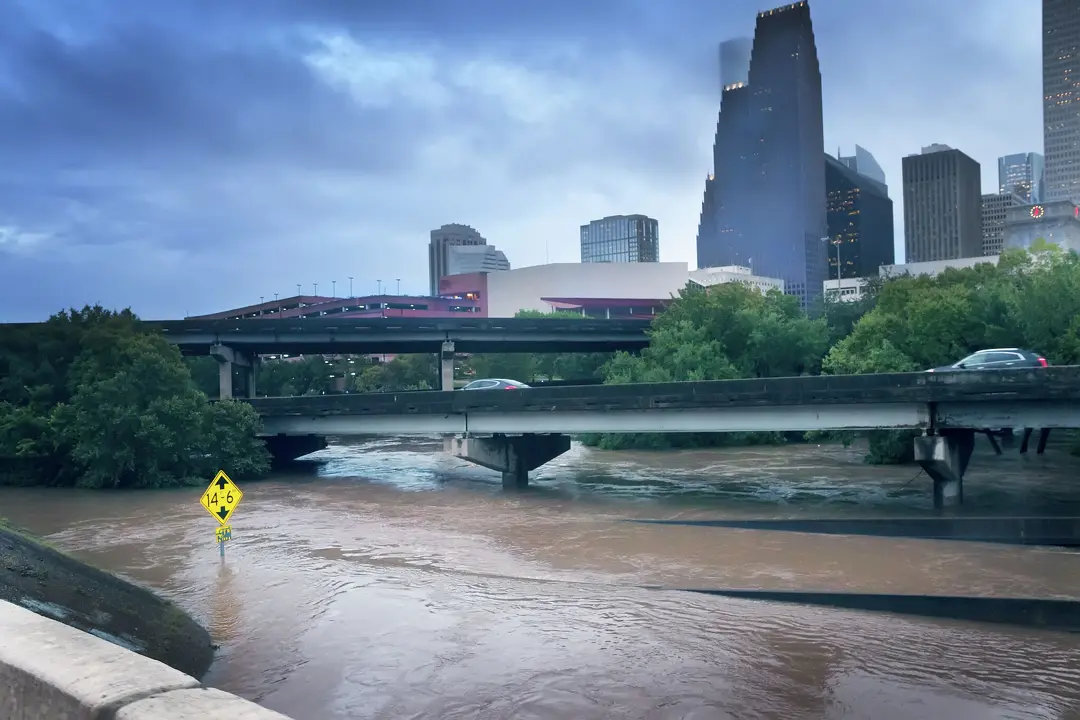
The Federal Emergency Management Agency has designated 14 census tracts in Harris County that are most at-risk and a priority for federal funding in an extreme weather event.
irin717/Getty Images/iStockphoto
Chron.
By Kennedy Sessions
Updated
Harris County has more FEMA-designated disaster zones than anywhere else in the country, according to a new report.
The Federal Emergency Management Agency (FEMA) this month designated certain communities at high risk for natural disasters as "disaster resilience zones." These areas are the most at-risk in extreme weather events and would be prioritized for federal funding and resources. According to FEMA, these are meant to increase resilience in underserved communities at risk due to climate change.
In addition to where to prioritize federal funding, FEMA said the selected areas also designate where the most money is needed from public, private, and philanthropic agencies and organizations.
Out of 483 census tract designations, 14 were selected from Harris County, the most out of any county in the U.S., according to Rice University's Kinder Institute. In no specific order, FEMA found the most at-risk census tracts in Harris County are Greensport, the George Bush Intercontinental Airport, the northwest area of Aldine, Channel View, Gulfton, La Porte, Sharpstown, and more. An interactive map of all the resilience zones can be found here.
According to Rice researcher Muizz Akhtar, all 14 designated zones comprise 60,000 people, about 1 percent of the population. Still, they are areas where people are less likely to have resources in an extreme weather event.
The curated list comes after President Joe Biden signed the Community Disaster Resilience Zones Act into law last year. Under the law, FEMA must create a natural hazard risk assessment and identify communities most at-risk by census tracts. FEMA collected data from the National Risk Index and the Center for Disease Control Social Vulnerability Index to make the designations.
“These designations will help ensure that the most at-risk communities are able to build resilience against natural hazards and extreme weather events, which are becoming increasingly intense and frequent due to climate change,” FEMA Administrator Deanne Criswell said in a statement. “This aligns with Congress’ direction and other FEMA initiatives to get federal support and resources to the communities that need them most."
FEMA officials said the agency will announce more designations that include tribal lands and territories in the next few months.