Texas' right-to-farm amendment would set new bar for city regulation
Published: Tue, 10/03/23
Texas' right-to-farm amendment would set new bar for city regulation
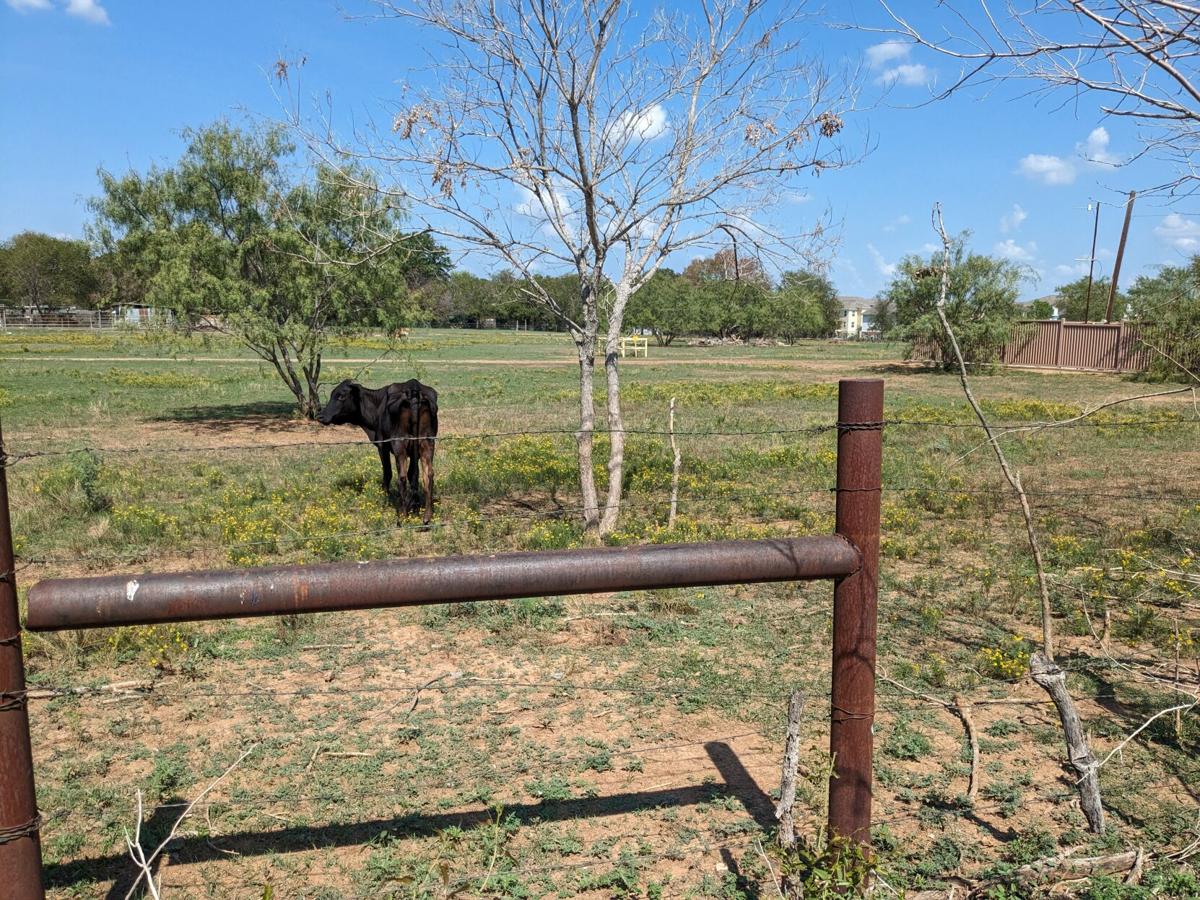
Cattle rest in a pasture near Third Street and Garden Drive in South Waco, with student housing in the background. Waco city leaders have not seen major regulatory disputes between development and agriculture.
J.B. Smith, Tribune-Herald
October 2, 2023
Editor's note: Voters have approved the Texas Constitution 517 times since 1876, and they will get the chance again Nov. 7. This is the first of a series of Tribune-Herald articles examining the intention and implications of the 14 amendments on the ballot.
The ballot language of Proposition 1 on next month’s state constitutional election is simple, asking for a vote for or against “The constitutional amendment protecting the right to engage in farming, ranching, timber production, horticulture, and wildlife management.”
The mechanics of the amendment, which would add a 36th section to the state Constitution’s Bill of Rights, are more complicated.
The amendment would limit but not eliminate the power of municipal governments to regulate agriculture.
Broadly, governments seeking to regulate generally accepted agriculture practices would have to show clear and convincing evidence of an imminent danger to public health and safety. In most cases, laws and regulations have no such burden of proof.
Meanwhile, the definition of generally accepted practices remains under development.
The amendment on the Nov. 7 ballot statewide would build on multiple statutory changes approved in this year’s legislative session that expand the state’s right-to-farm statute, which has been in place since 1981.
The new laws limit local-level regulation and have already led the city of Waco to change its zoning laws. Related legislation also strengthens protections that agricultural operations have from lawsuits.
The amendment also includes exceptions to the clear and convincing standard for regulations that preserve the state’s natural resources, and allows state agencies to protect animal health or crop production. The Texas A&M Agrilife Extension Service is in the process of developing a manual laying out the specifics of what qualifies as a generally accepted agricultural practice in the state.
The idea for a constitutional amendment arose largely as a strategy for pushing back against and anticipating municipal actions that harm producers on the outskirts of growing metropolitan areas, said Dalton Moore, chief of staff for state Rep. DeWayne Burns, R-Cleburne. Burns was one of five authors of House Joint Resolution 126 calling for the constitutional election. Burns also was an author of House Bill 1750, one of the pieces of legislation that took effect Sept. 1 to expand the right-to-farm statute.
“We just felt that this was something that needed to be taken to the next level, because farming and ranching is the backbone of the economy in Texas,” Moore said of the decision to pursue a constitutional amendment on top of the related statutory changes.
The measure does not remove anything in the Constitution, but adding it will mean another election, rather than legislative action alone, would be required to roll it back. Proposition 1 is aimed at conflicts between agriculture and development that has sprawled into formerly rural areas, a set of conflicts that largely has not arisen in the Waco area even as it grows.
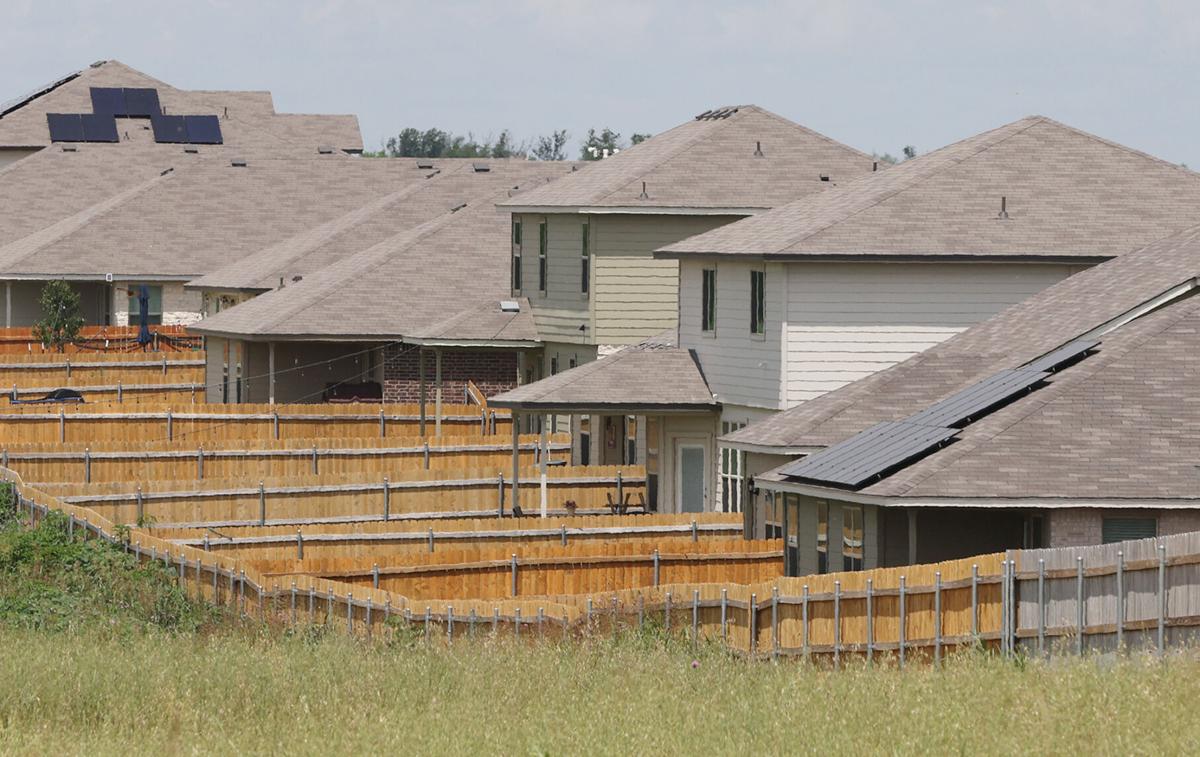
Stylecraft homes in Hewitt off Ritchie Road.
Rod Aydelotte, Tribune-Herald file photo
During committee hearings, James Lockridge testified that the city of Farmers Branch in Dallas County mowed his hay fields based on grass height requirements, wiping out significant revenue, then sent him the bill for the mowing. He also later faced fines for not quickly moving hay bales.
Farmers Branch by early this year rolled back its grass height limits based on state law in place before this year's changes, but Lockridge also discussed similar challenges in other North Texas cities.
In an interview this month, McLennan County Agrilife Extension Agent Shane McLellan said the type of conflicts that motivate Proposition 1 have not cropped up in the Waco area.
“The city of Waco, most of our smaller towns in our county, they’re ag friendly,” McLellan said. “They work with ag producers.”
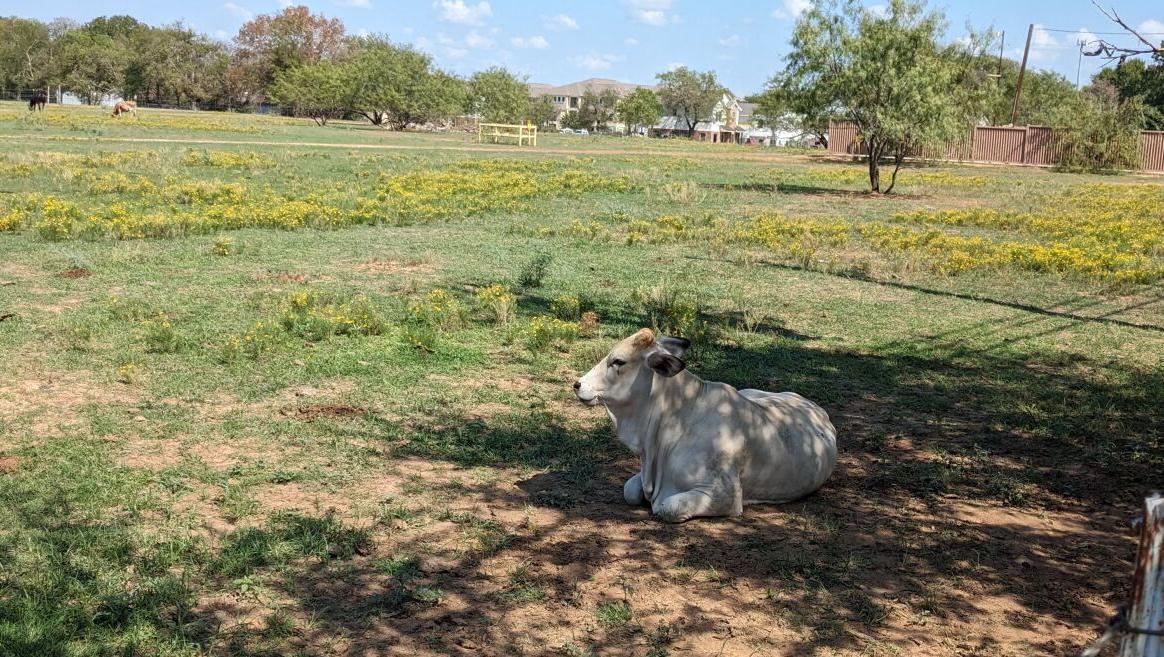
Cattle rest in a pasture near Third Street and Garden Drive in South Waco, with student housing in the background. New state laws and a proposed state constitutional amendment limit the powers of cities to regulate agriculture.
J.B. Smith, Tribune-Herald
He said the measure is about anticipating conflict points that arise as new developments and new people move in next to farms and ranches, especially in situations when people moving into a newly developed area do not have a basic understanding of agriculture.
While there have been no high-profile conflict points locally, new housing and other development taking over farmland is a familiar dynamic. The Ritchie Road area, China Spring, the Highway 84 corridor and Hewitt in recent years have seen thousands of suburban homes take the place of cropland, with picket fences rather than barbed wire now bordering many fields.
A long list of agriculture associations have endorsed Proposition 1. The Texas Farm Bureau and 22 other groups have backed the Right2Farm Texas political action committee formed to support the measure.
But the Cameron-based Farm and Ranch Freedom Alliance opposes the amendment as placing undue limits on regulation and being overly broad and ambiguous. Practical implications of the change remain to be worked out, raising uncertainty rather than consistent and practical regulation, alliance Executive Director Judith McGeary said.
The limits on action against farms could, for example, leave organic producers without recourse if a neighbor’s operations are contaminating their crops with seeds or pesticides that do not meet organic requirements, McGeary said.
“There are a lot of small farmers who live next large farms, and there’s nothing in this that protects them,” she said.
The amendment and related right-to-farm expansions also hinge on unelected Extension Service officials’ yet-to-be-developed definitions of generally accepted agricultural practices, she said.
“There is an immense amount of power being put in the hands of the Extension Service,” McGeary said.
Based on the already-expanded right-to-farm statute, the city of Waco has made two ordinance amendments, one to allow agricultural operations in all zoning categories and the other to make the language of its grass height limits match the state statute’s.
It says vegetation height limits, with a minimum allowance of one foot, can only apply to a farm, ranch or wildlife management area within 10 feet of a public right-of-way or a neighboring property that includes an occupied residence.
Planning Director Clint Peters said Waco historically has not applied its grass-height requirement to farms, and the zoning limits have largely been a moot point because the zoning classes that did not allow farming were limited to areas of town that are already developed and impractical for agriculture.
Peters said the city also has some agriculture-specific provisions, such as requirements to keep animal pens a certain distance from a property line, and it is waiting on the Extension Service’s guidance to ensure those provisions can remain unchanged.
“As of right now, we feel like those comply with state law,” Peters said.
The Extension Service has experts in a range of agricultural practices developing its manual, though it has not yet established a timeline for completing the task. House Bill 1750 requires it be developed “as soon as practicable.”
Once the initial draft of the manual is ready, it will be peer-reviewed within the Extension Service, and the service’s legal counsel will review it before it is submitted to the Legislature, said Chris Elam, strategic initiatives lead in the Extension Service director’s office.
Statutory changes
Under the House Bill 1750 provisions already in effect, a city that wants to create any requirement for an agricultural operation must “obtain and review” a report by a city health officer or consultant that presents clear and convincing evidence there is no less restrictive way to protect people in the immediate vicinity of the agricultural operation from its negative effects.
Those effects include the imminent danger of explosion, flooding, an infestation of vermin or insects, physical injury, the spread of an identified contagious disease that is directly attributable to the agricultural operation, the removal of lateral or subjacent support, an identified source of contamination of water supplies, radiation, improper storage of toxic materials, crops planted or vegetation grown in a manner that will cause traffic hazards or discharge of firearms or other weapons.
The report also will have to explain any recommendation for a requirement limiting a generally accepted agricultural practice that the Extension Service manual identifies as not posing a risk to public health.
In addition to House Bill 1750, another new law expanding the state’s right-to-farm statute has added new limits to the types of lawsuits that can be brought against established agricultural operations.
All 50 states have some form of right-to-farm law that, like Texas’ 1981 version, exempts agricultural operations from nuisance lawsuits. Nuisance lawsuits provide a way for property owners to challenge actions by neighbors that interfere with the use of their property, often industrial operations that create excessive noise, light, odor or runoff.
The measure that passed as House Bill 2308 expands the protection for farms beyond nuisance lawsuits to include “other actions to restrain” agricultural operations. Though the statute previously singled out nuisance lawsuits, courts already applied it to other actions, according to an explainer by Texas Agriculture Law Blog author and Extension Service agricultural law specialist Tiffany Dowell Lashmet.
For example, an appeals court dismissed both nuisance and trespass claims an El Paso County landowner filed in a case dating to 2003 against a neighboring dairy after manure ran across the plaintiff’s property.
The right-to-farm protections previously applied to operations in place for at least a year, with a separate start date established for any expansion. House Bill 2308 now places each operation under a single start date, with a new start date if an operation is substantially changed, defined as “a material alteration to the operation of or type of production at an agricultural operation that is substantially inconsistent with the operational practices since the established date of operation.
Waxahachie-based ag producer John Paul Dineen III talks about the right to farm bills in the Texas House and Senate.
via The Waxahachie Sun on YouTube
See video at: https://youtu.be/106hea2eBlU
The agriculture industry has remained a driver of Texas’ economy, even as the state has grown past 30 million residents and its economy has diversified with a dozen sectors eclipsing agriculture in terms of gross domestic product. As of 2021, farms and ranches covered 75% of the state’s land, driving $24.7 billion in agricultural cash receipts and representing 1.9% of the state’s economic activity, according to a University of Arkansas Division of Agriculture analysis. The state had $7.3 billion in agricultural exports in 2021, according to the U.S. Department of Agriculture.