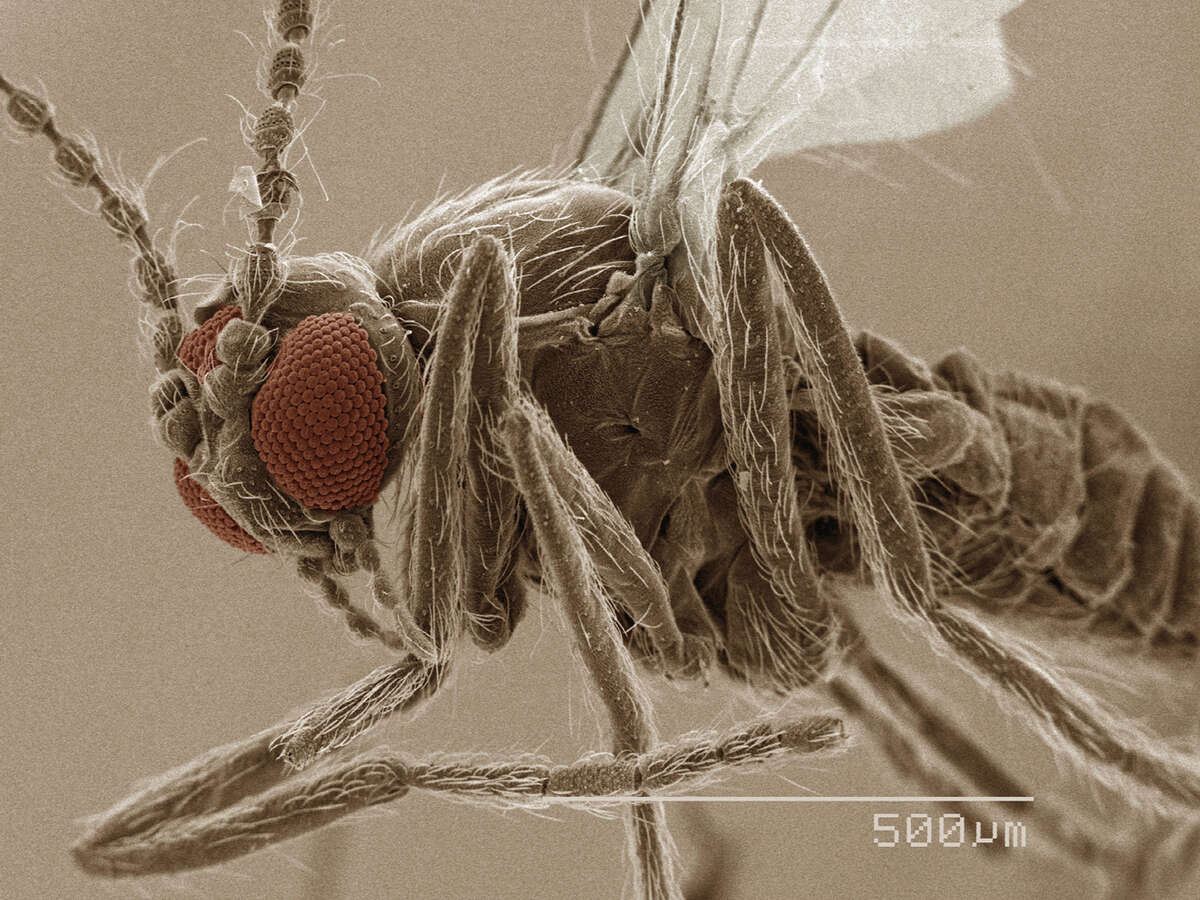
The sand fly, seen here in an extreme close-up, spreads the parasite that causes cutaneous leishmaniasis, which has become endemic to Texas.
Gregory S. Paulson/Getty Images/Image Source
San Antonio Express-News
Shepard Price, San Antonio Express-News, Staff Writer
The federal government now considers a disease caused by a flesh-eating parasite to be endemic to Texas, but that disease hasn’t been reported in the Alamo City, according to the San Antonio Metropolitan Health District.
Closed or open sores typically develop within several weeks or months of infection, but in other cases, you may not see sores for months or years after infection, CDC says. Most sores eventually heal, even without proper treatment, but they can last for months or years and typically result in scarring.
In some cases, leishmaniasis can spread to the visceral organs, according to the Texas Department of Health and Human Services. This results in visceral leishmaniasis, characterized by irregular bouts of fever, substantial weight loss, swelling of the spleen and liver, and anemia. If untreated, the fatality rate of visceral leishmaniasis can be as high as 100%.
If you have traveled to an endemic region and think you might be at risk of leishmaniasis, Health and Human Services says you should inform your health care provider.
“The disease mainly affects poor people in Africa, Asia and Latin America,” the World Health Organization says, and it “is associated with malnutrition, population displacement, poor housing, weak immune system and lack of resources.”
No locally acquired case has been reported in Bexar County, said David Alegria, public relations manager for Metro Health. And the disease remains uncommon in the United States.
No vaccine or drug to prevent infection is available, Alegria said, so the best way to avoid the parasite is to avoid the bite of the sand fly.
Travelers should avoid outdoor activities in endemic areas, especially from dusk to dawn, and they should wear protective clothing and apply insect repellent to exposed skin and under the edges of clothing, CDC says.