Developing Problems: Lack of standards has led to many new homes built in fast-growing south and west Killeen to look th
Published: Wed, 08/30/23
Developing Problems: Lack of standards has led to many new homes built in fast-growing south and west Killeen to look the same, be built close together and close to the street with short driveways.
City moves to start collecting on inspection fees
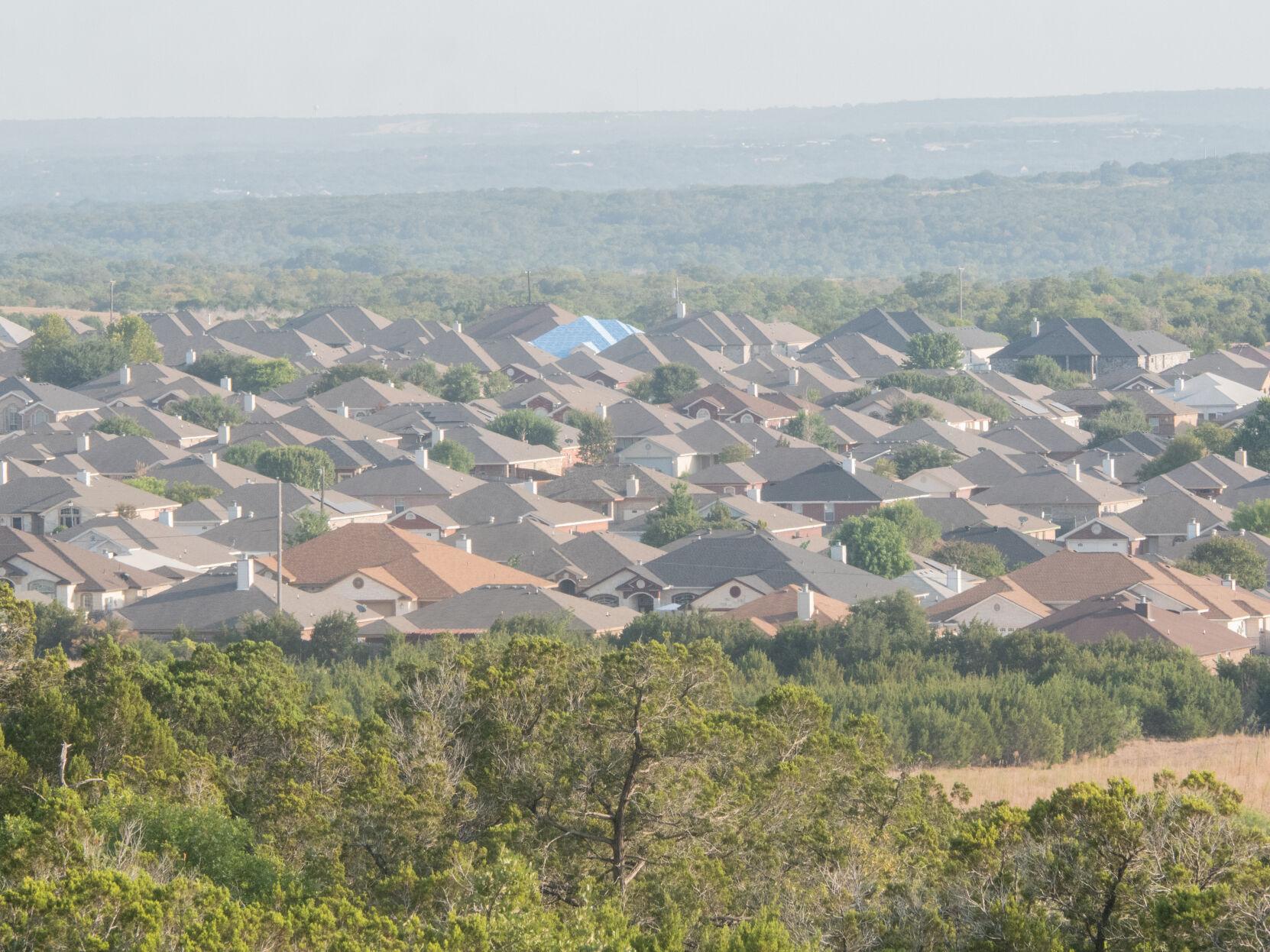
The established and developed housing in Bunny Trail Village shares floorplans and external design for a faster construction process.
Walter Lanier | Herald
Killeen Daily Herald
By Kevin Limiti | Herald
August 27, 2023
Killeen City Manager Kent Cagle revealed to the Herald Wednesday that a new system started this month for collecting developer inspection fees — the latest development in a series of long-standing issues between the city government and the businesses that build new homes in Killeen.
For decades, the two sides have quarreled over the placement of mailboxes, mandatory trees and bushes in the front yards of newly built homes and other regulations. In recent weeks, the city and developers have been locking horns again — this time over inspection fees and design standards.
The lack of those standards in recent decades has led to many new homes built in fast-growing south and west Killeen to look the same, be built close together and close to the street with short driveways. As a result, many neighborhoods in Killeen often have streets full of parked cars.
From now on, Cagle said Thursday, the developers would need to show a receipt to the engineers from building inspection to show that they paid the inspection fees.
“We’re not going to do it until they show us a receipt from the building inspection,” he said.
Cagle also said an audit would be necessary in order to figure out exactly how many fees were owed by developers.
“We don’t know the amount and it will take a very extensive audit to find out,” he said in an email last week “We will have to follow every development submitted and try to match payments or non payments. I feel sure the Council will ask our Internal Auditor to do that.”
Cagle said in an interview Thursday that the process of developers showing a receipt from building inspections would be temporary. Eventually, the city will be using an online system called My Permits Now, which will be digital and track the process online. He said this would take about a year to implement.
“Nobody was aware that payments weren’t being made,” Cagle said. “As we started digging into it, that’s when we found out when all this blew up in front of the council.”
RECENT HISTORY
When Dallas-based consulting firm Verdunity suggested that the city implement an architectural standards ordinance in 2020, a process was begun to apply architectural standards to developers.
Wallis Meshier, the city’s assistant director of development services, said in 2021 that the standards were “intended to encourage higher development standards overall.”
And, during that time, there seemed to be little disagreement on that point.
Councilman Michael Boyd said that despite “reservations” from developers, and that “it will be rough” the council would “have to drag this one through.”
This contrasted with his statement Aug. 15, when he proposed a motion of direction to send the architectural standards back to city staff.
It was also suggested that two proposed ordinances be brought back to the council — one from the developers and one from the city — after which the council would decide how best to proceed.
JANUARY 2022
At a joint City Council and Planning and Zoning meeting on Jan. 24, 2022, local developers and the council found themselves at a similar impasse voiced at the Aug. 15 meeting.
Developer Josh Welch argued at that meeting that Killeen was unique in trying to regulate development heavily.
Then-Councilwoman Mellisa Brown shot back that other cities, such as Frisco and Waco, had design requirements similar to that Killeen was introducing.
Local developer Gary “Bubba” Purser was also in attendance at that meeting and spoke out against the ordinance, just like he did earlier this month.
“What we’re talking about here tonight is all subjective, and that becomes a very bad position to take,” Purser said. “Just because you like something, don’t mean the next guy will.”
At a council meeting two weeks ago, Purser took issue with the 80-foot porch guideline from the proposed amendments to the ordinance, which Cagle said was not a requirement.
Purser said he doesn’t have the right to tell home buyers what to buy.
The council eventually did pass an architectural standards ordinance in April 2022 by a vote of 4-2.
PRESENT DAY
Meshier said multiple times in the last couple of weeks that the city staff and the developers were at an “impasse.”
She even went so far as to say at the Aug. 15 council meeting that there was a fundamental and “philosophical” difference between developers and the city over the architectural standards ordinance.
However, it seems like much of the momentum of discussions between the developers and city have gone in the former’s favor with more council members changing their tune or else continuing to steadfastly support them.
There is also a difference between the city and developers over how much they ought to pay in inspection fees.
But because the goal is to bring the fees up to benchmark averages of other similar cities in Texas, Cagle said, and because the ultimate goal is to eventually break even with the fees — the city would have no choice but to impose higher fees and implement processes that ensure all the fees are collected.
Additionally, the goal of the city’s comprehensive plan, which cost more than $300,000, was to create guidelines for development and part of that plan requires an architectural standards ordinance.
“I think they’ve been very clear they don’t want it at all,” Cagle said Thursday about the architectural standards. “Yes, it can be frustrating, but it’s part of the political process.”
Cagle, who has experience working in what he describes as fast-growing cities such as Leander, Carrollton and Plano, said this conflict between the city and developers is not unique to Killeen.
“This back and forth between the development community and the city is always going on because here’s the issue: The development community are short-term economic actors. They’re very important, but their job is to put a development on the ground, fill it with houses and move on,” Cagle said. “So their focus is short-term. There’s nothing wrong with that, but you shouldn’t put them in charge of long-term planning. That’s the problem is that the development community has a short-term focus and the cities should have a longer term focus. And that’s where the tension comes in.”
“It’s not really good or bad people or anything like that, just a completely different focus,” he said.
Meanwhile, Councilwoman Jessica Gonzalez confirmed Friday via email to the Herald that she and other council members have been meeting with developers, including Purser.
“As a service provider to the City of Killeen it is important that we listen, and where we can, meet the needs to resolve challenges in an effort to ensure that our service providers have the most efficient and productive opportunity to better serve our community,” she said.
Gonzalez said prior meetings have proved “meaningful.”
“I support our staff fully, but also understand sometimes when we implement a policy in theory and on paper it may seem perfect, but when it is time to enact it on the ground, at times you may find that some of those changes have unintended consequences or create a bottleneck in services for the people who are actually doing the job,” she said. “I see absolutely nothing wrong with community service providers and partners bringing their challenges forward and our staff working with them to alleviate their issues where possible and providing them quality customer service.”
She said she works for everybody in Killeen, and asserted that she does not receive campaign support from Purser, nor does she seek out campaign assistance.
Welch, who has criticized the inspection fee increases and the city’s design standards during meetings, declined to comment when reached by phone Friday. Purser could not be reached.
In recent weeks, developers and the city of Killeen have been at odds with each other on two issues: inspection fees and architectural standards.
Here are some answers to frequently asked questions about the subjects.
WHAT STARTED THE CONTROVERSY OVER FEES?
At a Killeen City Council meeting on Aug. 2, multiple developers complained to the city council about fee increases in the proposed 2024 budget. The fee increases were subsequently cut in half by Councilman Jose Segarra through a motion of direction. But it turns out that some of those fees went uncollected.
WHY WERE DEVELOPERS SO ALARMED ABOUT THE INCREASES?
Some of the alarm was based on a misprint, which stated that the fees were based on “per acre” rather than “per application.”
Nevertheless, developers were still against the increases even after the misprint was fixed. Developers said during citizen comments that fee increases would stifle development in Killeen.
Developers also said they were not given enough notice about the changes. The city’s policy is normally to send out an alert but Miranda Drake, Killeen’s assistant director of finance, said she wasn’t sure if the alert was set out.
WHY HAVE BUILDING INSPECTION FEES GONE UNCOLLECTED?
According to Cagle, the fees have gone uncollected because developers have circumvented the process. Instead of going to building inspection to pay the fees, they went straight to the engineers with their plans.
HOW MANY FEES HAVE GONE UNCOLLECTED AND FOR HOW LONG?
We don’t know. The city does not have any records of uncollected fees, which is one of the reasons why Mayor Debbie Nash-King, Councilman Riakos Adams and others have asked about doing an internal audit. Nash-King was previously opposed to an audit, but seems to have changed her mind.
Councilwoman Jessica Gonzalez is against the audit.
WHAT DOES KILLEEN’S COMPREHENSIVE PLAN SAY ABOUT INSPECTION FEES?
The plan says that due to the population growth of the city, the city has been left with more infrastructure than it has the budget to pay for.
“Residents’ ability to pay more in taxes and fees is limited,” the plan reads. “This has created a constant tension between elected officials, staff, and citizens around priorities and how to best address growing wants and needs of the community with limited resources.”
“In order to be fiscally sustainable long-term and maintain or improve service levels, the city will need to generate additional revenue to cover the costs of what is realistically required to do so,” it continues, saying some of those means are raising property taxes or adding fees.
WHAT ARE THE ARCHITECTURAL STANDARDS FOR THE CITY OF KILLEEN?
The idea for having standards for builders is that houses don’t look all the same, are appealing aesthetically and will increase in value over time.
WHEN WERE THE ARCHITECTURAL STANDARDS APPROVED?
The standards were first approved in 2022. Prior to this, developers faced few regulations on architectural designs.
WHY ARE DEVELOPERS UPSET OVER ARCHITECTURAL STANDARDS?
Developers say that the market should dictate what type of homes are built and that architectural standards would make homes in Killeen unaffordable.
WHY IS THE CITY PRESSING THE ISSUE ON THE ARCHITECTURAL STANDARDS?
The city is in conflict with developers over this because the city’s position, according to Killeen’s comprehensive plan, is that the city should build neighborhoods and not subdivisions, inviting homes which are not just affordable but maintain and increase in value over time.
HOW LONG HAVE THESE ARCHITECTURAL STANDARDS BEEN DISCUSSED?
At least two years. The idea was originally presented by Verdunity in 2020, the firm that wrote the city of Killeen’s comprehensive plan, who suggested that having architectural standards would improve the city’s image.
Since then, the city has had dozens of meetings about this issue with developers. But some city officials have said they are at an impasse with developers.
WHY WERE THE ARCHITECTURAL STANDARDS SENT BACK TO CITY STAFF?
The architectural standards ordinance was sent back to city staff because of the amendments to the ordinance, which city staff needs to update every once and awhile. Some council members stated they agreed with the developers’ sentiments that houses should be designed in whatever way the market dictates.
WHAT ABOUT THE 80-FOOT PORCH?
In the presentation for the architectural standards ordinance, an 80-square-foot porch was mentioned as an example of an option that qualifies under the ordinance’s repetition standard, but was not a mandatory requirement.
WHAT NOW?
City staff will have to bring back the architectural standards ordinance after bringing the developers back on the table and ironing out some of the amendments while getting a resolution on the ordinance as a whole.